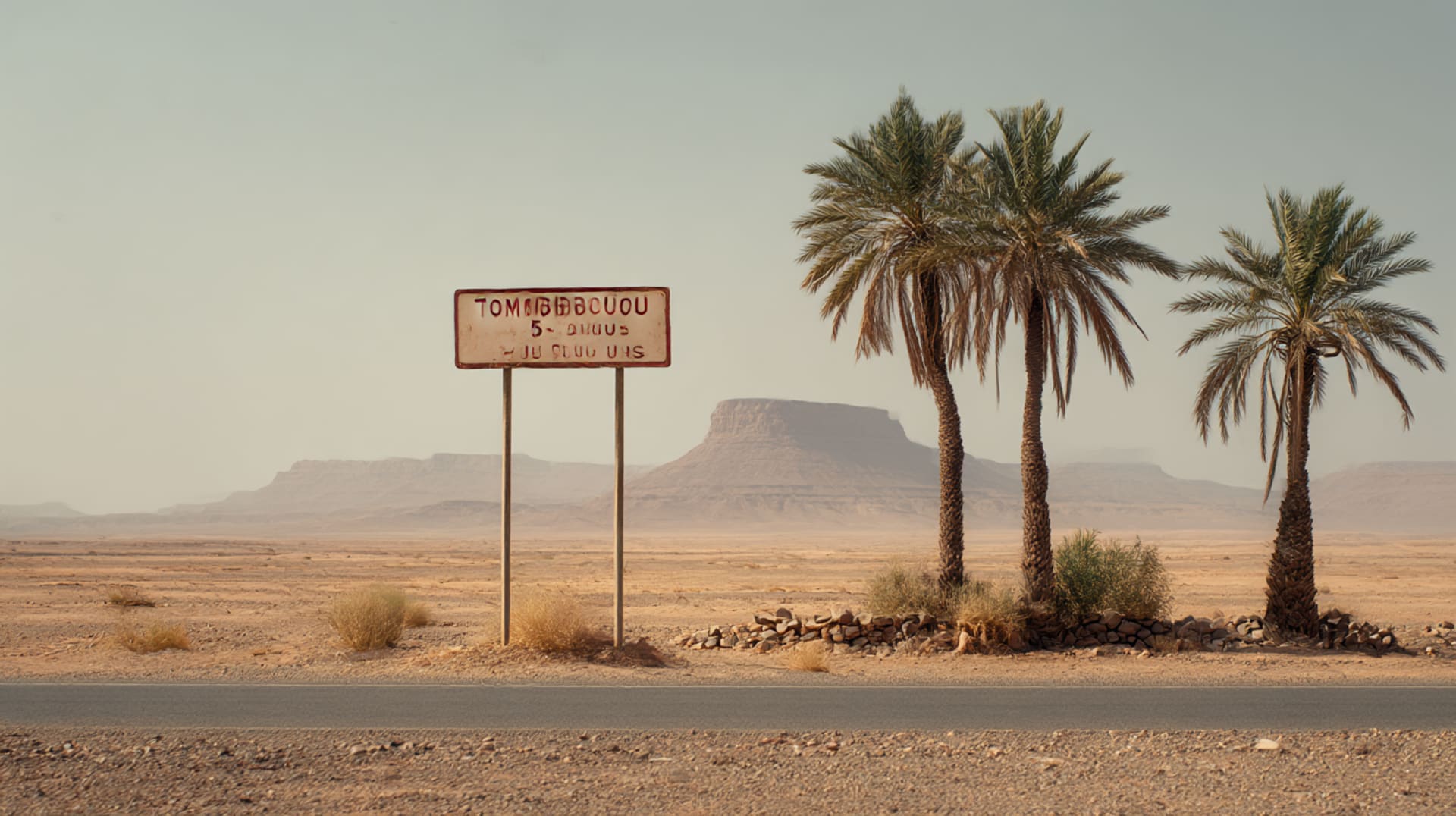
The sign at the edge of Zagora reads "Tombouctou 52 Jours" — 52 days by camel. It is the most photographed road sign in Morocco.
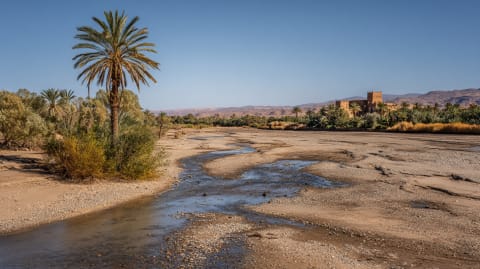
Zagora sits at the southern end of the Draa Valley, where the river — Morocco's longest — begins to lose its argument with the desert. Beyond Zagora, the date palms thin out, the irrigated fields end, and the hammada takes over. The town was historically the last point of reliable water and supply on the trans-Saharan trade route to Timbuktu, 2,500 kilometres to the south.
The sign was erected by the French during the Protectorate, partly as information and partly as romance. The 52-day estimate assumes a laden camel caravan moving at the standard pace of 30 to 40 kilometres per day. Modern vehicles can cover the distance in a fraction of that time, but the border between Morocco and Algeria — which lies on the direct route — has been closed since 1994. Today you cannot drive from Zagora to Timbuktu by any direct path.
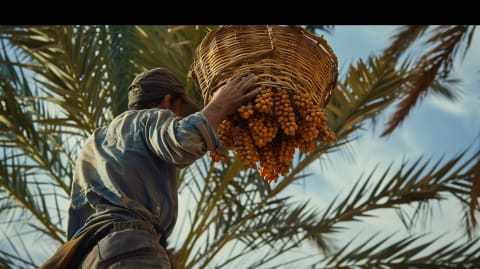
The town itself is a market centre for the surrounding Draa Valley oases. Wednesday is souk day. Dates, henna, and livestock change hands. The Jebel Zagora — the flat-topped mountain that overlooks the town — was an Almoravid stronghold in the 11th century, the base from which they launched their conquest of Morocco and Spain.
Most tourists pass through Zagora on the way to M'Hamid and the desert camps of Erg Chigaga. They stop for the photograph with the sign. The sign has been replaced several times — weather and souvenir hunters take their toll — but the number never changes. Timbuktu is still 52 days away.
The Facts
- —The sign at the edge of Zagora reads "Tombouctou 52 Jours" — 52 days by camel.
- —The town was historically the last point of reliable water and supply on the trans-Saharan trade route to Timbuktu, 2,500
- —The 52-day estimate assumes a laden camel caravan moving at the standard pace of 30 to 40 kilometres per day.
- —Modern vehicles can cover the distance in a fraction of that time, but the border between Morocco and Algeria — which lies on the
- —The Jebel Zagora — the flat-topped mountain that overlooks the town — was an Almoravid stronghold in the 11th century, the base
- —Timbuktu is still 52 days away.
Sources
- Bovill, E.W. The Golden Trade of the Moors. Oxford University Press, 1968
- Levtzion, Nehemia & Hopkins, J.F.P. Corpus of Early Arabic Sources for West African History. Cambridge University Press, 1981
- Porch, Douglas. The Conquest of the Sahara. Knopf, 1984
Practical questions