Mauretania Tingitana — Rome's westernmost African province — occupied the northern third of modern Morocco. Its capital was Tingis, which is Tangier, which means Tangier has been a capital before and may feel that its current status as merely a city is beneath it.
The most impressive city was Volubilis, near modern Meknes. The province was annexed in 40 CE when the Emperor Caligula murdered the last Mauretanian king, Ptolemy — a descendant of both Cleopatra and the Numidian kings — for the offence of wearing a purple cloak to the games. This is not a metaphor. Caligula murdered a king over a cloak. Rome was Rome.
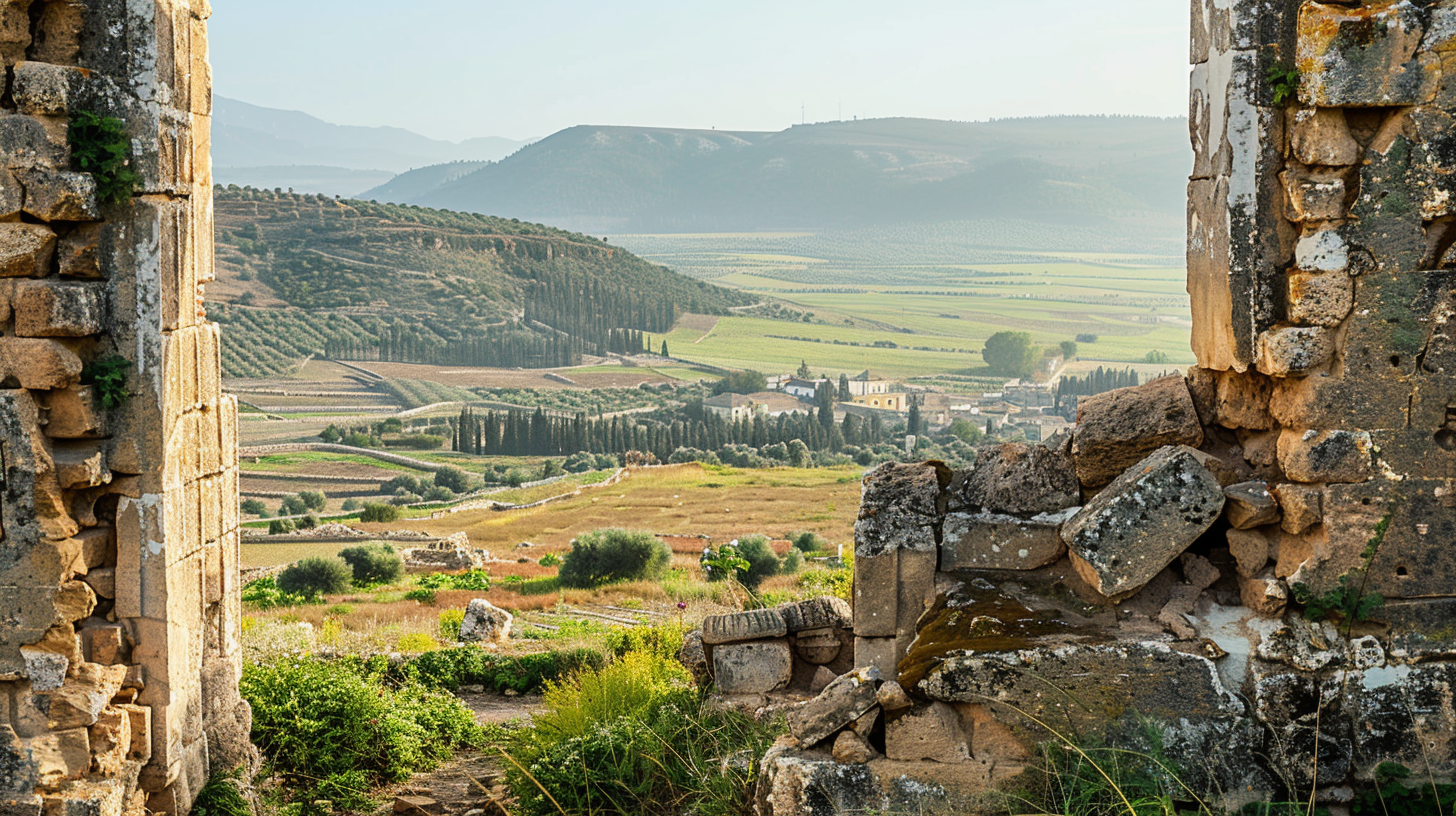
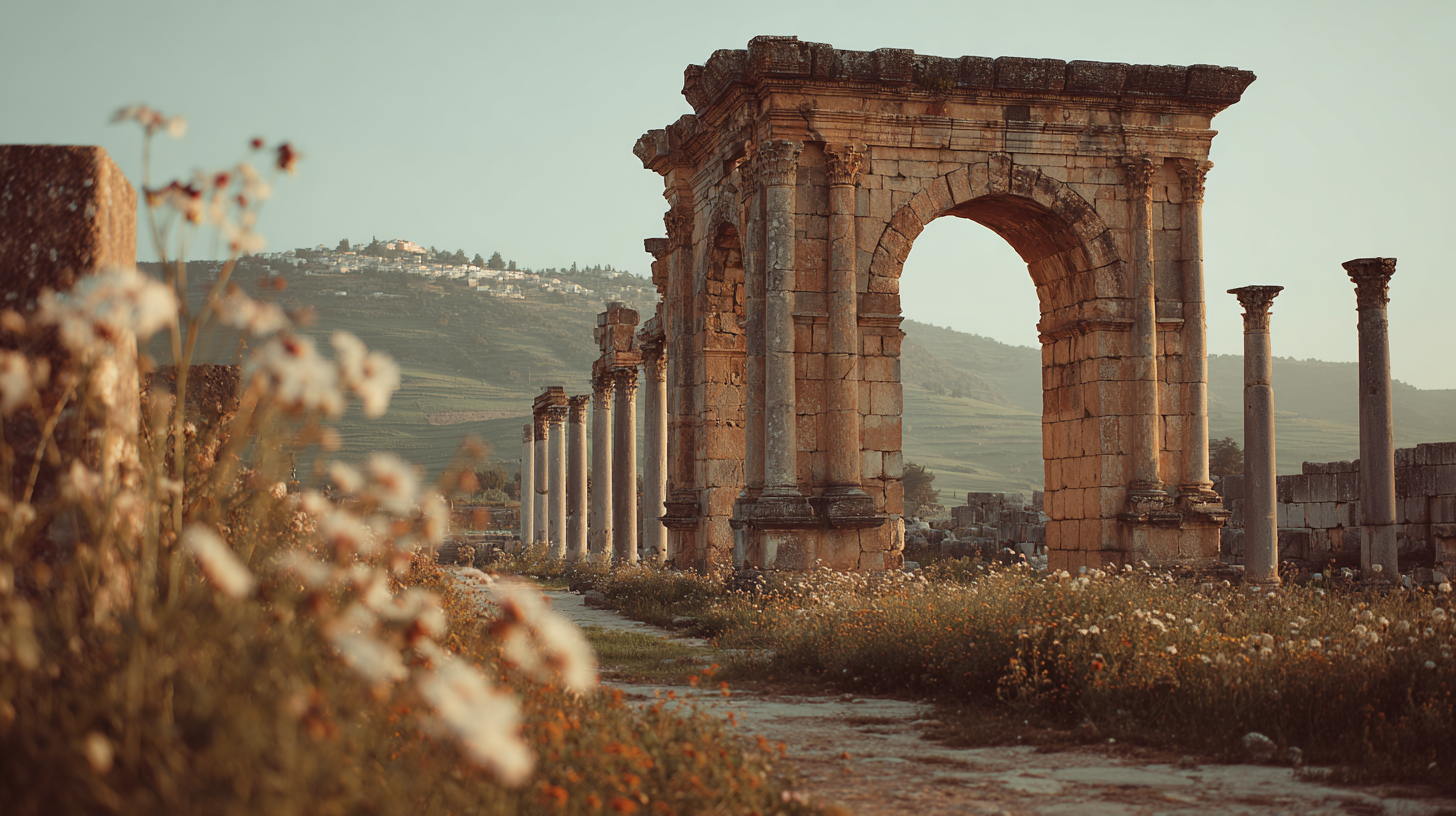
Volubilis sits on a fertile plateau with views to the holy town of Moulay Idriss Zerhoun. The site was inhabited long before Rome — Phoenicians and Carthaginians traded here — but the monumental city is Roman. The Capitoline temple, the basilica, the forum, the triumphal arch of Caracalla, and the residential quarter with its extraordinary mosaics date from the 2nd and 3rd centuries CE. The city was prosperous, well-connected, and, by the standards of the western empire, comfortable. People lived well here. You can tell from the mosaics, which are the Roman equivalent of putting your wealth on the floor.
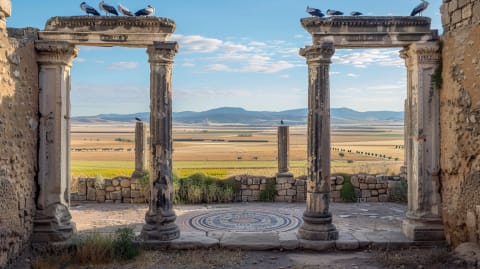
The mosaics are the highlight. The House of Orpheus. The House of the Acrobat. The House of the Labours of Hercules. Each contains floor mosaics of remarkable quality — Orpheus charming the animals, Bacchus in his chariot, Nereids riding sea creatures. The tesserae are small, the colours vivid, the subjects drawn from the standard Roman mythological repertoire. They are among the finest surviving Roman mosaics in Africa, which makes them among the finest anywhere.
Lixus, near Larache on the Atlantic coast, has a longer history and a wilder setting. The site was legendarily associated with the Garden of the Hesperides — Hercules' eleventh labour. The Roman fish-salting factories here produced garum, the fermented fish sauce that Romans put on everything. The ruins sit on a hill above the Loukkos River, overgrown, under-excavated, and more atmospheric than Volubilis precisely because nobody has tidied them up.
Rome withdrew from Mauretania Tingitana around 285 CE — not conquered but abandoned, a province too far from the centre to justify the cost of holding. The Amazigh reclaimed the territory. The aqueducts silted up. The mosaics were buried. Fifteen centuries later, the French uncovered them, which is the colonial relationship in miniature: they took a lot, but they also found things that had been lost.
The Volubilis detour between Fes and Meknes is ninety minutes that rearrange your understanding of Morocco.
Tell us about your trip →Data and visualisation by Dancing with Lions
The Facts
- —Mauretania Tingitana: Roman province
- —Volubilis: capital, population ~20,000
- —Rome present ~40 BCE to 280 CE
- —Olive oil, wheat, garum: primary exports
- —Juba II: client king, married Cleopatra's daughter
- —Banasa, Lixus, Thamusida: other Roman sites
- —Romans left 280 CE, Berber/Islamic culture continued
- —UNESCO World Heritage since 1997
Sources
- Fentress, Elizabeth & Wilson, Andrew. "The Saharan Berber Diaspora and the Southern Frontier of Roman North Africa." In Migrations and Diaspora in Antiquity. Cambridge University Press
- Mattingly, David. "The Laguatan." Libyan Studies
- Raven, Susan. Rome in Africa. Routledge, 1993