
Culture
The Scent Atlas
Morocco has an olfactory geography as distinct as its visual one. Every region smells different. Every season shifts the register.

The Dadès Valley runs roughly parallel to the Todra, separated by a ridge of the High Atlas. The road from Boumalne Dadès climbs north into the mountains through what the French called the Route des Mille Kasbahs — the road of a thousand kasbahs. The name is not an exaggeration. Fortified houses line both sides of the valley, built from pisé — rammed earth mixed with straw — and eroding slowly back into the landscape.
The valley is narrower than the Draa and greener than the Ziz. Almond trees bloom white and pink in February. Roses appear in April and May — the upper Dadès connects to the Kelaat M'Gouna rose valley to the west. In autumn, the walnut and fig harvest fills the roadside stalls.
The Dadès Gorge itself begins about 25 kilometres north of Boumalne. The road climbs through a series of switchbacks — the famous Monkey Fingers rock formations stand at the mouth of the gorge, eroded into vertical pillars that look like stone hands reaching upward.
Beyond the gorge, the road continues over the Tizi n'Ouano pass and descends to Msemrir, a remote Amazigh village from which tracks lead deeper into the High Atlas. Most travelers turn back at the gorge. Those who continue find the emptiest, quietest Morocco there is.
Places
Natural
The Road of a Thousand Kasbahs — the number isn't hyperbole. Ruined fortresses line the valley; the famous switchbacks stack against cliffs. The vertigo is universal.
Natural
In May, the Dades Valley turns pink. Damask roses bloom along irrigation channels; the harvest lasts three weeks; the perfume, in rosewater and local cooking, lasts all year.
Nature
The eroded rock formations above Aït Arbi in the upper Dades Valley — columns of pale limestone worn by water and wind into forms that resemble fingers, hands, or whatever the traveller needs them to be. The Moroccan name is more direct: the Hands of God. The formations are best at sunrise when the low light catches the pale stone against the dark gorge below.
Stories from Dades Valley
You might also consider
Journeys that pass through Dades Valley
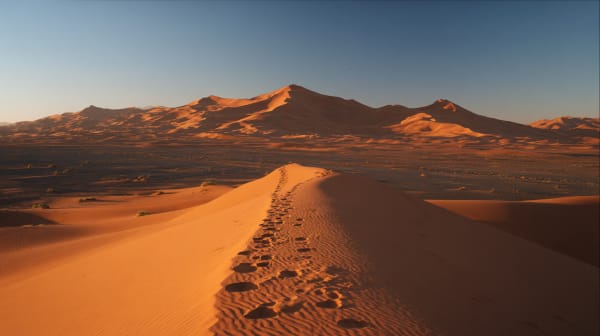
The classic — red city to medieval labyrinth via the Sahara. The corridor that defines Moroccan travel.

Descent through ancient rhythms. Return through gorges where the stone remembers everything — and your phone camera remembers nothing accurately.

The classic desert crossing — medieval labyrinth to red city, with the Sahara in between.
Plan your visit
Every journey we design includes private guiding, accommodation chosen for character rather than category, and the kind of access that takes years in Morocco to arrange.
Plan Your TripWritten from the medina. Sent when it matters.