Portuguese Cistern
Hours
Daily 9am–1pm, 3pm–6:30pm
Entry
20 MAD
Duration
15 minutes
Location
Cité Portugaise, Rue Mohammed Al Hachmi Bahbah, El Jadida
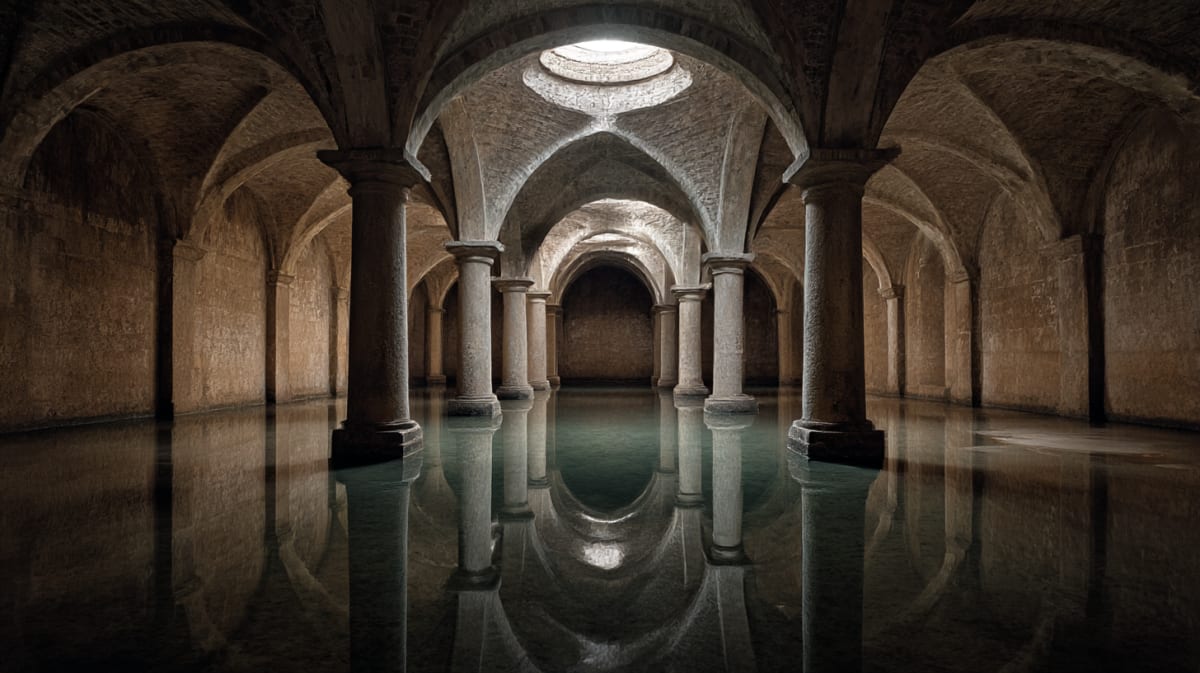
A Portuguese underground cistern where the ceiling floats on its own reflection.
01
The Portuguese Underground
The Portuguese built this cistern in the 16th century to store water for their garrison in El Jadida (then Mazagan). It was lost under later construction and rediscovered in 1916 when a shopkeeper noticed his floor was hollow. The underground chamber — Gothic vaults reflected in a shallow pool of water — became famous when Orson Welles filmed part of Othello here in 1949.
02
The Vaults
Five rows of stone columns support Gothic rib vaults. A central skylight drops a circle of light onto the water below. The reflection doubles everything — columns, arches, light. The effect is architectural and cinematic simultaneously.
03
Visiting
Inside El Jadida's Portuguese City (a UNESCO World Heritage Site). Small entry fee. The cistern is underground — descend a stairway from the street. Allow 15 minutes. The Portuguese City above is worth an hour of walking.
Best Time to Visit
Midday when the skylight sends the strongest reflection onto the water.
Getting There
Inside the Portuguese City (Cité Portugaise) in El Jadida. Enter the UNESCO-listed enclosure and follow signs.
Local Tip
Underground cistern built by Portuguese in 1514. Originally an armoury, converted to water storage. The reflection of the vaulted ceiling in the water is the famous shot. Featured in Orson Welles' Othello (1952). 15 minutes is enough.
Common Questions
Parts of Orson Welles' Othello (1949) were filmed in the cistern, yes.
Walking Distance
Nearby

The Portuguese Cistern is the reason we include El Jadida on coastal itineraries. The reflection in the water hasn't changed since Orson Welles filmed it.
Plan a private journey →Explore More
Related Stories
Discover the history and culture of El-jadida
Explore More
Multi-day journeys featuring this place
Curated routes that pass through El-jadida
4 Days
Oualidia Oysters & Lagoon
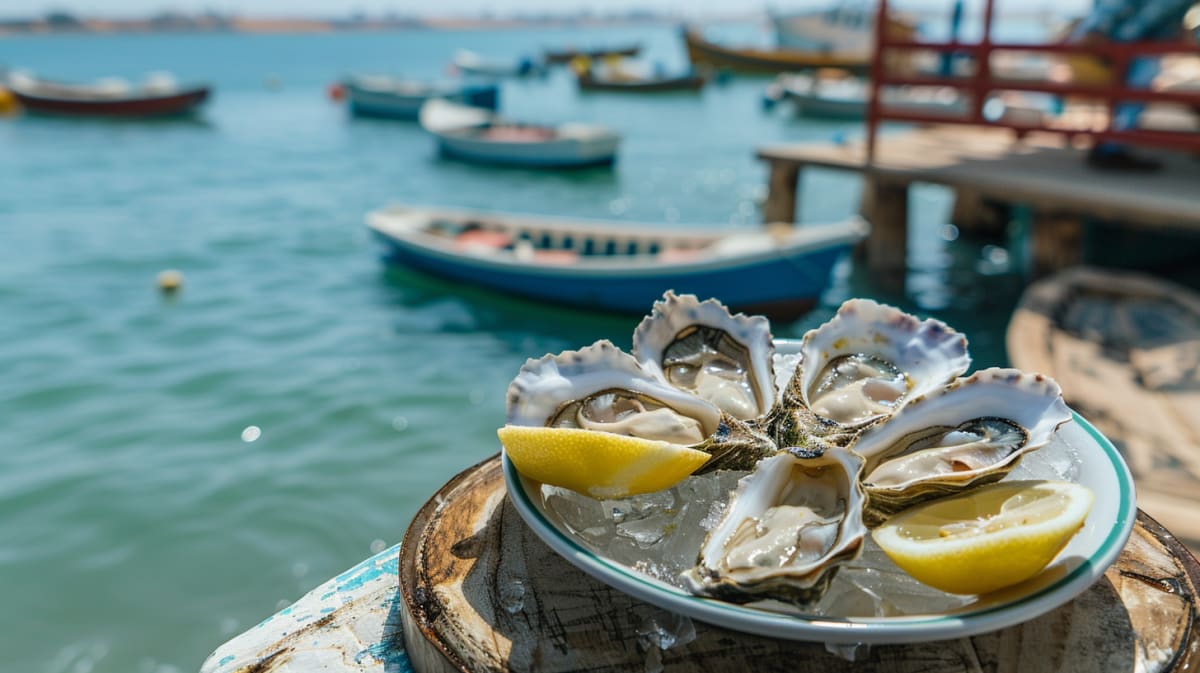
A lagoon between Casablanca and Essaouira produces the only oysters in Morocco. Four days of birds, salt marshes, and a kitchen that knows what to do with both.
4 Days
Portuguese Coast
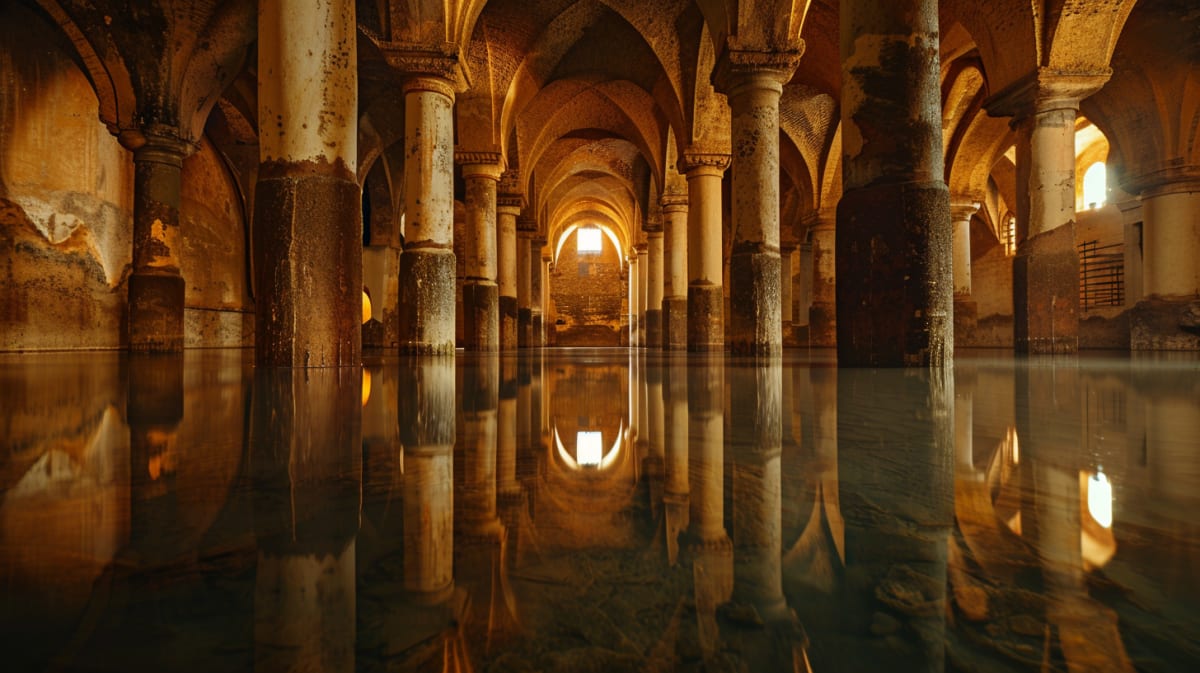
El Jadida, Mazagan, and the fortresses Portugal left in Morocco's stone — the empire sailed away but the architecture refused to follow.

5 Days
El Jadida & Tbourida
Portuguese ramparts, an underground cistern that echoes like a cathedral, and the thunder of Moroccan cavalry — history that refuses to whisper.
Sources: UNESCO Portuguese City of Mazagan nomination file (2004);;Caillé J. (1949) La Ville de Rabat