The sardines are attracted to blue. Or so the fishermen say, which is one of those explanations that is either folk wisdom or marine biology depending on who is telling it.
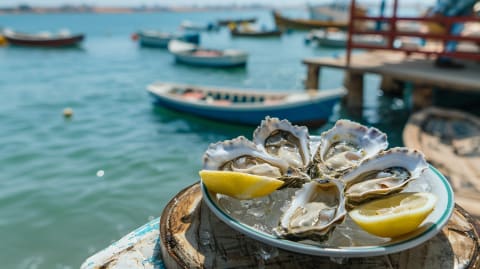
Every fishing boat in Essaouira is painted the same shade — a deep, almost purple-tinged blue that locals insist brings better catches. Three hundred and forty feluccas and a hundred trawlers, all matching, as if the harbour itself had a dress code. The uniformity is striking. The reason, if you dig, is stranger than the superstition.
That particular blue has a name: Phoenician purple. For three thousand years, the islands off Essaouira — the Îles Purpuraires — were harvesting murex snails for dye. Not the crimson Tyrian purple of emperors. A different species. A different colour. Blue. The fishermen's boats are painted the colour of their own history, and most of them don't know it. They paint the boats blue because their fathers did, and their fathers did because the Phoenicians taught the coast what blue meant three millennia ago. Tradition works like that: it carries the reason inside it, and the reason doesn't need to be remembered to be followed.
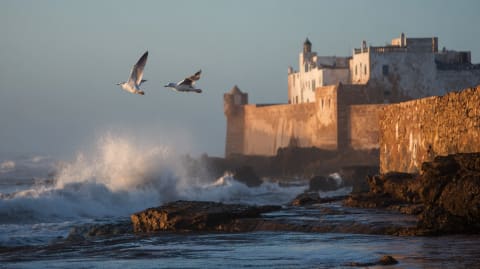
By the 19th century, Essaouira's harbour was handling half of Morocco's foreign trade. Gold, ivory, ostrich feathers flowing out. Sugar, leather, salt flowing in. Sultan Mohammed ben Abdallah redesigned the whole city in 1765, bringing in a French architect to build walls that could withstand cannon fire and the Atlantic wind — the alizé that blows six months of the year and gives Essaouira its character: beautiful, windswept, slightly mad.
Today the harbour is smaller, the trade local. The blue boats go out at dawn and return by noon, loaded with sardines, anchovies, sea bream. The fish auction happens on the quayside — fast, loud, incomprehensible to anyone who hasn't grown up with it. The sardines go to restaurants, to grillers, to the canning factories that dot the coast. Essaouira smells of fish and salt and woodsmoke, which is the smell of a port doing what ports do. The boats bob in the harbour, all blue, all waiting for dawn, all painted a colour whose origin is three thousand years old and whose logic is: it has always been this way.
The Essaouira harbour is a morning stop on every coastal journey. The sardine boats come in early. The light is worth the alarm.
Tell us about your trip →The Facts
- —Essaouira harbor: 340 feluccas, 105 trawlers | Third-largest sardine port in Morocco | Purple Islands (Iles Purpuraires) produced murex dye for 3,000 years | Port rebuilt by Sultan Mohammed ben Abdallah, 1765 | 19th century: handled 50% of Morocco foreign trade | French architect Theodore Cornut designed the fortifications
Sources
- FAO. Morocco fisheries sector report
- Moroccan Department of Maritime Fisheries. Fleet and catch data
- Haut-Commissariat au Plan. Fisheries statistics