Sidi Ifni
Hours
Always open
Entry
Free
Duration
90 minutes
Location
Sidi Ifni, Guelmim-Oued Noun
A crumbling Spanish art deco town on the Atlantic edge, where Africa almost touches the Canary Islands.
01
Art Deco by the Sea
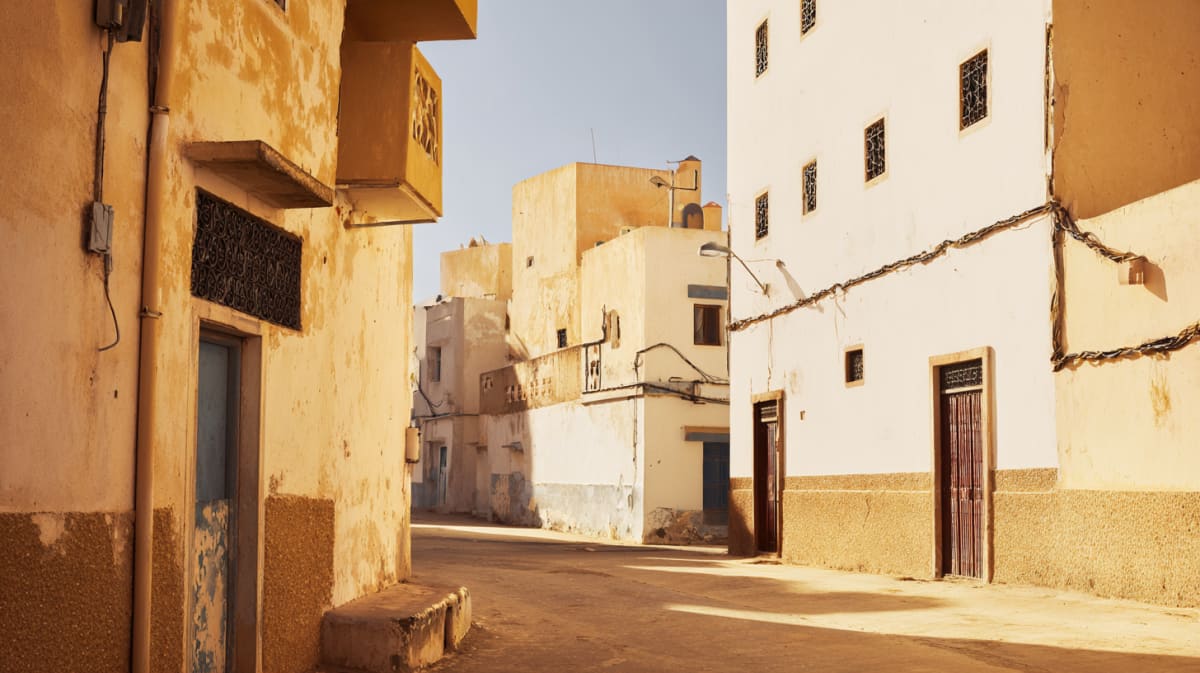
Sidi Ifni was Spanish until 1969 — the last colonial territory surrendered on the Moroccan coast. The Art Deco architecture from the 1930s Spanish occupation survives: curved facades, tile-work, a cinema, a former Spanish consulate. The town sits on a cliff above the Atlantic, wrapped in fog for much of the year.
02
The Town
Art Deco buildings in various states of repair. The former airstrip. The fishing port below the cliffs reached by a steep road. The Sunday souk. The town feels like a Spanish colonial outpost that someone forgot to update.
03
Visiting
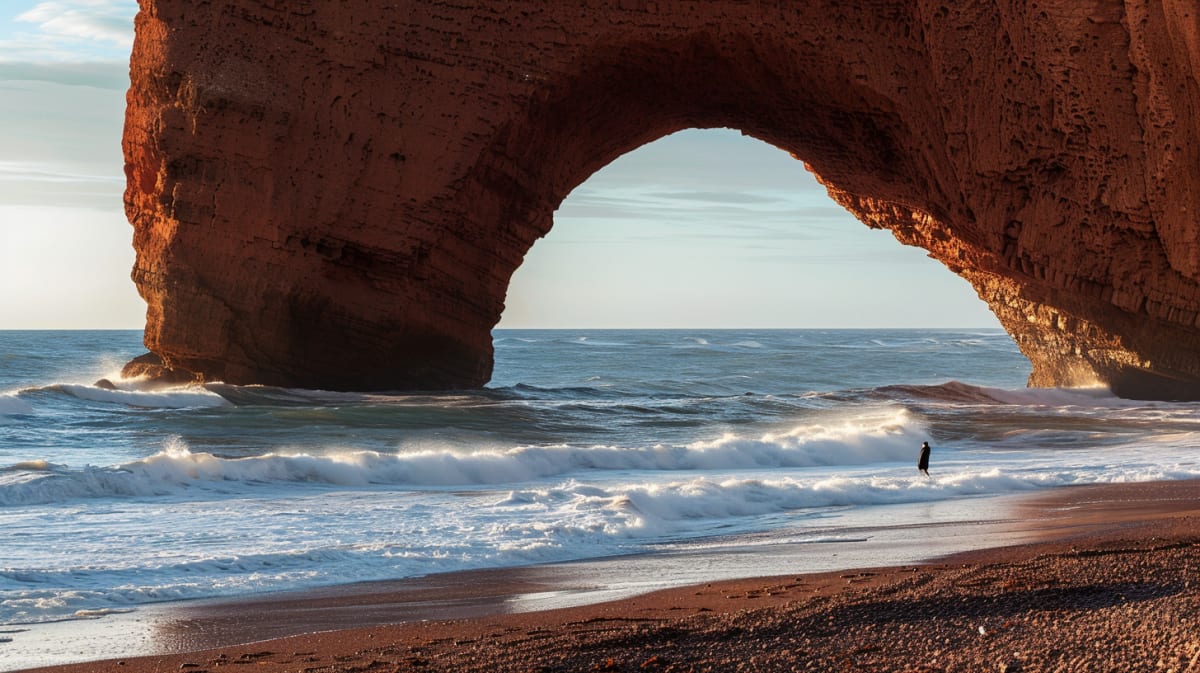
South of Tiznit on the coastal road. The town is small — a half-day. The beach at Legzira (30 km south) with its red stone arches is worth combining.
Best Time to Visit
Spring and autumn. Summer fog is atmospheric but limits visibility.
Getting There
South of Tiznit on the coast road. About 4 hours from Agadir.
Local Tip
Former Spanish enclave, returned to Morocco in 1969. Art deco buildings from the 1930s crumbling photogenically along the seafront. Sunday souk is excellent. Quiet, end-of-the-road atmosphere. Good base for Legzira Beach (10km south) with its famous natural stone arches.
Common Questions
Spain held Sidi Ifni until 1969. The Art Deco architecture dates to the 1930s Spanish colonial period.
Walking Distance
Nearby

Sidi Ifni is a detour on our deep south coastal route. The Spanish architecture is crumbling beautifully. We go for Legzira beach and the Sunday souk.
Plan a private journey →Explore More
Related Stories
Discover the history and culture of Sidi-ifni

Explore More
Multi-day journeys featuring this place
Curated routes that pass through Sidi-ifni

6 Days
Southern Surf & Cliffs
Point breaks, empty lineups, and red cliffs that glow at sunset — Morocco's surf coast, minus the crowds and plus the silence.
6 Days
Wild Atlantic South
Agadir to Sidi Ifni—where the tourist trail ends and the real coast begins.

10 Days
Road to Dakhla
The long south — Agadir to the Saharan peninsula where the wind never stops and the Atlantic never rests.
Sources: Spanish Protectorate architectural records;;Morocco National Tourism Office;;Sidi Ifni municipal archives