
Souk of Rissani
Birthplace of Morocco's ruling dynasty. The souk sells everything the desert needs.
The donkey park is at the back of the souk. Hundreds of them, tethered and braying and swishing flies with the weary patience of creatures who have been doing this since the 8th century — which, in Rissani, is not an exaggeration. This is the car park of a market older than most countries.
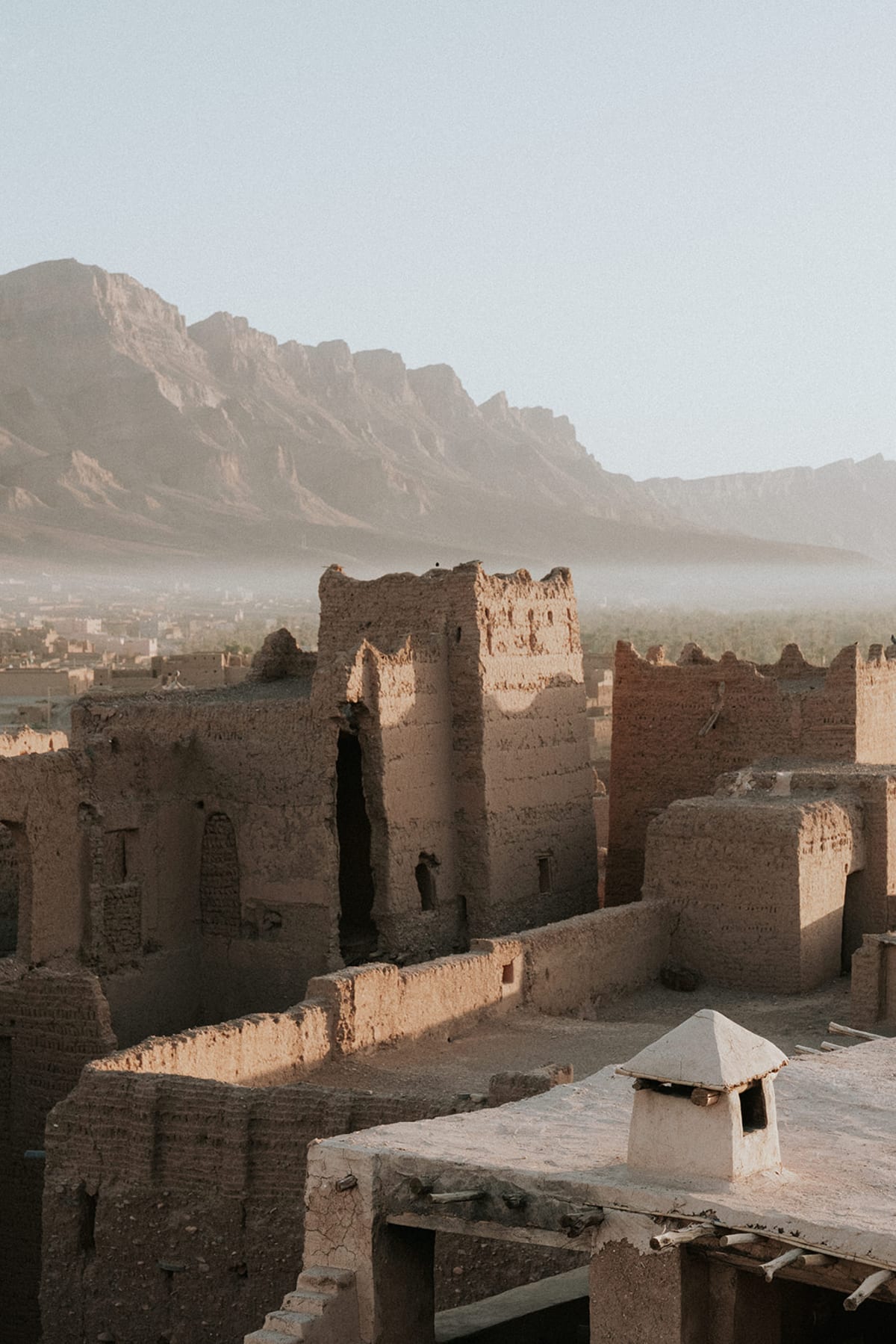
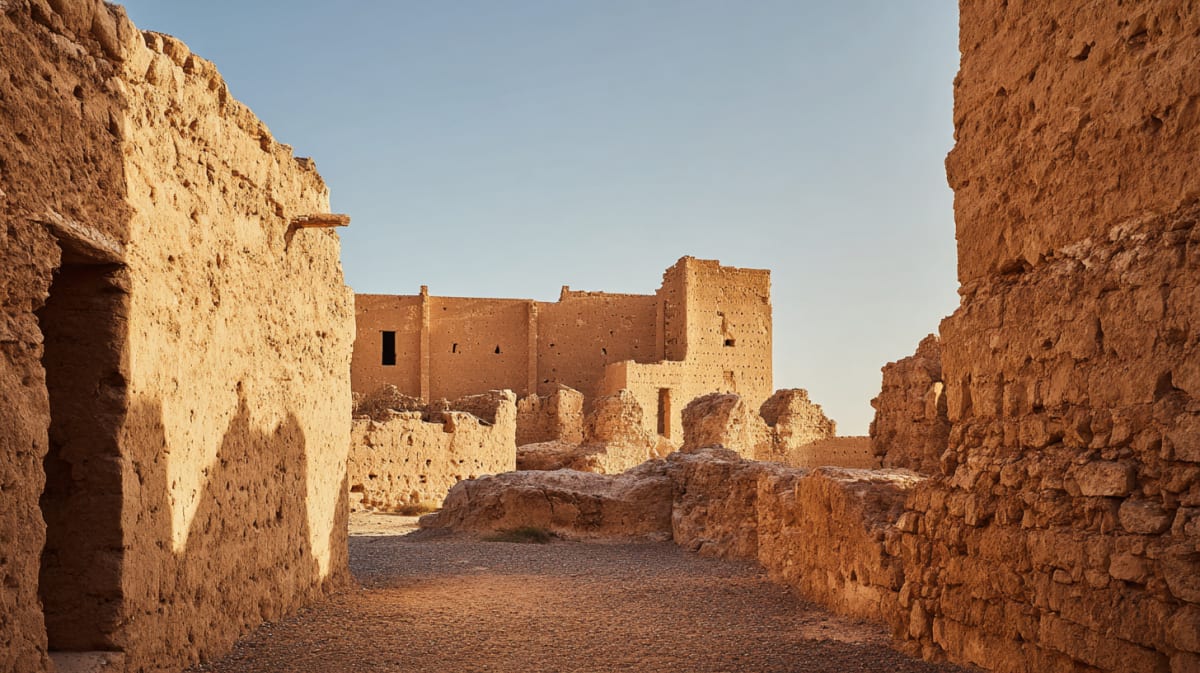
The souk runs on Tuesdays, Thursdays, and Sundays. On those mornings, people arrive from the surrounding ksour and oases long before dawn — by motorbike, by van, by donkey, occasionally by foot. Rissani inherited this trade when Sijilmassa, the great medieval city four kilometres away, collapsed in the 14th century. Sijilmassa had controlled the northern terminus of the trans-Saharan gold and slave routes. When it fell, the merchants needed somewhere to go. They came here. The souk they started is still running.
There is no entrance gate and no map. The market unfolds in sections — the rahbas — each dedicated to a category: dates over here, livestock over there, spices, textiles, household goods, leather. The Tafilalet oasis produces dates that are softer, richer, and significantly cheaper than anything sold up north. Women sell warm bread wrapped in cloth, pulled from communal ovens that morning. Families plan their week around souk day. If you want to understand the rhythm of life in the Moroccan southeast, come on a Tuesday and stay until the bread runs out.
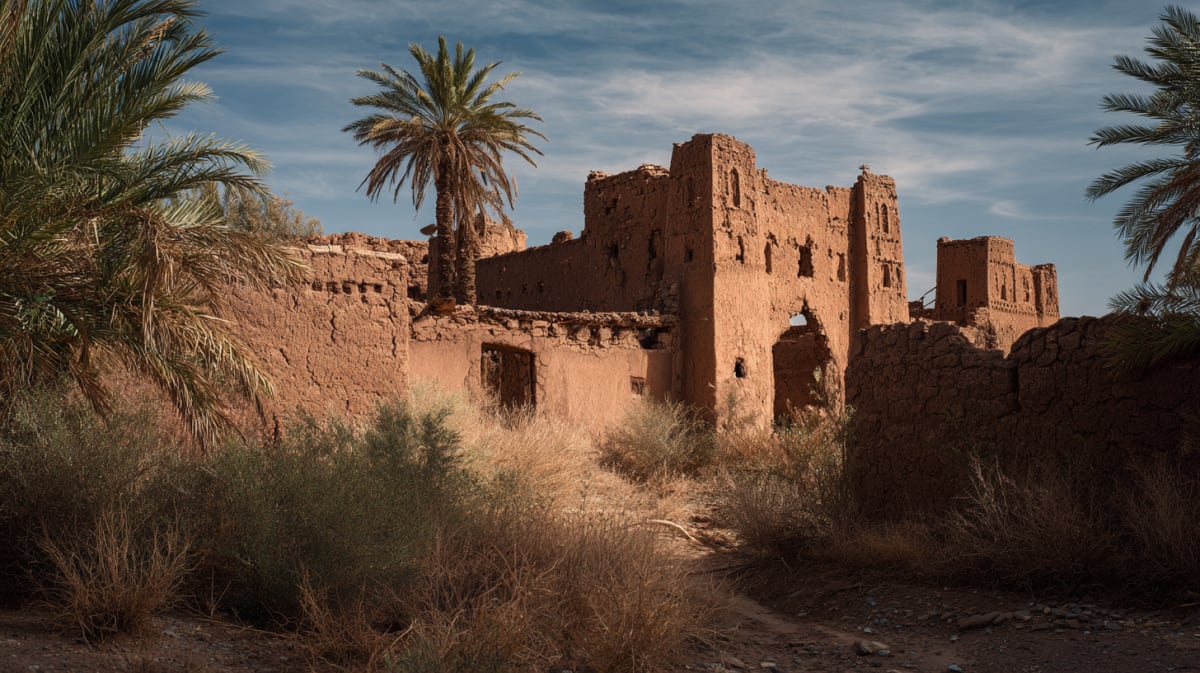
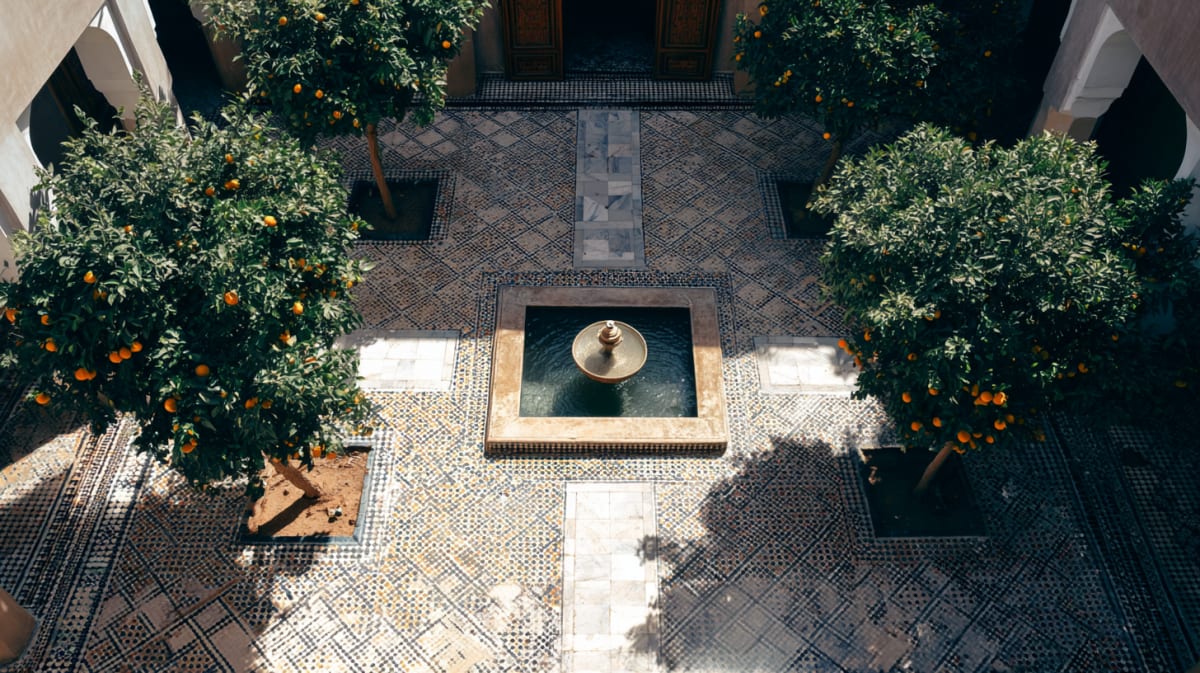
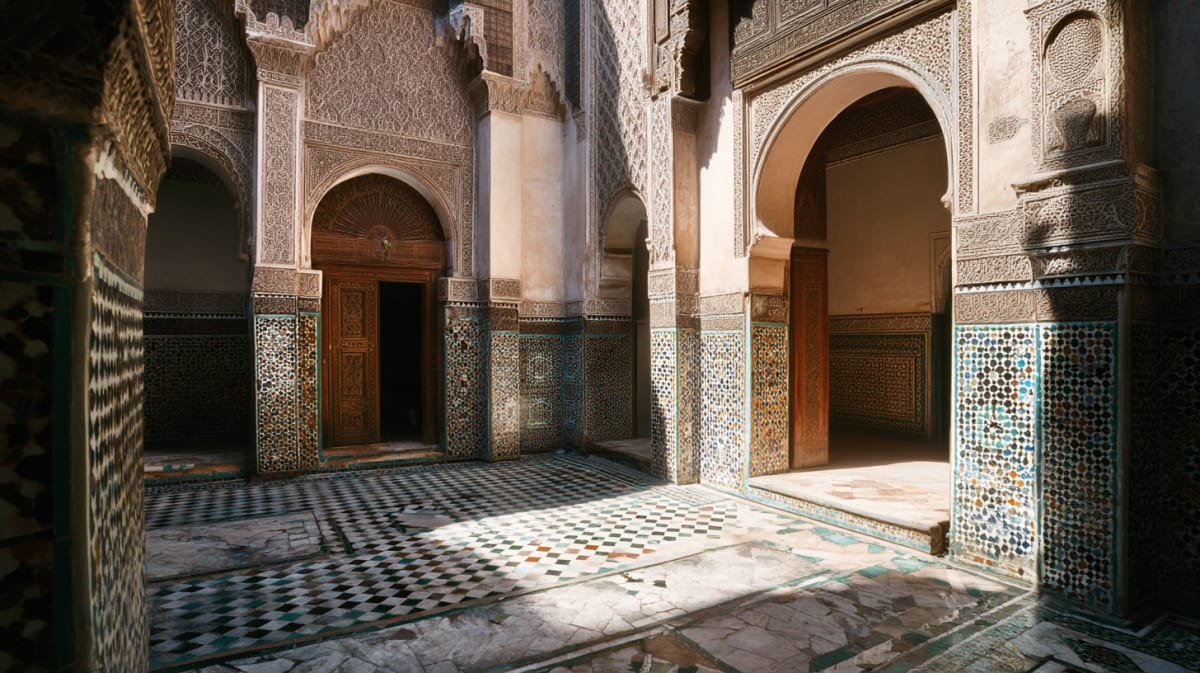
Rissani is also, improbably, where Morocco's current ruling dynasty began. Moulay Ali Cherif, ancestor of the Alaouite kings, was named Prince of Tafilalet in 1631 — a desert title that didn't sound like much at the time. His grandson Moulay al-Rashid captured Fes in 1666 and Marrakech in 1668, unifying the country under the family that still sits on the throne today. From donkey park to royal palace in two generations. The mausoleum of Moulay Ali Cherif sits on the town's southern edge, its courtyard shaded by pomegranate and orange trees. Non-Muslims cannot enter, but the craftsmanship visible from outside makes the point on its own.
A Jewish community lived here too, drawn by the caravan trade. The cemetery, recently restored as part of Mohammed VI's national preservation project, sits quietly on the periphery — a reminder that desert towns have always run on diversity, even when the official histories forgot to mention it.
By early afternoon, the souk empties. The sellers pack what they didn't sell onto the donkeys that brought them. The donkeys, who have been standing in the sun all morning with approximately zero enthusiasm for the entire arrangement, begin the walk home. The market that has been running since the 8th century will run again in two days. Nobody doubts this. Least of all the donkeys.
Rissani's souk is busiest on Tuesdays and Thursdays. We build Sahara itineraries around the market days when the timing works.
Plan a private journey →Visitor Information
Address
Rissani, Draa-Tafilalet
Hours
Souk: Tue, Thu, Sun from early morning. Town always open.
Entry Fee
Free
Tips
The gateway town to Merzouga and the Erg Chebbi dunes. The souk (Tuesday, Thursday, Sunday) is one of the largest in southern Morocco — livestock, dates, spices, household goods. Rissani was the capital of the Tafilalet oasis and birthplace of the Alaouite dynasty that still rules Morocco. The Moulay Ali Cherif mausoleum is closed to non-Muslims.
Explore More
Related Stories
Discover the history and culture of Rissani

Walking Distance
Nearby
Sources: Naji S. (2001) Art et architectures berbères du Maroc;;Morocco National Tourism Office;;Tafilalet regional archives