
Architecture
A Thousand Kasbahs
Not ruins. A building technology — earth, straw, water, sun — that created one of the most dramatic architectural landscapes on the planet.

Skoura is a palmery — a long, narrow oasis of date palms, olive trees, and almond groves watered by the Dadès River and a network of seguias — irrigation channels — that have been maintained for centuries. The palmery is about 20 kilometres long and 5 kilometres wide. Inside it, hidden among the trees, stand some of the most beautiful kasbahs in southern Morocco.
Kasbah Amridil is the most famous — a 17th-century fortress that appeared on the 50-dirham banknote. It is privately owned and open to visitors. The towers rise above the palm canopy like a sandcastle that refused to erode.
The palmery is best explored on foot or by bicycle. The paths wind through the trees, past irrigation channels, through small villages, and alongside crumbling kasbahs that no guidebook has ever mentioned. A local guide is useful — the paths are unmarked and the palmery is larger than it looks from the road.
Skoura is 40 kilometres east of Ouarzazate on the N10. Most travelers drive through without stopping. The ones who turn off the highway and enter the palmery are always glad they did.
Places
Kasbahs
The kasbah on the 50-dirham note, in the same family for 17 generations. The welcome is genuine; the rooftop views take in the Skoura palmery and mountains beyond.
Nature
The oasis of Skoura is one of the densest palmeraies in southern Morocco — 1,500 hectares of date palms, olive trees, almond orchards, and the kasbahs of the families who have farmed here for centuries. The palmeraie is crossed by a network of irrigation channels and footpaths. Getting lost in it for an hour is one of the most disorienting and pleasurable experiences the south offers.
Stories from Skoura
You might also consider
Journeys that pass through Skoura
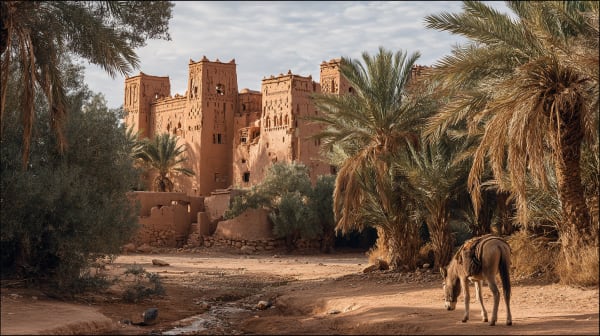
Morocco's most dramatic architecture — mud fortresses that melt slowly back into the earth.
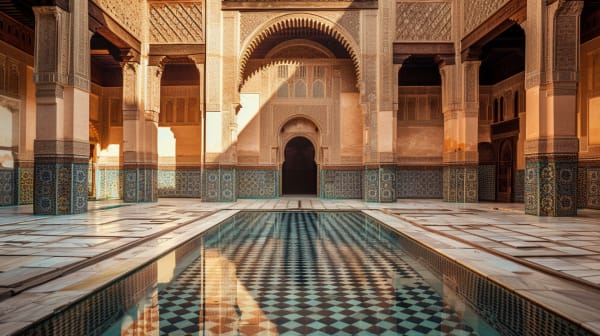
From Roman columns to Art Deco facades—fourteen days through Morocco's built history.
Plan your visit
Every journey we design includes private guiding, accommodation chosen for character rather than category, and the kind of access that takes years in Morocco to arrange.
Plan Your TripWritten from the medina. Sent when it matters.