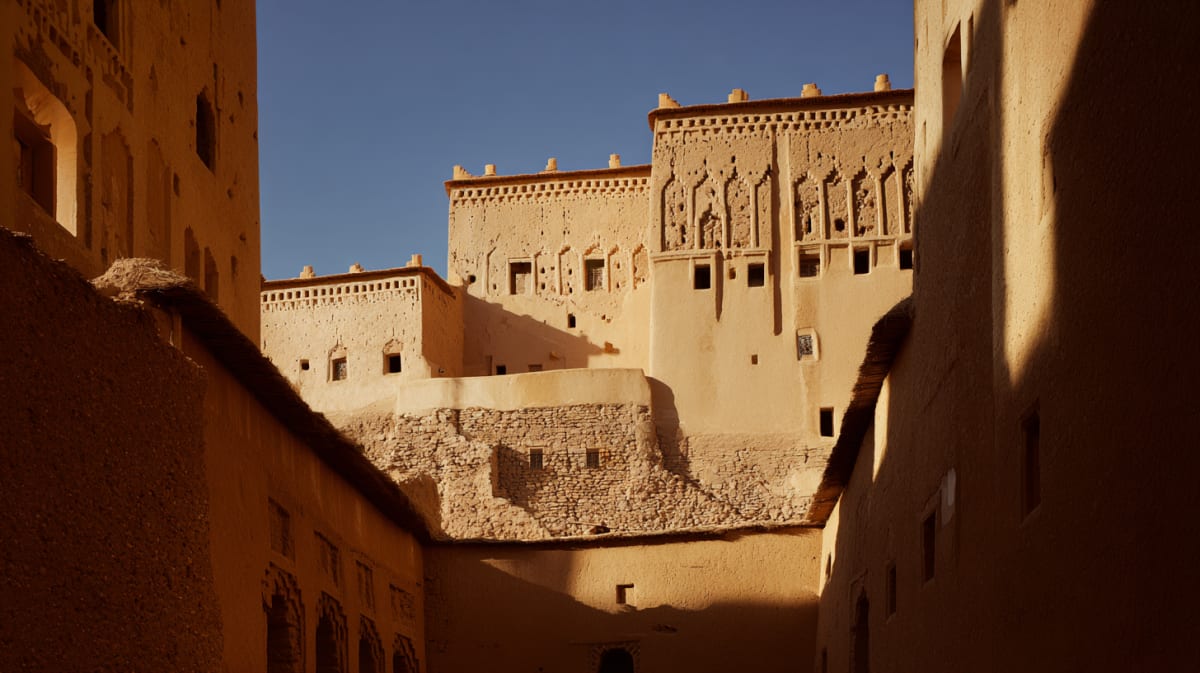
Kasbah Amridil
Hours
Daily 8am-6pm
Entry
30 MAD
Duration
90 minutes
Location
Skoura Oasis
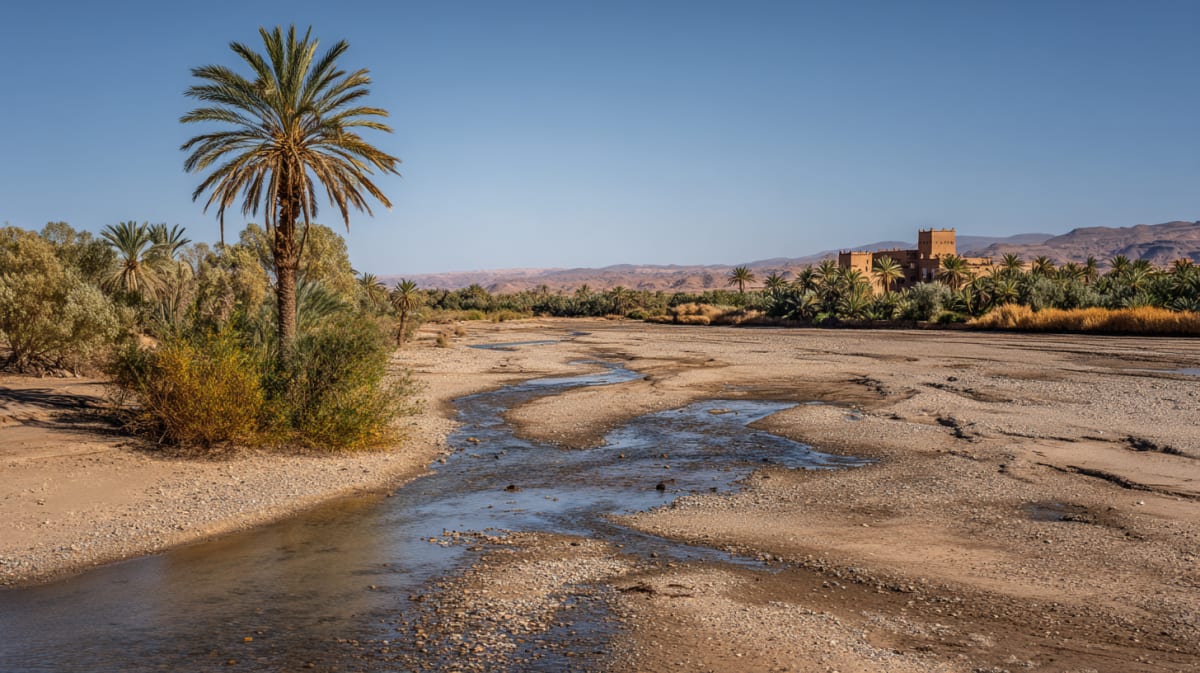
The kasbah on the 50-dirham note, in the same family for 17 generations. The welcome is genuine; the rooftop views take in the Skoura palmery and mountains beyond.
01
The Family That Never Left
The Nasiri family built this kasbah in the 17th century and still lives in part of it. That is the first thing to understand — Amridil is not a ruin, not a museum set piece. The family occupies the upper floors while visitors walk through the lower ones. You might hear a television upstairs.
Skoura was a caravan stop on the route between Marrakech and the Sahara, and the Nasiris were among the families who controlled the palm oasis and its trade. The kasbah grew over generations — towers added, rooms expanded, walls thickened — the way a family business grows. At its peak it housed an extended family of over a hundred people.
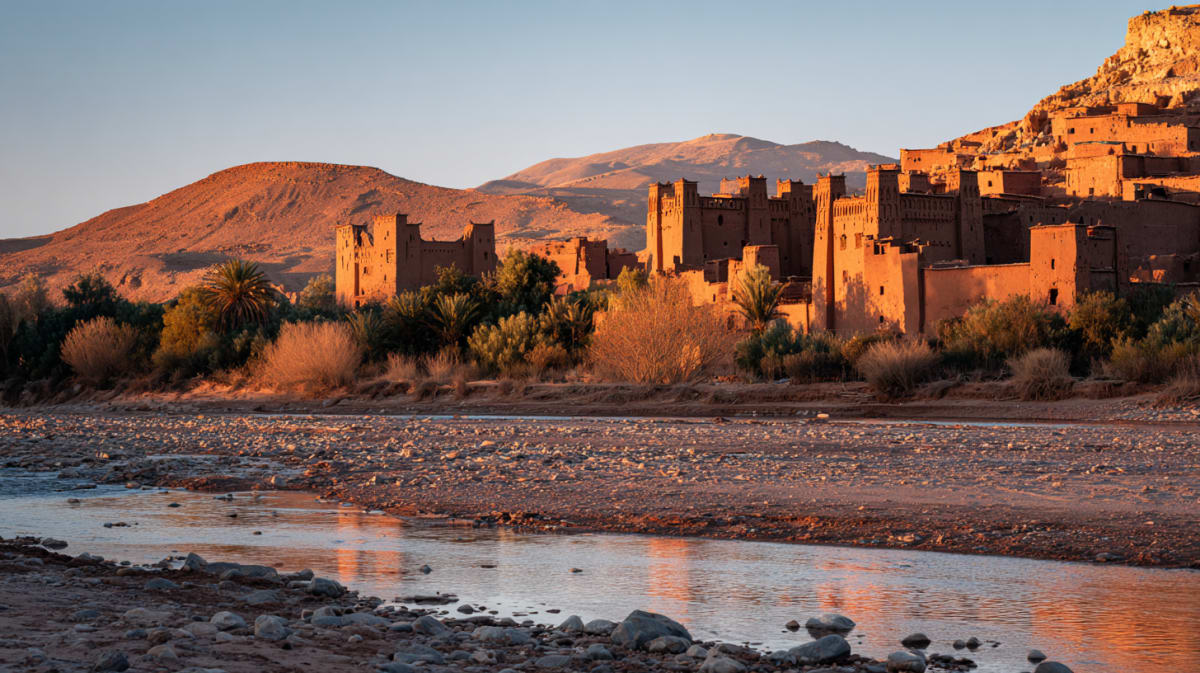
The Moroccan 50-dirham banknote featured Kasbah Amridil until the design changed. That is how iconic the silhouette is — four corner towers above a sea of palms in the Skoura oasis. It is the most photographed kasbah in Morocco after Aït Benhaddou, and arguably the more honest of the two, because Aït Benhaddou has been largely depopulated and rebuilt for film sets.
02
Pisé and Palm
The building material is pisé — rammed earth mixed with straw, tamped between wooden forms, and left to cure in the sun. The colour is the raw ochre of the Skoura soil. No paint. The walls are structural and decorative at once — the geometric patterns pressed into the upper storeys are done while the earth is still wet.
The interior follows the standard kasbah logic: ground floor for animals and storage, first floor for family living, upper floors for reception and views. The ceilings are palm trunk beams laid across the walls with smaller branches and packed earth above. The window openings are small and high — defensive, but also thermal. Pisé walls a metre thick keep the interior cool in summer and warm on freezing desert nights.
The towers at each corner taper slightly as they rise, which gives the silhouette its distinctive elegance. The crenellations at the top are not decorative — they are functional battlements from a time when oasis families defended their water and their dates by force.
03
Visiting
A family member guides you through the kasbah. The tour is informal — you walk through rooms that still have personal objects, carpets, tea sets, old photographs. It feels like visiting someone's house because it is someone's house.
The rooftop terrace gives the postcard view: the four towers framing the Skoura palmery, with the High Atlas snowline behind. Morning light is best — the pisé walls glow. The palmery itself is worth an hour on foot or by bicycle. It contains dozens of smaller kasbahs in various states of repair, and the irrigation channels that keep 50,000 palm trees alive.
Skoura is on the N10 between Ouarzazate and Boumalne Dadès, so most visitors pass through on the way to or from the gorges and the desert. Amridil is a 5-minute detour. Do not skip it.
Best Time to Visit
Morning for the best light on the pisé walls. Spring and autumn for comfortable temperatures. Summer afternoons in the Skoura oasis exceed 40°C.
Getting There
Skoura is on the N10, about 40 km east of Ouarzazate and 120 km west of Boumalne Dadès. The kasbah is signposted from the main road — a 2 km turn-off into the palmery. Most visitors stop en route between Ouarzazate and the Dadès or Todra gorges.
Local Tip
Featured on 50 dirham note. Best preserved in the region.
Common Questions
Not exactly. The Nasiri family still lives in part of the building. A family member guides you through the historic sections. It is part museum, part living house.
It was, until the banknote design changed. The silhouette — four towers above the Skoura palmery — remains one of the most recognisable images of southern Morocco.
About 30-45 minutes for the kasbah tour. Add an hour if you walk into the surrounding palmery.
Yes. The palmery is open and walkable. You can also hire a bicycle in Skoura town. The kasbah sits at the edge of the oasis — the palmery extends south from it.
Walking Distance
Nearby
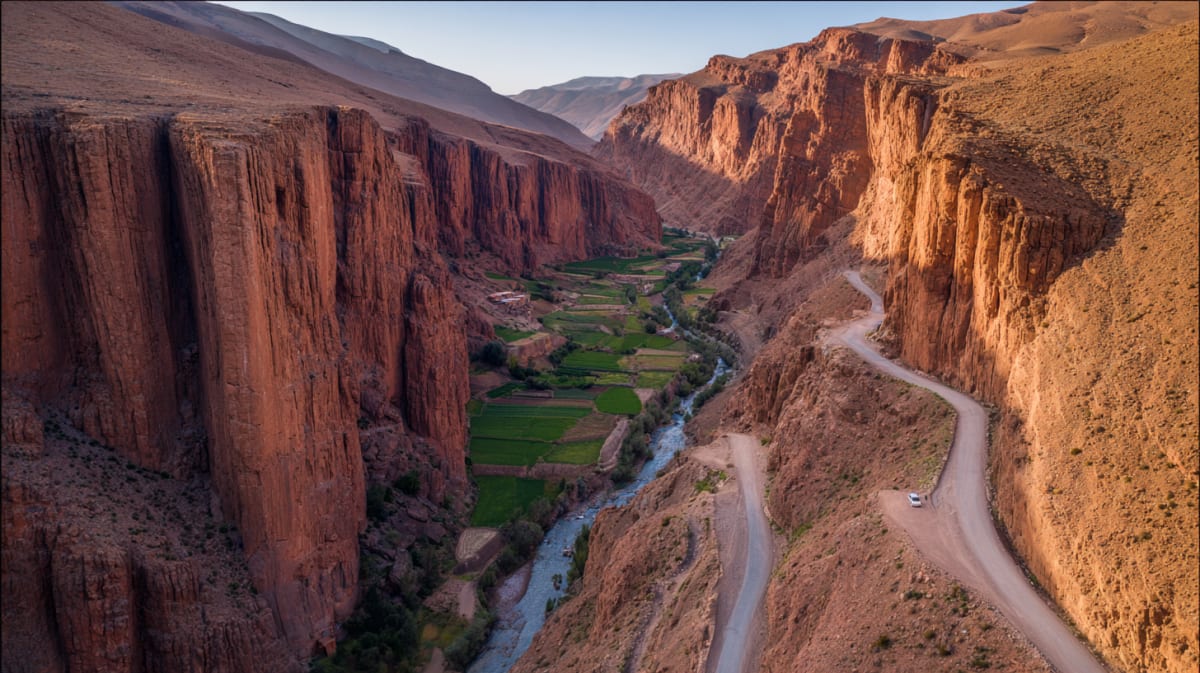
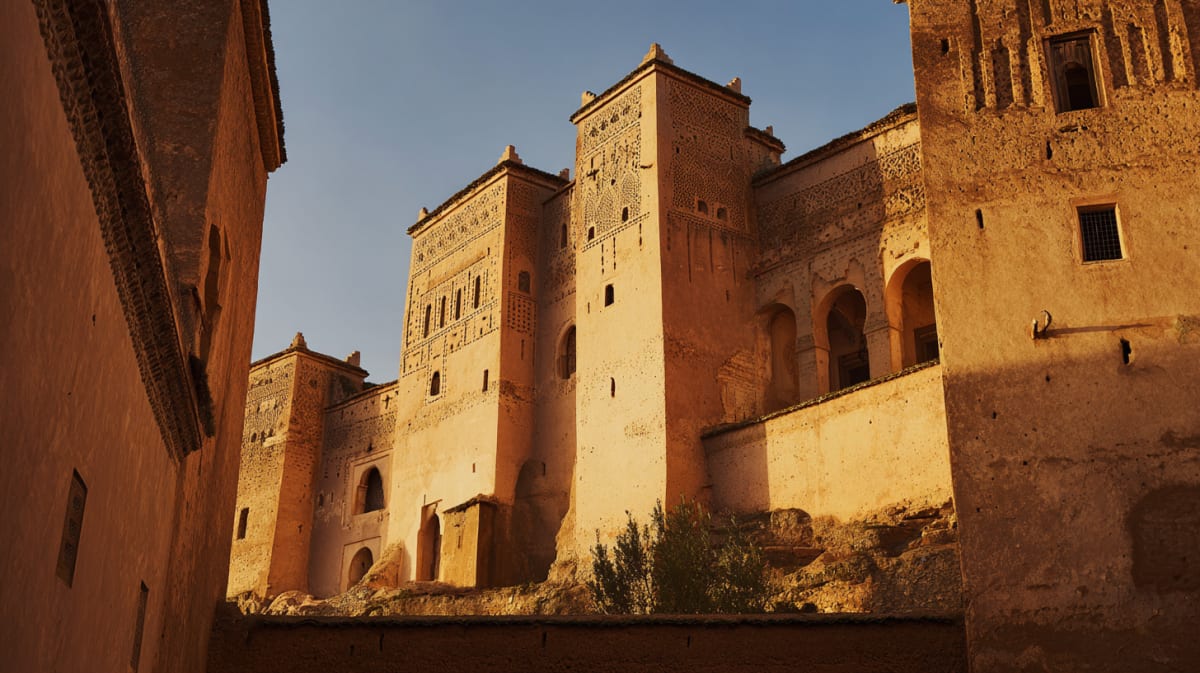
Amridil is the kasbah on the old 50-dirham note. We stop on the road between Ouarzazate and the Dades because the palm oasis around it is the best-framed in the south.
Plan a private journey →Explore More
Related Stories
Discover the history and culture of Skoura
Explore More
Multi-day journeys featuring this place
Curated routes that pass through Skoura

Sources: Naji S. (2001) Art et architectures berbères du Maroc;;Jacques-Meunié D. (1962) Architectures et habitats du Dadès