Architecture
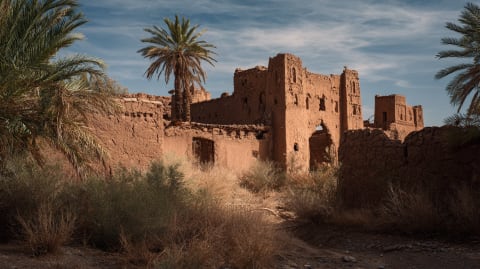
The Kasbahs
Built from earth. Returns to earth. The walls are always melting.
The history, craft, food, music, and people that make Morocco make sense.
Architecture
Built from earth. Returns to earth. The walls are always melting.

Architecture
One gate. One wall. Two hundred families inside. The same colour as the earth.

Architecture
Blank wall outside. Garden inside. The architecture of privacy.

Architecture
Earth walls absorb heat by day and release it at night. Older than electricity.
Architecture
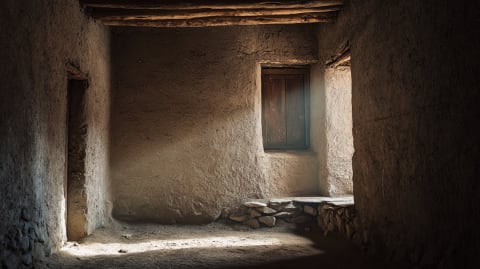
Stone corridors built to carry a whisper and swallow a shout.
Architecture
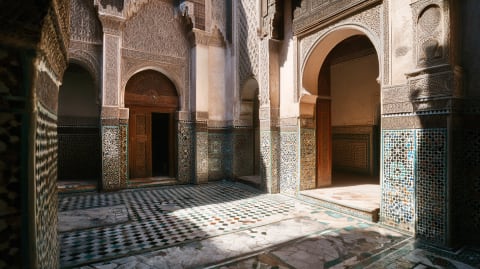
One man. Four wives. Twenty-four concubines. The architecture of managing them.

Architecture
Built to humiliate the Portuguese. Stripped to humiliate its builder.
Architecture
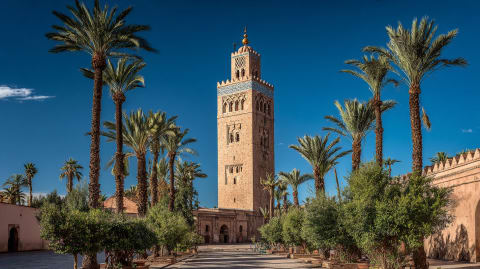
It didn't face Mecca. The Almohads built it twice.

Architecture
Waterproof plaster from egg whites and soap. Hardens with age. Needs no paint.
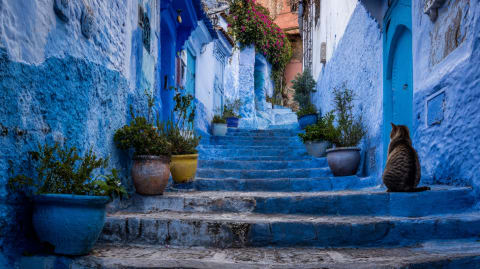
Architecture
Everyone knows it is blue. Nobody agrees why.
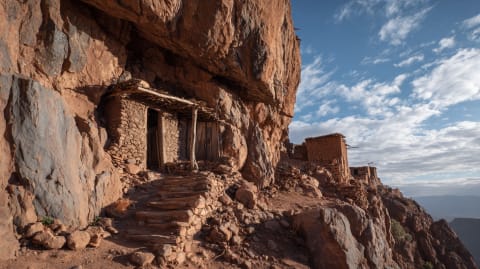
Architecture
In the Anti-Atlas, trust was built in stone. One family's compartment at a time.
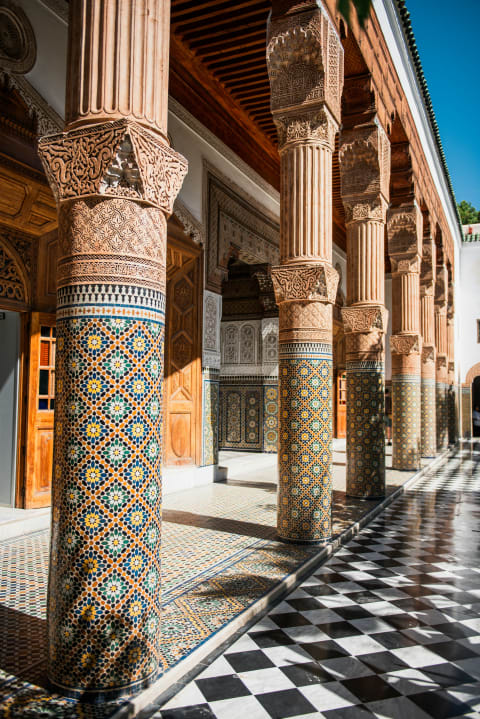
Design
The master cuts by eye. No ruler. Every chip is a decision.

Design
Waterproof walls built from river stone, egg whites, and soap. The technique is dying.
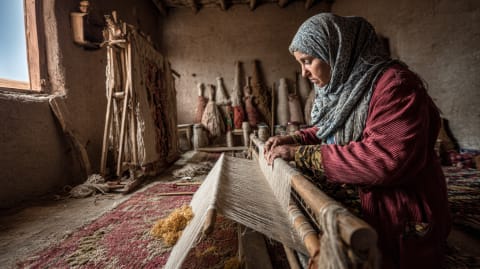
Design
Maps, dowries, and protection woven in wool
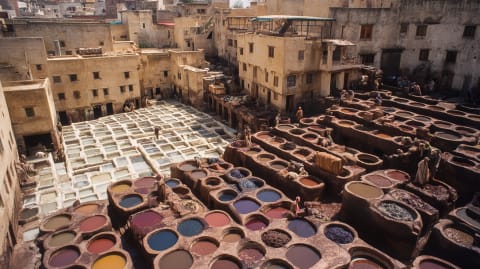
Design
Nine hundred years of leather tanning in Fes. The method hasn't changed.
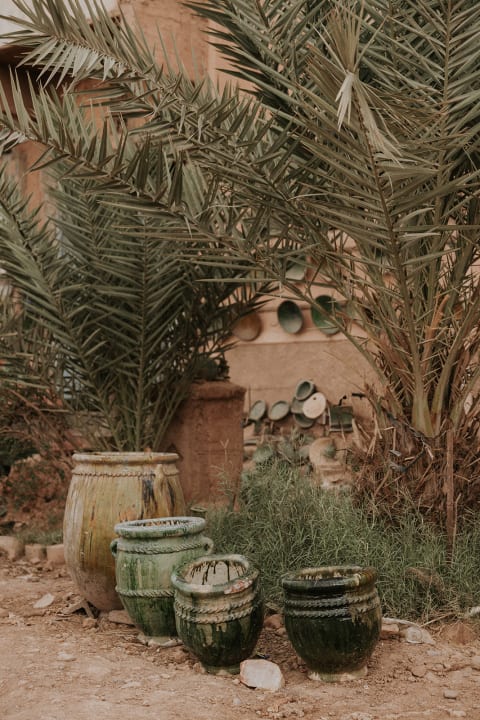
Design
One family. Four centuries. The same kiln at the end of the old salt road.
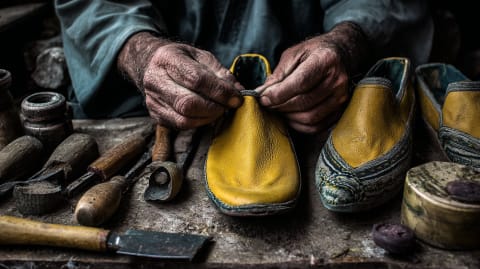
Design
Three craftsmen. One slipper. It takes a week.
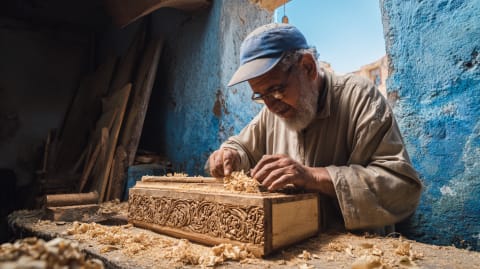
Design
The wood grows underground. Essaouira has been carving it for centuries.
Design
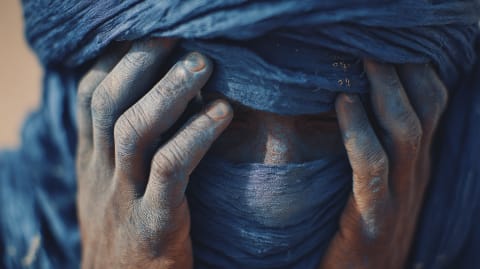
Indigo stained everyone who touched it. That was the point.

Design
Sequins and symbols. What it says, only women can read.

Art
Two weeks. He never painted the same way again.

Art
Bill Willis arrived in Marrakech in the 1960s. He saved Moroccan craft from extinction.

Art
The Koutoubia minaret was built twice. The first one didn't face Mecca.
Art
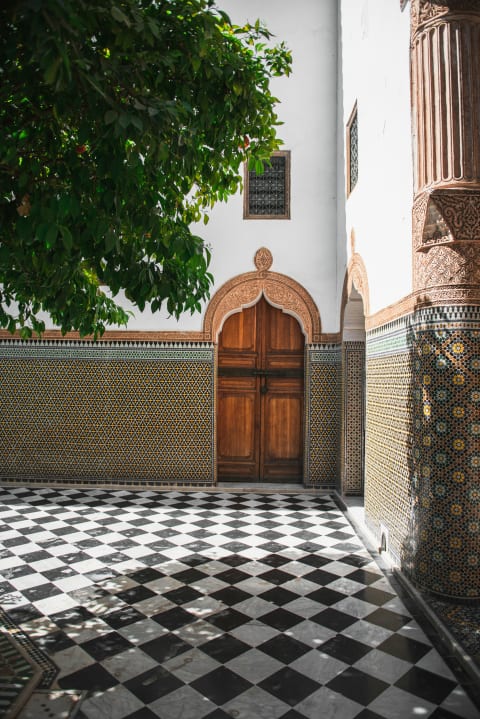
Islam prohibits figures. So they turned to geometry.
Cultural essays, artisan profiles, and deep-cuts from life in Morocco.