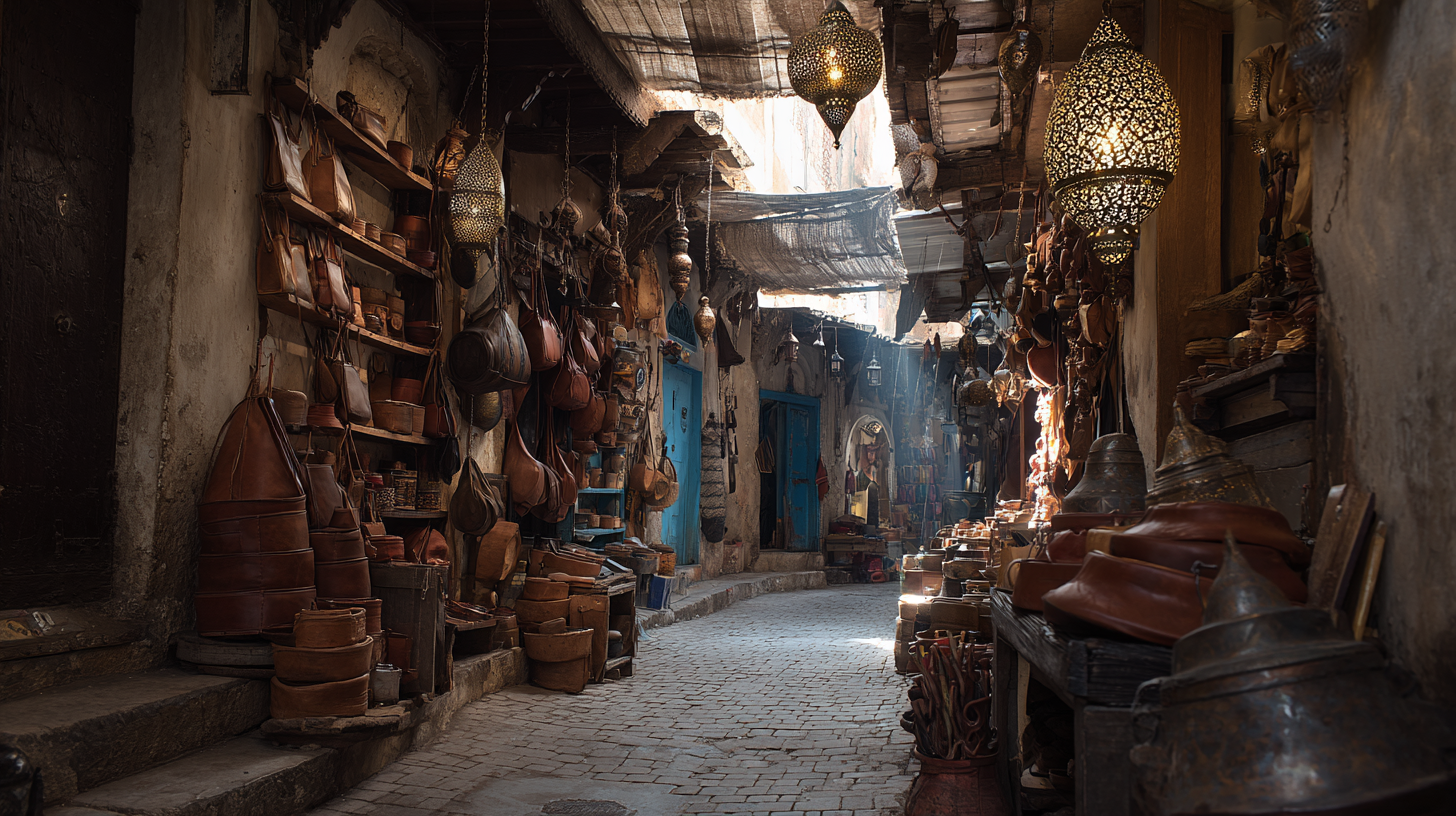
The real risks are not violent. They are annoying. Petty theft in crowded medinas. Taxi drivers who forget the meter exists. Faux guides who materialise at every monument entrance offering to show you the way and then demanding payment. Henna women in Jemaa el-Fna who grab your hand without asking and expect 200 dirhams for work you did not request. These are not dangers. They are friction. And they disappear almost entirely once you leave the main tourist circuits.
The Brigade Touristique — a dedicated tourist police force — operates in every major city. They wear plainclothes or uniforms and they take complaints seriously, because tourism accounts for roughly 7% of GDP and the government knows exactly what that number means.
Solo women travel Morocco successfully every year. The honest reality: verbal harassment happens, particularly in medinas and from younger men. It is rarely threatening but it is persistent, and it is more intense than in Western Europe. Modest clothing reduces it significantly. Confidence reduces it further. Having a plan — knowing where you are going, walking with purpose, wearing sunglasses — changes the dynamic. The harassment is not about you. It is a cultural pattern that Moroccan women also navigate daily.
Roads are statistically more dangerous than crime. Morocco's traffic fatality rate is among the highest in the region. If you are driving, the rules exist but enforcement is selective. If you are being driven, choose a professional driver with a licensed vehicle.
Tap water is not safe to drink. Bottled water costs 5-7 dirhams. Hepatitis A vaccination is recommended. Stomach issues in the first 48 hours are common and temporary — your body is adjusting to new bacteria, not being poisoned.
Avoid: the Algerian border (closed, militarised), the Western Sahara border zone (landmines), and city buses at night (use petit taxis instead). Everything else is open, welcoming, and waiting for you.
The numbers
In 2026, the HelloSafe Global Safety Index ranked Morocco the safest country in Africa — 42nd worldwide, with a score of 73.25 out of 100. The index measures public safety, political stability, health security, cybersecurity, and environmental risk. Iceland, Switzerland, and Norway lead the global ranking. In Africa, Morocco is first. Tunisia is second.
This is not a tourism board statistic. The methodology draws on World Bank, WHO, and International Telecommunication Union data. It measures what matters to a traveller: will I be safe on the street, is the political situation stable, can I get medical help if I need it.
The Facts
- —U.S. State Department: Level 1 (Exercise Normal Precautions)
- —17+ million tourists in 2024
- —Brigade Touristique: dedicated tourist police
- —Tourism = ~7% of GDP
- —Violent crime against tourists: exceptionally rare
- —Traffic accidents: statistically higher risk than crime
- —Tap water: not safe to drink
- —Bottled water: 5-7 MAD
- —Hepatitis A vaccination recommended
Sources
- HelloSafe. Global Safety Index, 2026
- Global Peace Index. Institute for Economics and Peace, annual report
- Ministère de l'Intérieur du Maroc. Crime statistics
- DGST (Direction Générale de la Sûreté Nationale). Annual report