Jebel Saghro was the last place in Morocco to fall to the French. The Aït Atta held the mountain until 1933.
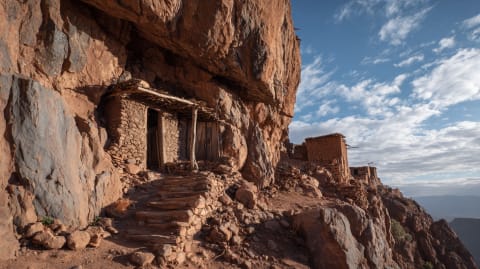
The Anti-Atlas range, which runs parallel to and south of the High Atlas, is lower, drier, and less visited. Jebel Saghro is its most dramatic section — a volcanic plateau of dark rock, pinnacles, and gorges that rises to 2,712 metres between the Draa Valley and the Dadès Valley. The landscape looks Martian: black basalt towers, fields of loose stone, dry riverbeds that flash with water once or twice a year.
The Aït Atta — a powerful Amazigh confederation — controlled the Saghro plateau and the surrounding valleys for centuries. When the French Protectorate began its "pacification" of southern Morocco in the 1930s, the Aït Atta retreated to the Saghro and fought. The Battle of Bou Gafer in 1933 — an engagement between French colonial forces with air support and Aït Atta warriors defending their mountain — was the last major armed resistance to the Protectorate. The French eventually prevailed, but the Aït Atta negotiated terms rather than surrendering.
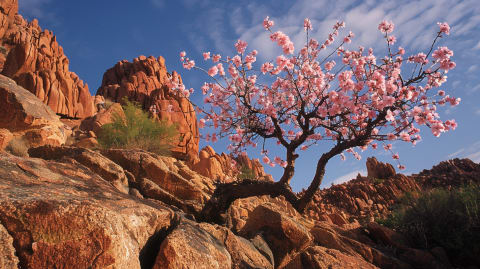
Today, Jebel Saghro is trekking country. The routes cross the plateau between nomadic camps, through volcanic pinnacles, and down into valleys where almond trees grow in the shelter of the rock. The trekking season runs from October to May — in summer the heat is prohibitive. The trails are unmarked and guides are essential.
The Aït Atta nomads still use the plateau for winter grazing, moving between the high pastures of the High Atlas in summer and the lower slopes of the Saghro in winter. You encounter their camps — dark goat-hair tents, small flocks, dogs — in the valleys between the peaks.
The mountain does not advertise itself. It has no visitor centre, no marked trails, no entry fee. It is simply there, as it was when the Aït Atta decided this was the hill they would hold.
The Facts
- —The Aït Atta held the mountain until 1933.
- —Jebel Saghro is its most dramatic section — a volcanic plateau of dark rock, pinnacles, and gorges that rises to 2,712 metres
- —The Battle of Bou Gafer in 1933 — an engagement between French colonial forces with air support and Aït Atta warriors defending
Sources
- Pennell, C.R. A Country with a Government and a Flag: The Rif War in Morocco. Ithaca Press, 1986
- Woolman, David. Rebels in the Rif: Abd el Krim and the Rif Rebellion. Stanford University Press, 1968
- Balfour, Sebastian. Deadly Embrace: Morocco and the Road to the Spanish Civil War. Oxford University Press, 2002
Practical questions