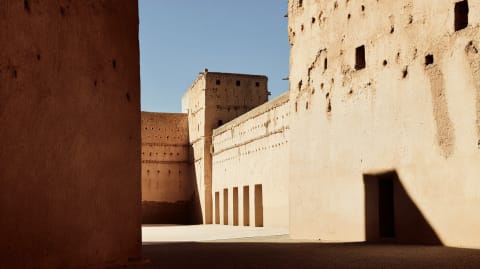
The Treaty of Fes was signed on March 30, 1912. Sultan Moulay Hafid ceded sovereign authority to France under military pressure. Spain received the northern zone and the far south. Tangier became an international zone. The rest — the largest and richest territory — went to France. The word "protectorate" was diplomatic fiction. The reality was occupation by another name.
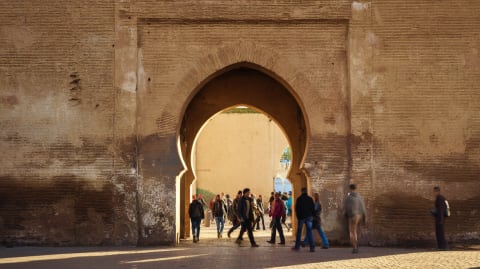
Maréchal Lyautey, the first Resident-General, made a decision that shaped Morocco permanently: he would not demolish the old cities. Instead, he built new European quarters — villes nouvelles — adjacent to but separate from the medinas. Rabat, Casablanca, Fes, Marrakech, Meknes — each got a modern grid city alongside its ancient core. The medinas were preserved. The separation was also social engineering: colonial and indigenous populations in parallel worlds, close enough to serve each other and far enough to never be equal. It was a sophisticated arrangement, and like most sophisticated arrangements built on inequality, it worked until it didn't.
The Berber Dahir of 1930 was the catalyst for nationalism. The decree attempted to place Amazigh populations under customary law rather than Islamic courts — dividing Amazigh and Arab Moroccans along ethnic and legal lines. The backlash was immediate and united. The Latif prayer — a collective supplication against the decree — became the first mass act of Moroccan nationalist protest. The French had intended to divide. They succeeded in unifying.
The independence movement gathered force through the 1940s and 50s. The Istiqlal Party demanded full sovereignty. France exiled Sultan Mohammed V to Madagascar in 1953 — a miscalculation that transformed him from a monarch into a martyr. The public response was overwhelming. The French, having also just lost Indochina and facing the beginning of the Algerian war, calculated the cost and brought the sultan back.
Independence came on March 2, 1956. Forty-four years of protectorate. The French left behind roads, railways, a legal code, a language embedded in every institution, and cities that still carry the imprint of a colonialism that called itself protection. Morocco kept what was useful. It has not yet finished deciding what that includes.
The Ville Nouvelle of every Moroccan city is Lyautey's blueprint. We walk both sides — medina and new town — because the gap between them is the story.
Tell us about your trip →Data and visualisation by Dancing with Lions
The Facts
- —French Protectorate: 1912-1956
- —Treaty of Fez: March 30, 1912
- —Lyautey: first Resident-General, preserved medinas
- —Ville nouvelle: French new cities built alongside medinas
- —Spanish zone: northern Morocco + Western Sahara
- —Istiqlal Party: independence movement
- —Mohammed V exiled 1953, returned 1955
- —Independence: March 2, 1956
Sources
- Rivet, Daniel. Le Maroc de Lyautey à Mohammed V. Denoël, 1999
- Abu-Lughod, Janet. Rabat: Urban Apartheid in Morocco. Princeton University Press, 1980
- Wright, Gwendolyn. The Politics of Design in French Colonial Urbanism. University of Chicago Press, 1991
Further Reading
Practical questions