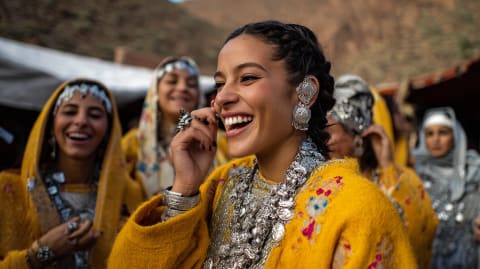
A Moroccan wedding is not a party with a price tag — it is a financial negotiation conducted across two families, sometimes across two years. The amounts involved would surprise most outsiders. So would who actually controls them.
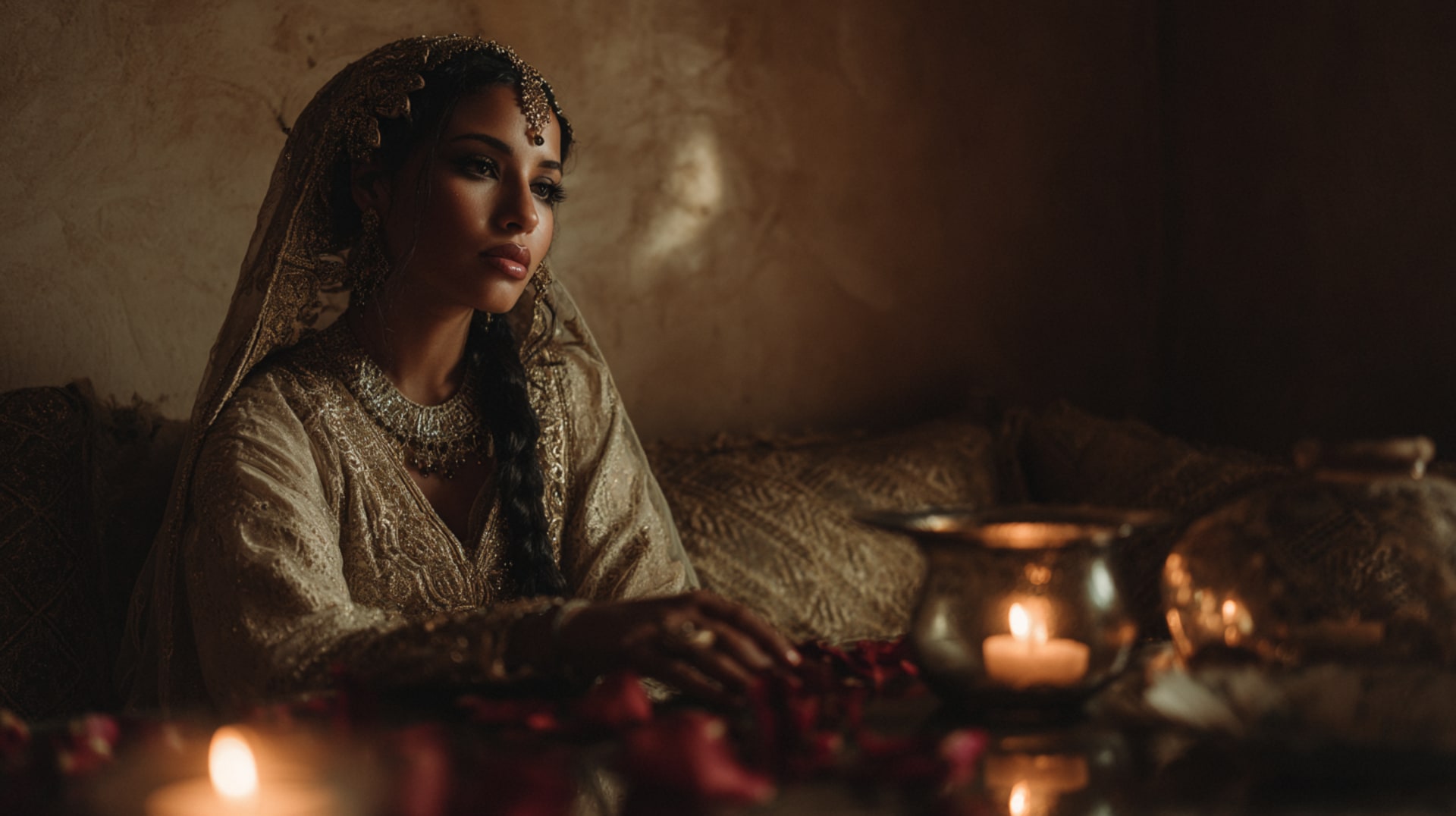
The negafa is the wedding stylist — a professional who manages the bride's appearance across multiple outfit changes (typically five to seven) throughout the celebration. The negafa provides the outfits (caftans, takchitas), the jewellery, the makeup, the amariya (the ornate throne-like sedan in which the bride is carried), and the choreography of the procession. A top negafa in Casablanca or Marrakech charges 30,000 to 100,000 dirhams or more.
The walima — the wedding feast — feeds hundreds. Three hundred guests is modest. Five hundred is common. A thousand is not unusual for wealthy families. The menu is standardised in its luxury: pastilla, mechoui (whole roasted lamb), tagine, couscous, fruit, pastries, and mint tea. The catering cost alone can exceed 100,000 dirhams.
Music is non-negotiable. A live orchestra — typically chaabi or Andalusi, depending on the family's taste and region — performs for hours. Top musicians command fees of 50,000 dirhams or more per evening. The music determines the energy of the celebration. Families compete on the quality of their musicians.
The total cost of a Moroccan wedding — including sadaq, venue, negafa, food, music, photography, and gifts — routinely exceeds 200,000 dirhams ($20,000) for middle-class families and can reach millions for the wealthy. In a country where the median monthly wage is approximately 3,500 dirhams, the wedding economy creates enormous financial pressure. Families save for years. Some take loans. The social expectation of a lavish wedding is one of the factors delaying marriage age in Morocco.
Marriage in Morocco is economics, alliance, and ceremony woven together. The Imilchil festival makes it visible.
Tell us about your trip →Data and visualisation by Dancing with Lions
The Facts
- —Sadaq (dowry): paid by groom's family
- —Mahr: Islamic marriage gift, woman's legal right
- —Wedding cost: often exceeds annual household income
- —Gold jewelry: primary store of value for bride
- —Negafa services: $500-$5,000+
- —Regional variation: Amazigh vs Arab traditions
- —Marriage age: legal minimum 18 (exceptions granted by judges)
- —Average marriage age rising in urban areas
Sources
- Combs-Schilling, M. Elaine. Sacred Performances: Islam, Sexuality, and Sacrifice. Columbia University Press, 1989
- Eickelman, Dale F. Moroccan Islam. University of Texas Press, 1976
- Hammoudi, Abdellah. The Victim and Its Masks. University of Chicago Press, 1993
Further Reading
Practical questions