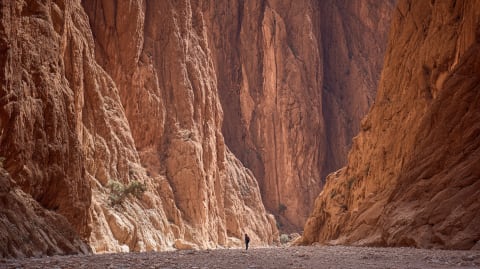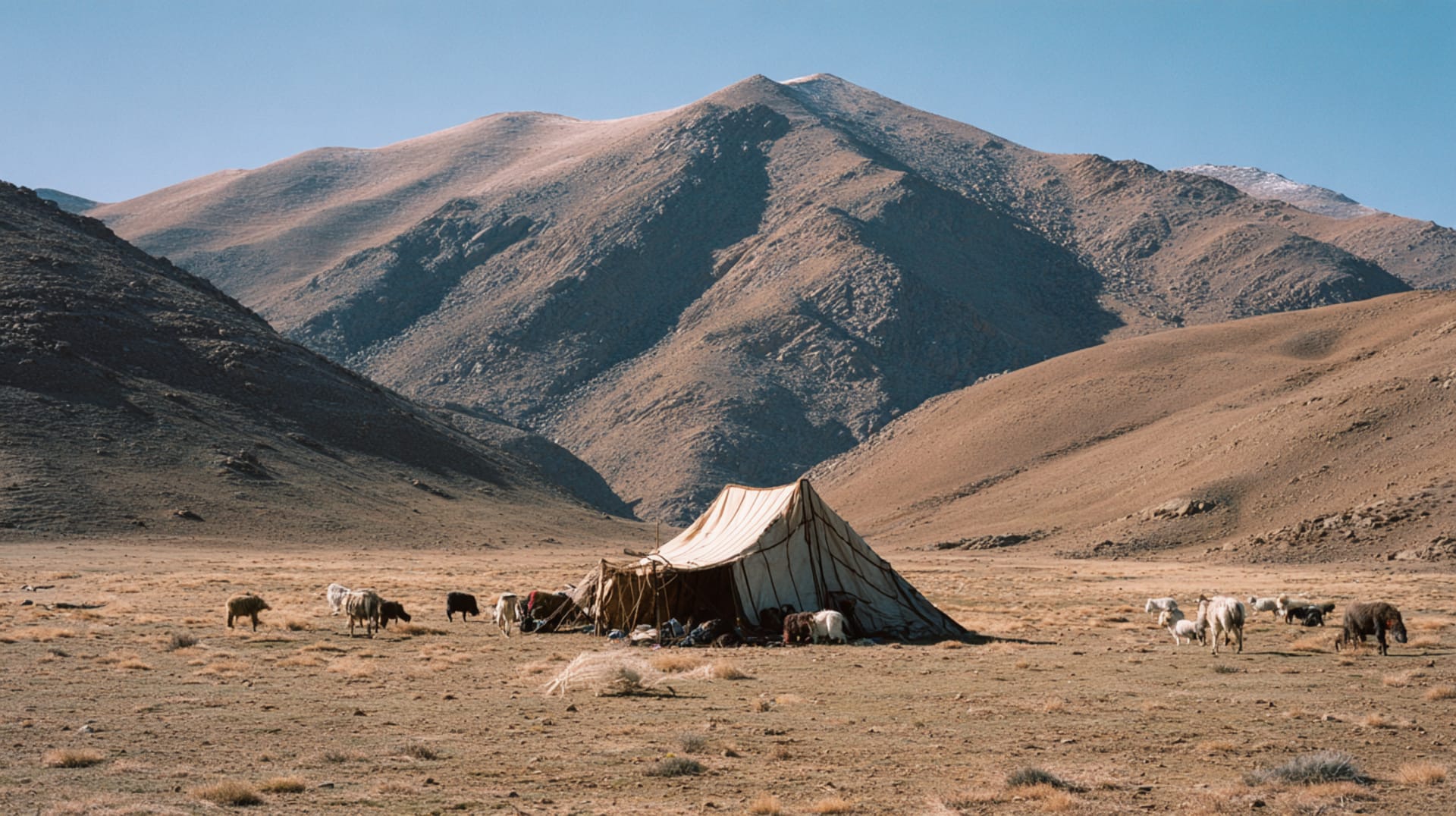
The Ait Atta move their flocks from the Draa Valley floor to the High Atlas pastures above 2,500 metres every June. They return in September. The route has been walked for centuries — the same families, the same passes, the same campsites. The mountains don't change. The calendar doesn't change. The only thing that changes is whether the next generation will make the walk, and this is the question nobody asks out loud.
The agdal system governs the highland pastures: collective ownership, enforced rest periods, staggered access. Each tribe has designated grazing areas. The timing is managed by community agreement — nobody enters the pasture before the date set by the jmaa, the assembly. The grass must reach a certain height. The season must be right. It is commons management so sophisticated that modern ecologists study it and modern governments struggle to replicate it. The system has functioned for centuries without a single page of legislation.
The eastern steppes — the Hauts Plateaux between the Atlas and the Algerian border — support a different pastoralism. Here the movement is horizontal, not vertical. Families follow the rain and the grass across semi-arid plains with sheep and goats. The tents are different — low, dark, woven from goat hair. The distances are greater. The economy is more precarious. One bad season can break a family that five good ones had barely built. The margin between viability and disaster is measured in rainfall, and rainfall is the one variable that cooperates with nobody.
The Saharan nomads — historically Tuareg and Sahrawi — have been largely sedentarised. Government settlement programmes, drought, and the Western Sahara conflict concentrated populations in towns. But camel herding continues in the Draa-Tafilalet and the southern territories. The moussem of Tan-Tan — UNESCO-listed intangible heritage — celebrates nomadic culture with camel races, poetry, and music that sounds like the desert taught someone to sing.
The pressures are structural. Overgrazing has degraded pastures. Drought, intensified by climate change, has reduced the carrying capacity of rangelands. Young people leave for cities, where the pay is regular and the work does not require walking a hundred kilometres with goats. The knowledge of routes, water sources, medicinal plants, and animal husbandry is not being transmitted — not because it isn't valued, but because the economy it sustained has shrunk faster than the knowledge can find new employment. A shepherd who knows every spring in the Atlas cannot monetise that knowledge in Casablanca.
The movement continues, diminished but not finished. And every June, the Ait Atta walk uphill.
The nomad pulse still beats in the Sahara — seasonal migrations, camel markets, star navigation. This journey follows it.
Tell us about your trip →Data and visualisation by Dancing with Lions
The Facts
- —Nomadic pastoralism: declining but surviving
- —Seasonal migration follows grazing and water
- —Camel: primary transport and wealth
- —Star navigation: traditional wayfinding
- —Imilchil, Guelmim, Tan-Tan: nomad gathering points
- —Tent (khaima): woven from goat/camel hair
- —Moussem of Tan-Tan: UNESCO Intangible Heritage
- —Drought and modernization reducing nomadic population
Sources
- Chatty, Dawn. Nomadic Societies in the Middle East and North Africa. Brill, 2006
- Bonte, Pierre et al. Émirs et présidents: figures de la parenté et du politique dans le monde arabe. CNRS, 2001
- Haut-Commissariat au Plan. Census data on nomadic populations
Further Reading
Practical questions