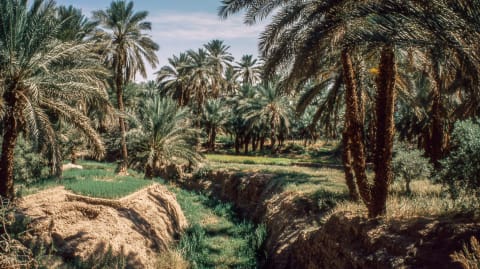
The Picholine marocaine is the dominant cultivar — it accounts for over 95% of Morocco's olive trees. It is dual-purpose: good for oil and good for table olives. The tree is hardy, drought-resistant, and productive. It has sustained Moroccan agriculture for centuries.
Meknes-Fes is the heartland. The rich agricultural plain between the two imperial cities — the Saïs — produces the highest volume of olives in the country. The Zerhoun massif near Moulay Idriss Zerhoun is particularly famous for its oil. The region benefits from reliable rainfall and deep, fertile soil.
The harvest runs from November to January. Families beat the branches with long sticks — the frapp method — or shake them mechanically in modern operations. The olives fall onto tarps spread beneath the trees. Children and grandparents participate. Schools in rural areas adjust their schedules around the harvest. It is one of the last genuinely communal agricultural activities in Morocco.
Traditional pressing used stone mills — the maasra. Olives were crushed under a rotating stone, the paste was spread on esparto grass mats, and the mats were stacked and pressed. The oil ran into settling basins. Many cooperatives still use this method, though hydraulic and centrifugal presses are replacing it. Cold-press cooperatives have emerged in the Meknes, Beni Mellal, and Chefchaouen regions, producing premium oil for export.
Morocco produces between 100,000 and 200,000 tonnes of olive oil annually, depending on rainfall — making it the world's fifth or sixth largest producer, depending on the year. Most of it is consumed domestically. Moroccan cooking uses olive oil liberally — in tagines, salads, bread dipping, and preserved lemon preparation. The per capita consumption exceeds many European countries.
The oil varies by region. Meknes oil is mild and fruity. Chefchaouen produces a greener, more peppery oil. The south — Tata, Akka — produces small quantities of intensely flavoured oil from ancient trees that grow in near-desert conditions.
The olive oil of the Meknes region has been flowing since the Romans planted the groves. The wine trail passes through the same orchards.
Tell us about your trip →Data and visualisation by Dancing with Lions
The Facts
- —Morocco: ~1 million hectares of olive groves
- —Meknes-Fes region: largest producing area
- —Roman-era groves still productive
- —~120,000 tonnes olive oil annually
- —Traditional stone press (maasra) being replaced
- —Cooperatives modernizing production
- —Export growing but most consumed domestically
Sources
- Vossen, Paul. "Olive Oil: History, Production, and Characteristics." HortScience, 2007
- FAO. Morocco olive oil production data
- Moroccan Ministry of Agriculture. Olive sector report