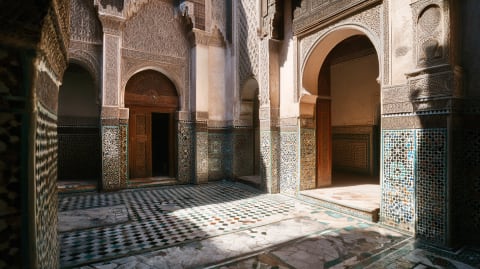
Dawn. The fajr prayer call breaks the silence. The first sounds are water — fountains running, shopkeepers wetting the ground outside their stalls. The ferran fires up. Women bring dough on wooden boards balanced on their heads, and the bread smell fills the narrow streets before any shop has opened its shutters. The medina wakes the way it has always woken: feet first.
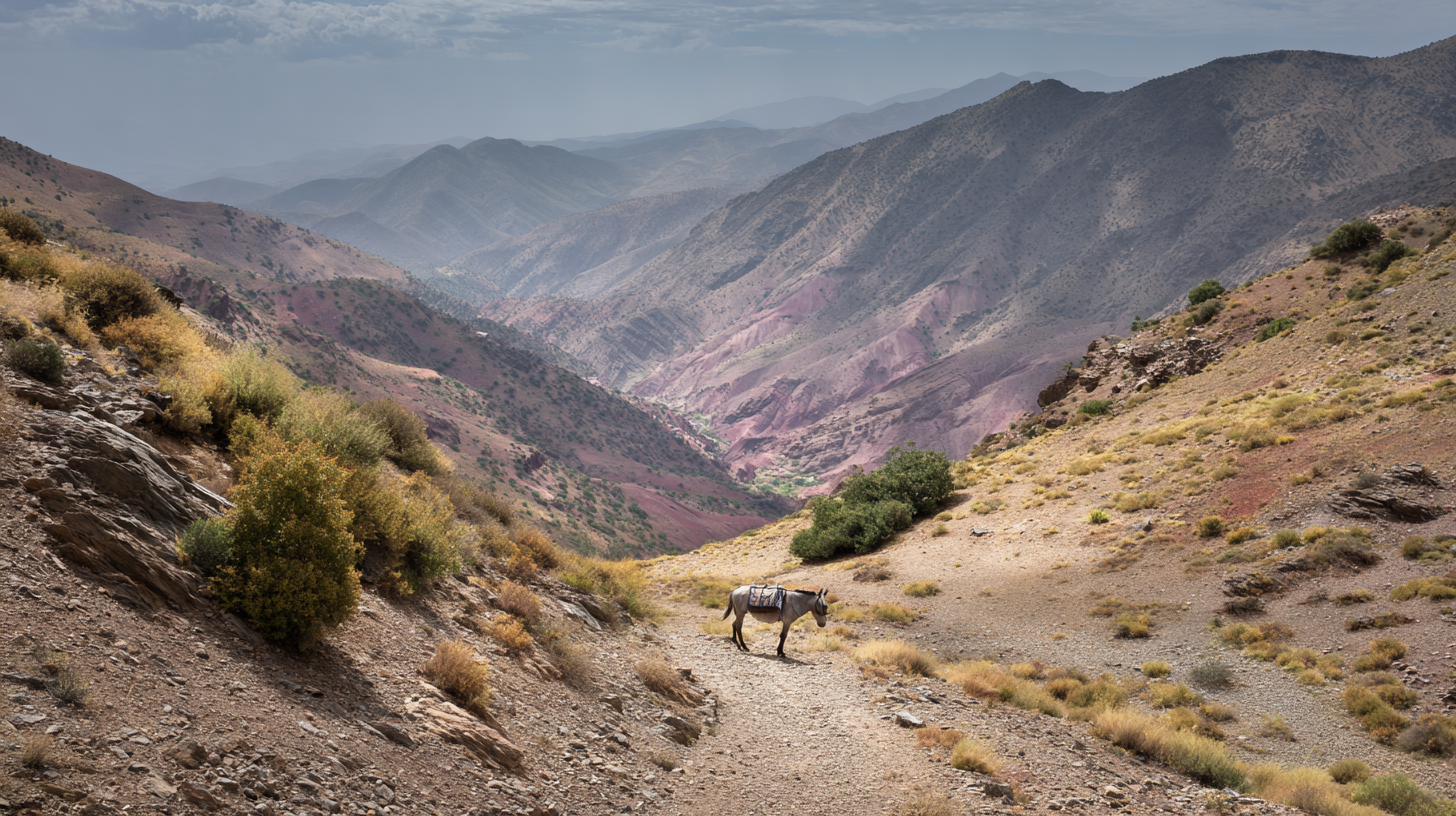
Seven a.m. The mule traffic begins. Deliveries happen early, before the passages fill with pedestrians — Coca-Cola crates, gas canisters, sacks of flour, construction materials — everything that enters or leaves the medina moves on animal or human back. The motorised alternatives are limited to a few main arteries and one very determined motorcycle that everyone pretends isn't there.
Nine a.m. The souks open. Metal shutters roll up in a wave from the centre outward, a sound like a city clearing its throat. Tea is prepared. The first customers are local — women buying vegetables, men collecting tools. Tourist traffic begins later, around ten, identifiable by pace: locals walk with purpose, visitors walk with their phones held up like divining rods.
Noon. The dhuhr prayer empties the souks briefly. Commerce pauses. The heat peaks. In summer, the medina enters its slowest hours between noon and three. Shops may close. Artisans rest. The shade of the narrow streets becomes the infrastructure that makes the whole thing survivable.
Four p.m. The second wave. The afternoon trade is the busiest — locals shopping after work, tourists reaching the deep souks, artisans finishing commissions. The food stalls begin preparing for evening. The smell shifts from leather and metal to grilling meat and spices, and the medina's second personality appears: the daytime city was a workshop. The evening city is a kitchen.
Sunset. The maghrib prayer. Another pause — deeper than the midday one, because sunset in a Moroccan city carries weight. Then the night market opens. Jemaa el-Fna transforms. The food stalls, the musicians, the storytellers emerge. The square that was a car park at noon becomes a theatre by nine.
Midnight. The souks are closed. The derbs are quiet. A cat owns the passageway. Somewhere, a television murmurs. The medina is not asleep — it is resting, storing energy, preparing to do exactly the same thing tomorrow with the same precision it managed yesterday and the day before that and the century before that.
The medina has a pulse — morning quiet, midday heat, evening crescendo. Three days is enough to feel the rhythm.
Tell us about your trip →Data and visualisation by Dancing with Lions
The Facts
- —Morning: bread ovens fire, deliveries by mule
- —Midday: shops close for heat/prayer
- —Afternoon: souk peak activity
- —Sunset: maghrib call, brief pause
- —Evening: Jemaa el-Fna transforms
- —Night: restaurants, cafés, rooftop terraces
- —Friday: couscous lunch, reduced afternoon trade
Sources
- Geertz, Clifford. "Suq: The Bazaar Economy in Sefrou." In Meaning and Order in Moroccan Society. Cambridge University Press, 1979
- Troin, Jean-François. Les souks marocains. Edisud, 1975
- Eickelman, Dale F. Moroccan Islam. University of Texas Press, 1976
Further Reading
Practical questions