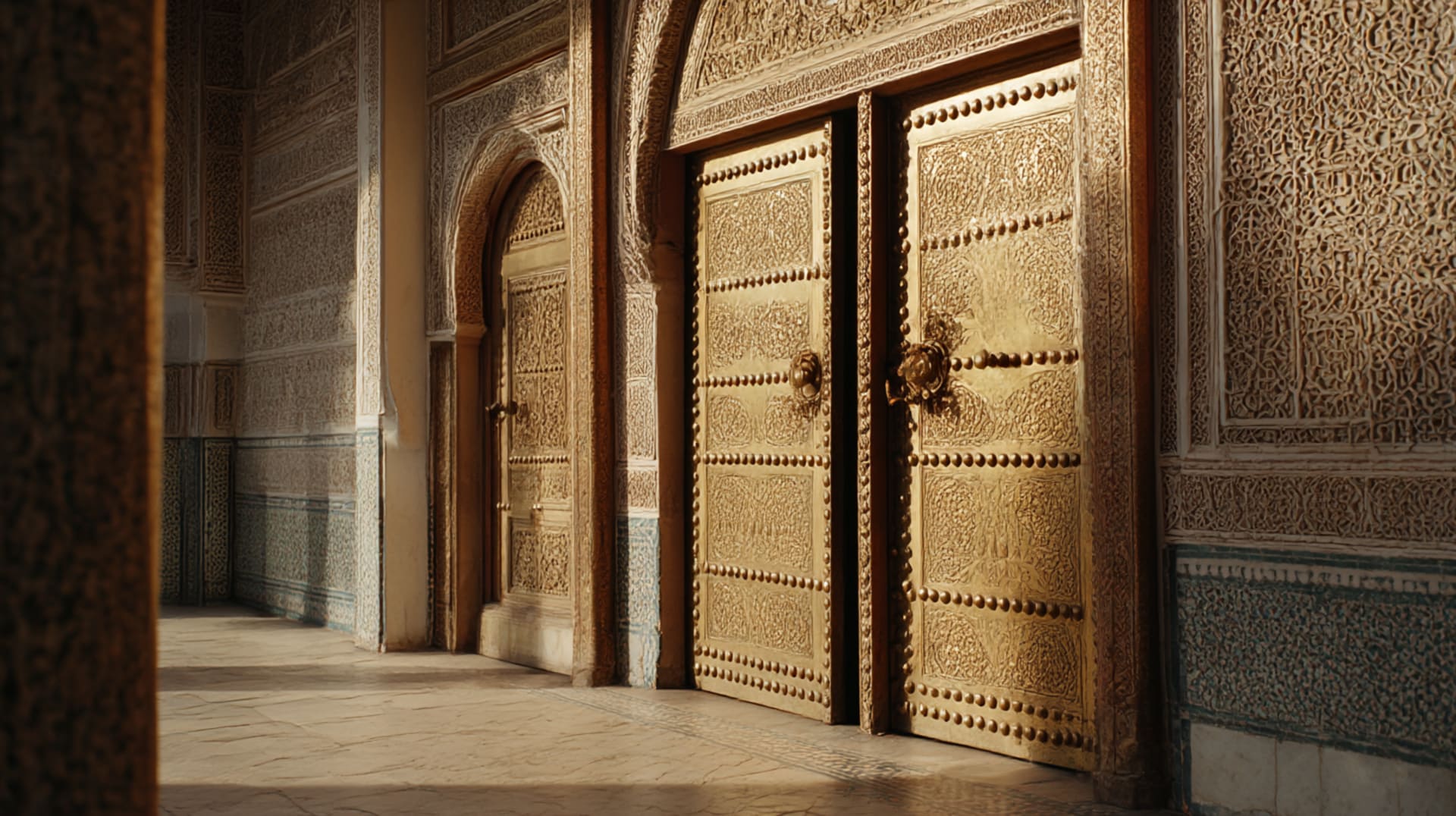
The doors are always closed.
The Dar el Makhzen in Fes — the Royal Palace — covers 80 hectares in the heart of the old city. Behind those famous golden doors lie gardens, mosques, a madrasa, kitchens that once fed thousands, and the administrative heart of a 1,200-year-old monarchy. You cannot enter. No tourist can. The palace is still a working royal residence.
But the stories seep out.
This was where the Moroccan state happened. Every morning, for centuries, the sultan would hold audience in the mechouar — the great courtyard. Petitioners lined up: tribal leaders seeking favor, merchants disputing contracts, families begging clemency for condemned relatives. The sultan listened, consulted his viziers, and pronounced judgment. The system ran on personal authority — no parliament, no constitution, just a man on a throne who had to keep a continent-sized country together through persuasion, patronage, and presence.
The makhzen — literally "the storehouse" — became the word for the entire apparatus of royal power. Not just the sultan, but the network of viziers, caids, pashas, moqaddems, and sheikhs who administered the country from the palace outward. A hierarchy so elaborate that European diplomats compared it to Versailles — with the difference that Versailles was theater, while the makhzen was a functioning machine.
The Alaouite dynasty, which has ruled Morocco since 1631, perfected the system. Power radiated from the palace in concentric circles: the bled al-makhzen (the governed land) and the bled al-siba (the autonomous land, mostly Berber mountains and desert). The genius was not in controlling everything — no sultan ever did — but in making the system appear inevitable.
Moulay Ismail (1672–1727) took it furthest. He created a standing army of 150,000 soldiers — the Abid al-Bukhari — personally loyal to the throne. He built Meknes into a capital to rival any in Europe: 25 kilometers of walls, 20 gates, stables for 12,000 horses, granaries that could feed the city for a decade. He sent ambassadors to Louis XIV and proposed a marriage alliance with the French court. His building program employed tens of thousands. The scale was extraordinary — a single man reshaping the landscape of an entire country.
The throne room was kept at 16°C. Cool enough to preserve the silk furnishings. The precision tells you something about the administration: even temperature was managed.
When the French established the protectorate in 1912, they kept the makhzen intact. The sultan remained on the throne. The caids kept their positions. The French governed through the existing structure rather than replacing it — an acknowledgment that the 300-year-old system worked.
In 1953, the French exiled Sultan Mohammed V to Madagascar, expecting the move to weaken the monarchy. The opposite happened. The absent king became the symbol around which the entire independence movement united. When he returned in 1955, Mohammed V was more powerful than any sultan had been in a century. The monarchy had survived colonialism not despite the exile, but because of it.
Today, the palace in Fes still functions. The golden doors still close at sunset. The 1,200-year machine still runs.
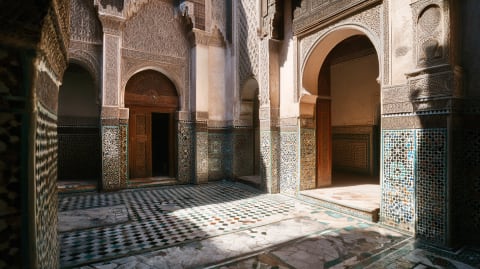
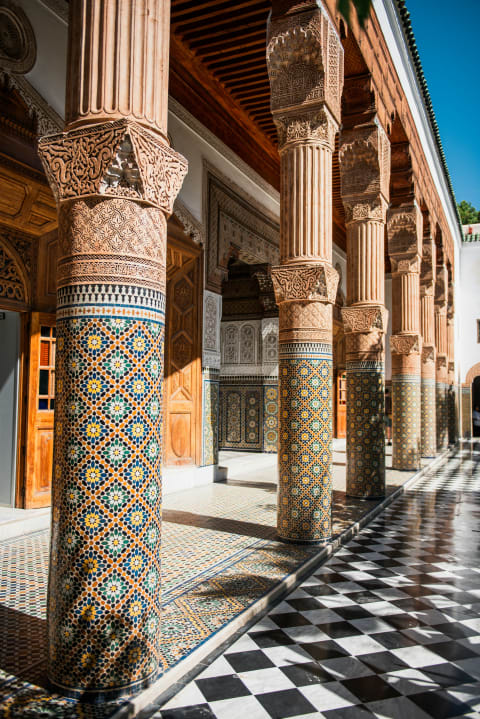
The mechouar courtyard where sultans held audience for 1,200 years. Walk the imperial cities where the makhzen machine still hums.
Tell us about your trip →The Facts
- —Dar el Makhzen covers 80 hectares
- —Makhzen = "storehouse" — became word for entire royal apparatus
- —Alaouite dynasty ruling since 1631
- —Moulay Ismail built 25km of walls and stables for 12,000 horses in Meknes
- —Throne room kept at 16°C
- —Mohammed V exiled to Madagascar 1953, returned 1955 stronger than before
- —French kept makhzen system intact during protectorate
- —Palace in Fes still a working royal residence
Sources
- Deverdun, Gaston. Marrakech: des origines à 1912. 1959
- Parker, Richard. A Practical Guide to Islamic Monuments in Morocco. Baraka Press, 1981
- Terrasse, Henri. Histoire du Maroc. Atlantides, 1949
Further Reading
Practical questions