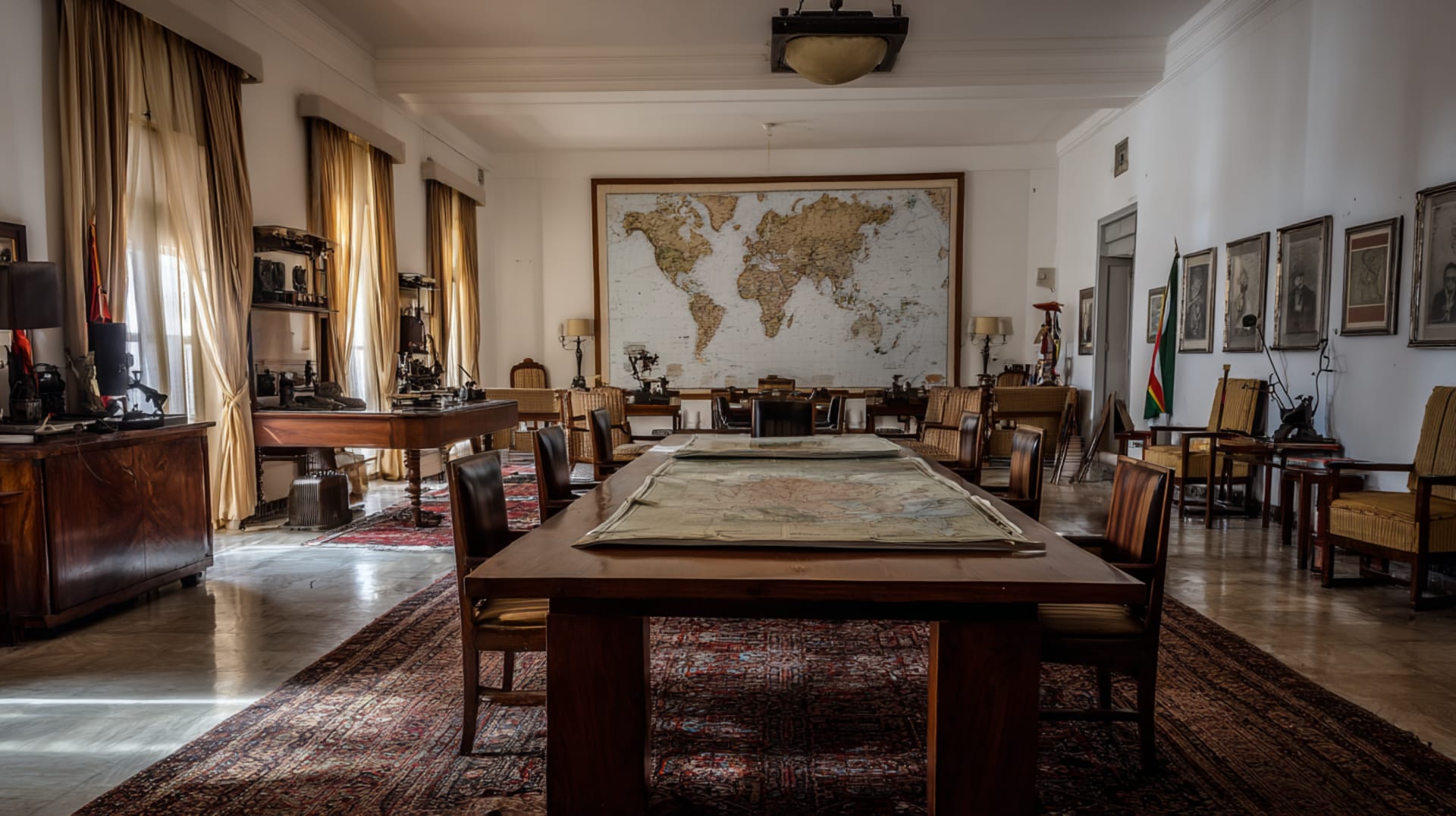
They chose Casablanca because it was the last place anyone would look. Also because the oranges were good, and Churchill cared about such things.
January 1943. The war was at a tipping point. The Allies had just taken North Africa — Operation Torch had secured Morocco, Algeria, and Tunisia. The Soviets were grinding through Stalingrad. For the first time, it seemed possible that the Axis powers might lose. Churchill wanted to meet. Roosevelt agreed. Stalin was invited but declined — he had a battle to finish, which was true and also diplomatically useful.
They convened at the Anfa Hotel, a luxury resort on the outskirts of Casablanca, surrounded by the largest security operation the war had yet produced. The irony was thick enough to walk on: the leaders of the free world, meeting in a colony. Morocco was under Vichy control until three months earlier. The hotel where they dined had served German officers for lunch.
The meetings lasted ten days. Churchill and Roosevelt argued, strategised, and made decisions that would cost millions of lives. They agreed to invade Sicily. They agreed to bomb Germany around the clock. They agreed to prioritise Europe over the Pacific. And they agreed on unconditional surrender — Roosevelt's phrase, announced at a press conference on the final day. The Axis powers would not be allowed to negotiate. They would surrender completely or be destroyed completely. No armistice like 1918. No deals. The phrase shaped the rest of the war and, arguably, the rest of the century.
Sultan Mohammed V attended a dinner during the conference — seated between Roosevelt and Churchill, the colonial subject dining with the men who controlled the colonies. Roosevelt reportedly encouraged Mohammed V to seek independence after the war. Churchill, who held rather different views on the future of empires, was not pleased. The conversation planted a seed. Twelve years later, Morocco was independent.
The Anfa Hotel is gone. Casablanca has built over the site. But the table where the war turned — where two men in wicker chairs decided the shape of the modern world while Moroccan waiters served the meals — that table existed, and what was decided at it is still in force.
The table where Roosevelt and Churchill planned the invasion of Europe is in a hotel in Casablanca. You can see it on day one.
Tell us about your trip →The Facts
- —The Casablanca Conference ran January 14-24, 1943
- —Stalin declined to attend due to the Battle of Stalingrad
- —It was code-named 'Symbol'
- —This was the first time an American president traveled by plane while in office
- —Roosevelt and Churchill announced 'unconditional surrender' doctrine on January 24
- —The Anfa Hotel was demolished in the 1970s
Sources
- Atkinson, Rick. An Army at Dawn: The War in North Africa. Henry Holt, 2002
- Eisenhower, Dwight D. Crusade in Europe. Doubleday, 1948
- Pennell, C.R. Morocco Since 1830. NYU Press, 2000