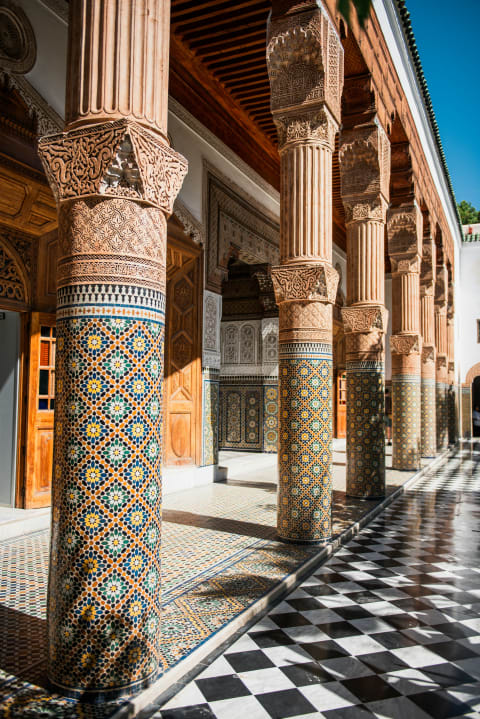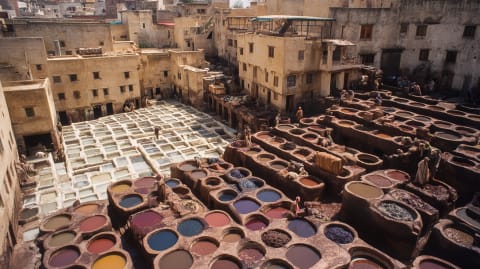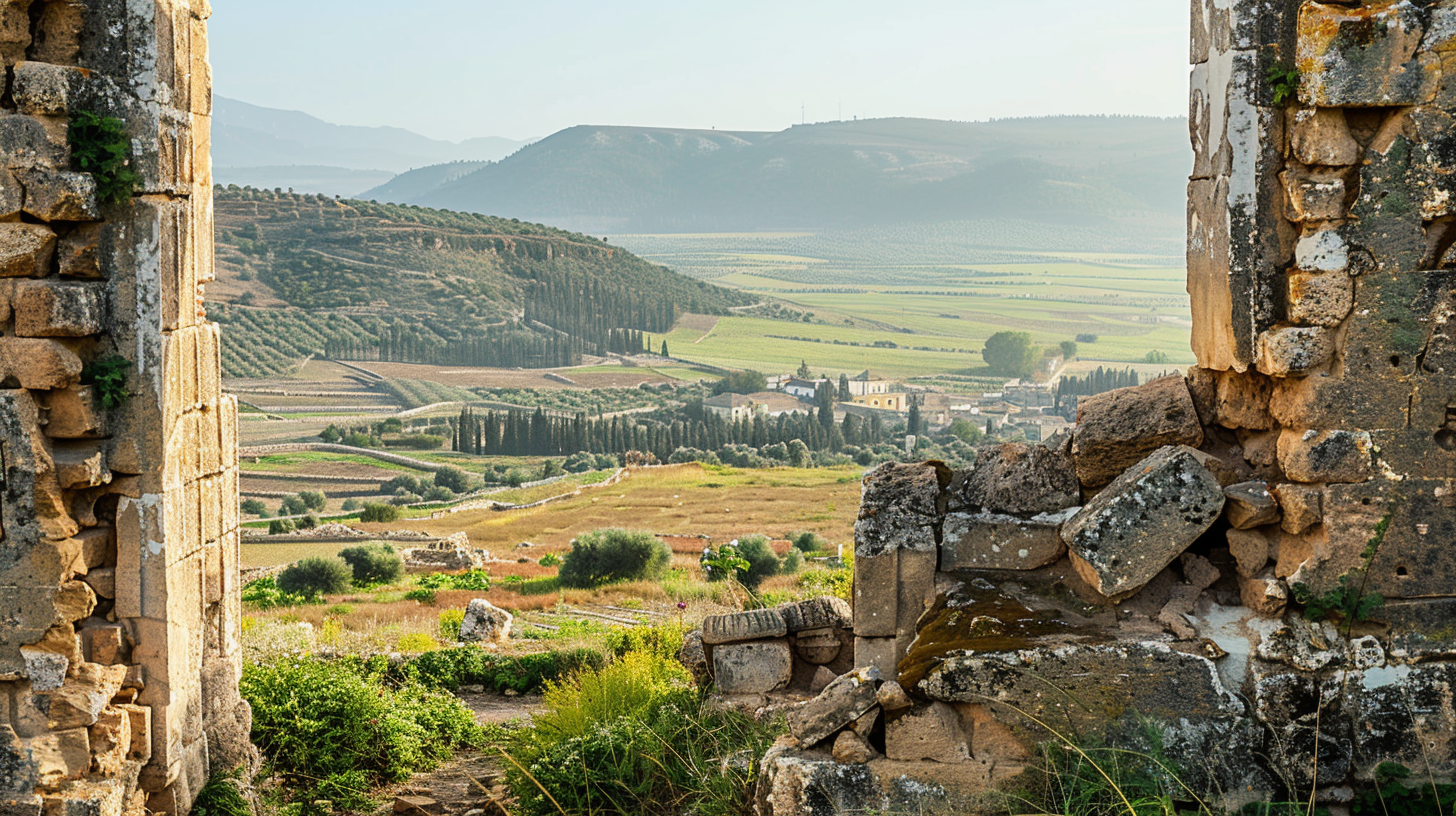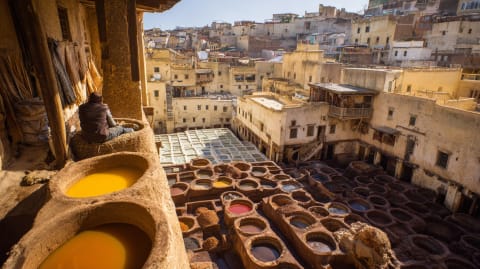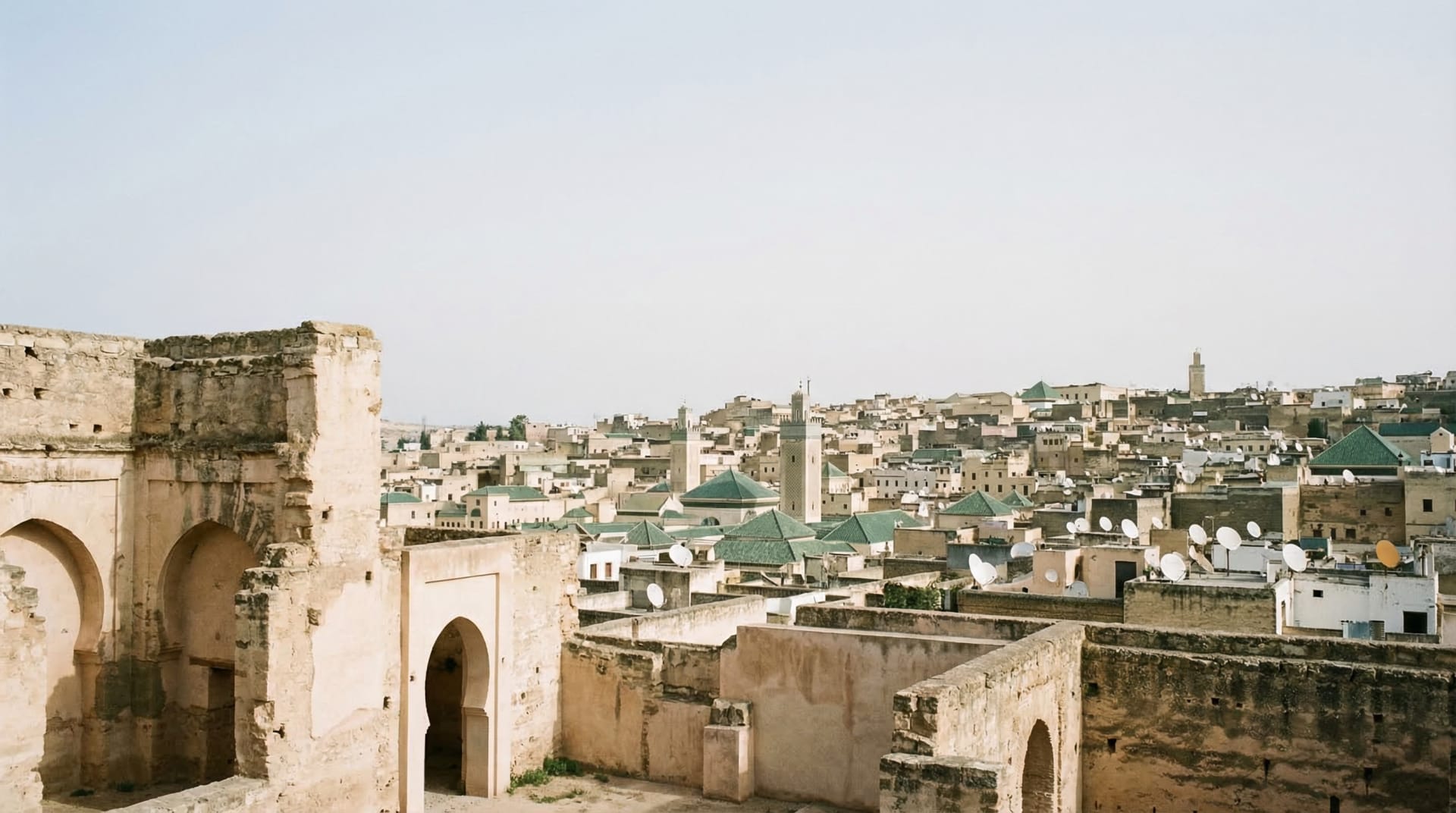
The tombs are ruined. The view is not.
The Merenid Tombs sit on the hill above Fes el-Bali, on the northern ridge overlooking the medina. They were built in the 14th century for the sultans of the Marinid dynasty — the rulers who constructed the Bou Inania Madrasa, the Al-Attarine Madrasa, and much of what visitors now think of as essential Fes.
Today the tombs are little more than broken walls and fragments of carved decoration. What remains of the zellige and stucco has been weathered beyond legibility. The site is unfenced, unguarded, and officially closed for safety reasons, though visitors come anyway.
They come for the view.
From the Marinid ridge you see the entire medina spread below — the green-tiled roofs of the mosques, the minarets, the smoke from the hammams, the white satellite dishes that dot the rooftops like barnacles. At dawn the city is silent and gold. At sunset it turns amber and the call to prayer rises from dozens of minarets in staggered sequence — not synchronized, because each muezzin begins when he judges the moment right.
The Marinids chose this hill for their tombs because they wanted to look down on the city they had built. Seven centuries later, the tombs are gone but the city remains, and the view is the same one the dead sultans were meant to see forever.
The Facts
- —They were built in the 14th century for the sultans of the Marinid dynasty — the rulers who constructed the Bou Inania Madrasa,
Sources
- Le Tourneau, Roger. Fès avant le protectorat. IHEM, 1949
- Marçais, Georges. L'architecture musulmane d'occident. 1954
- Parker, Richard. A Practical Guide to Islamic Monuments in Morocco. Baraka Press, 1981
Practical questions