The date is January 13. The year count begins in 950 BCE — the approximate date when the Amazigh king Sheshonq I ascended to the throne of Egypt, founding the 22nd Dynasty. Yennayer 2976 corresponds to Gregorian 2026. The calendar is agricultural in origin, tracking the solar year for planting and harvest. It is the oldest calendar system in active use in North Africa, and until very recently, it was not on the official calendar of any country that celebrates it. The oldest traditions are always the last to be recognised. This appears to be a universal law.
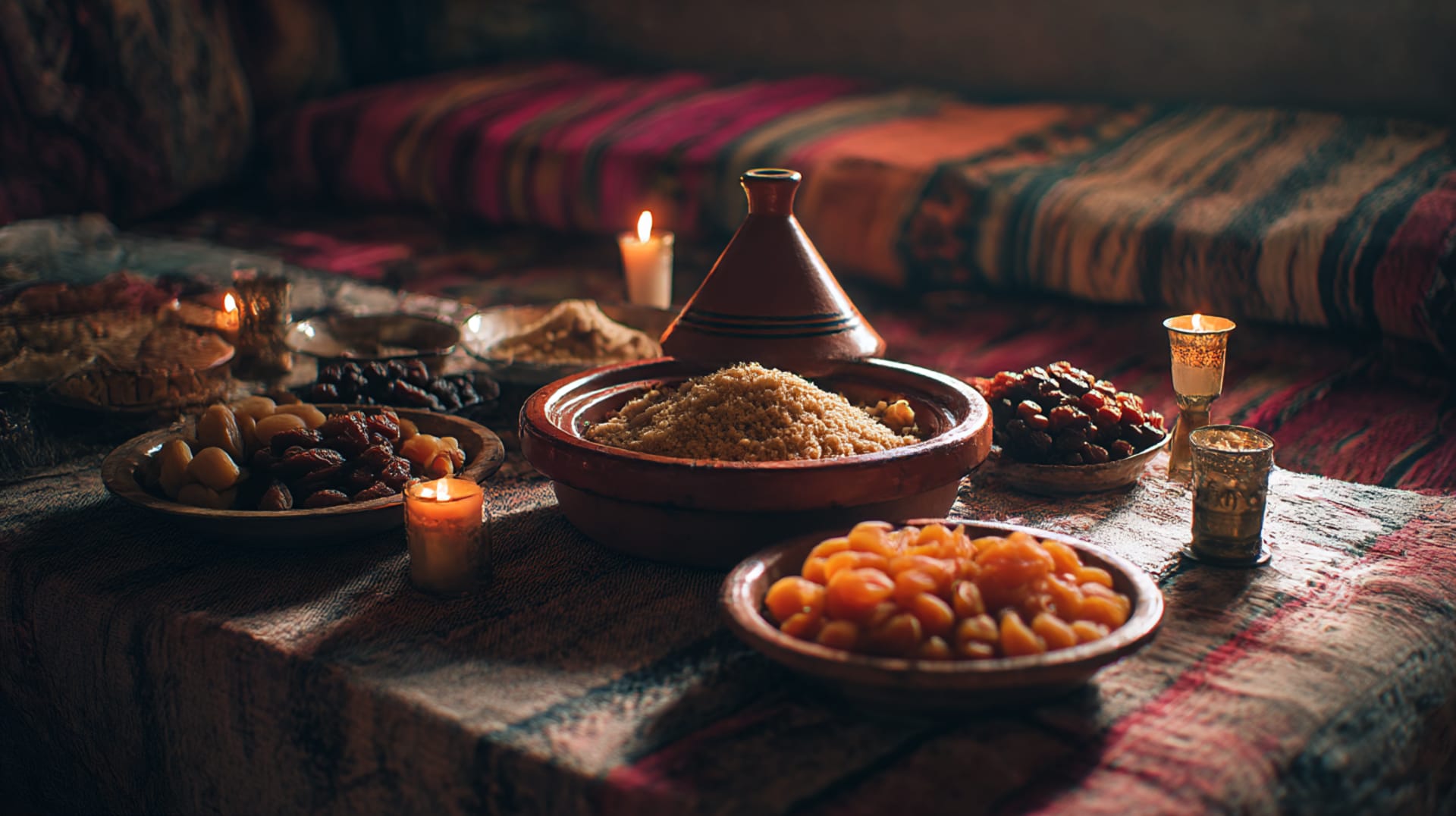
The celebration centres on food, because all celebrations that matter centre on food. The ritual meal varies by region but always emphasises abundance: in the Souss, tagine with seven vegetables. In the Rif, couscous with seven vegetables. In the Atlas, a rooster is slaughtered and a special dish prepared. The shared element is the number seven and the principle that the table must be full — an abundant Yennayer meal promises an abundant year. You eat your future into existence. It is a theology of dinner, and it works as well as any other.
The renewal rituals are domestic. Houses are cleaned. Old kitchen utensils may be replaced. In some regions, the hearth is relit with new fire. Children receive new clothes or small gifts. The symbolism is consistent: the old year is swept away. The new year begins clean. If this sounds like other new year traditions from other parts of the world, it should. The impulse to begin again is human, not cultural. Only the date varies.
Official recognition was a long struggle. Amazigh cultural activists campaigned for decades to have Yennayer recognised as a national holiday. Algeria declared it in 2018. Morocco followed in January 2024 — a decision that carried more weight than the calendar date it honoured, acknowledging that Amazigh identity is not a subculture or a minority tradition but a founding element of the country itself.
The day itself is quiet. Families gather. The food is prepared. Someone tells the story of Sheshonq, the Berber who became pharaoh, whose accession nearly three thousand years ago still sets the date of a celebration in a kitchen in the Atlas. The candles are lit. The couscous steams. The year turns. It has been turning for 2,976 years, and it shows no signs of stopping.
The Amazigh New Year falls on January 14. The celebrations stretch from the Rif to the Anti-Atlas. The craft trail crosses the same ground.
Tell us about your trip →Data and visualisation by Dancing with Lions
The Facts
- —Yennayer: Amazigh/Berber New Year
- —January 14 (solar calendar)
- —National holiday in Morocco since 2018
- —Traditional meal: couscous with seven vegetables
- —Celebrates agricultural renewal
- —Year count starts from 950 BCE (Amazigh king Sheshonq)
- —2026 = Amazigh year 2976
- —IRCAM promotes cultural preservation
Sources
- Chaker, Salem. Manuel de linguistique berbère. Bouchène, 1991
- Camps, Gabriel. Les Berbères: mémoire et identité. Actes Sud, 2007
- Hoffman, Katherine & Miller, Susan. Berbers and Others. Indiana University Press, 2010
Further Reading
Practical questions