The dough is the thing. A ball of soft paste, slapped against the surface of an upturned copper pot balanced over charcoal. One motion. Lift. A translucent circle remains on the metal, thin enough to read a newspaper through. Thirty seconds, and the warqa sheet is peeled off and stacked on the pile. A single pastilla requires forty of them.
Warqa means "leaf" or "paper" in Arabic, and the women who make it in Fes have been doing it this way for centuries. The technique came from Andalusia with the refugees who arrived after 817 — families expelled from Córdoba who brought their recipes, their music, and their conviction that cooking was architecture.
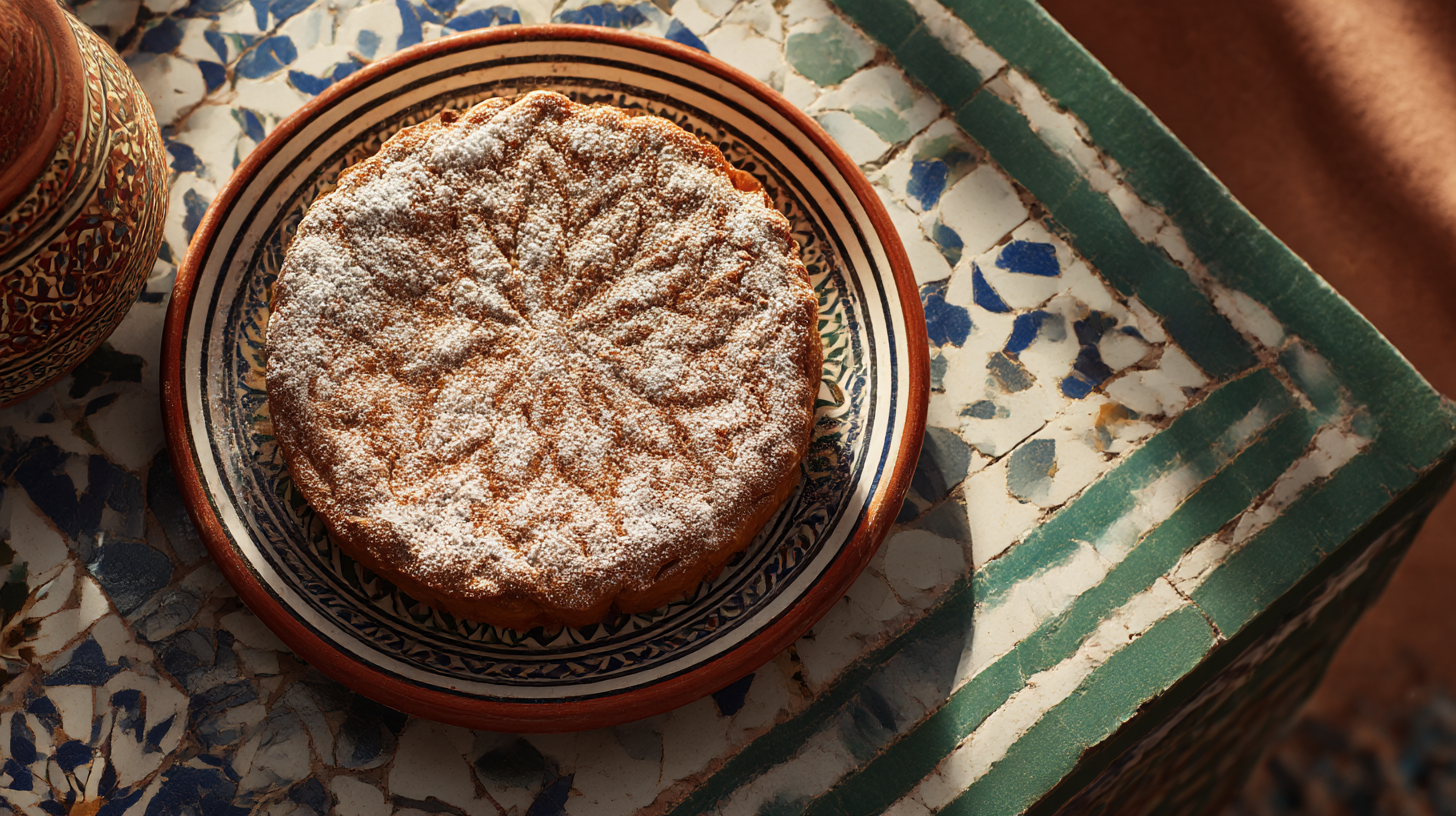
Pastilla is the masterpiece. In Fes, the proper version uses pigeon — not chicken, which is the concession made everywhere else. The birds are braised with saffron and onions, then shredded. Eggs are scrambled into the spiced cooking liquid. Almonds are toasted, ground, and sweetened. The layers go into the warqa shell: pigeon, egg, almond, another sheet, more pigeon. The top is sealed, baked until golden, and dusted with powdered sugar and cinnamon in a crosshatch pattern.
Sweet and savoury on the same plate, in the same bite. This offends some visitors and converts the rest. The Fassis consider it obvious — flavour has no obligation to stay in a single lane.
The roots are thirteenth-century Arab-Andalusian. The fanadiq — the ancient inns where travelling merchants from every corner of the Islamic world stayed and ate — were the original fusion kitchens. Berber staples met Arab spicing, Andalusian pastry technique, sub-Saharan ingredients arriving via caravan. The result was a cuisine that borrowed from everywhere and claimed to have invented everything.
Fes is not wrong. The Fassi tagine is different from what you eat in Marrakech. The base is slow-caramelised onions — hours of them, cooked down to a dark, sweet jam — with saffron, ginger, and preserved lemon. Less tomato than the south. More patience. The classic is chicken with preserved lemons and olives, but the lamb with prunes and almonds is the one the Fassi families save for guests they want to impress.
M'hanncha — "the snake" — is a coiled pastry of ground almonds, orange blossom water, and cinnamon, wrapped in warqa or filo, baked, and soaked in honey. It sits on the table at every celebration. Chebakia is the Ramadan version: deep-fried dough, coated in honey and rosewater syrup, sprinkled with sesame seeds. Every family has a batch ready before the first fast begins.
Then there is the preservation economy. Smen is butter that has been salted, spiced, and aged — sometimes for years — without refrigeration, until it tastes like a pungent Parmesan. A tablespoon stirred into couscous or harira transforms the dish. Khlii is the Fassi equivalent of jerky: beef or lamb, salted, spiced, sun-dried for a month, then stored in rendered fat. Both were born from necessity — no refrigeration, hot climate — and survived because they taste better than their fresh equivalents.
The communal bakery — the farran or furan — is the institution that holds the neighbourhood together. Some have been operating for four hundred years. Families bring their dough each morning, marked with a stamp or a pattern so the furnatchi, the baker, can tell them apart. He knows each family's preferences: this one wants a darker crust, that one likes extra flour on the bottom. The bread comes out round, dense, and slightly chewy, designed to be torn by hand and used as a scoop for everything else on the table.
A Fassi table set for guests is not casual. Multiple salads arrive first — zaalouk, taktouka, grated carrots with orange blossom water. Then the pastilla. Then the tagine. Then couscous. Then fruit. Then pastries. Then tea. The sequence matters. The presentation matters. The embroidered tablecloth matters. Fassi families have been eating like this since the Marinid sultans set the standard in the fourteenth century.
Marrakech will tell you its food is better. The Fassis do not argue. They just set the table and wait.
Pastilla in Fes is the real thing — pigeon, warqa, almonds, cinnamon. Eight days on the culinary route and you eat it where it was invented.
Tell us about your trip →The Facts
- —Pastilla: flaky warqa dough, pigeon or chicken, almonds, eggs, cinnamon, powdered sugar
- —Warqa: paper-thin dough made by dabbing paste on upturned hot copper pot
- —Andalusian origin — brought by refugees from Córdoba after 817-818
- —M'hanncha ("the snake"): coiled almond pastry
- —Fassi tagine: slow-caramelised onion base, saffron, ginger, preserved lemon
- —Tanjia Fassi: slow-cooked lamb in sealed clay pot (distinct from Marrakech tanjia)
- —Communal bakeries (farran/furan): some operating 400+ years
- —Families mark dough with stamps; furnatchi knows each family
- —Smen: aged unrefrigerated butter, tastes like Parmesan, kept for years
- —Khlii: preserved dried meat, month-long salting process
- —13th-century Arab-Andalusian cuisine roots
Sources
- Le Tourneau, Roger. Fès avant le protectorat. IHEM, 1949
- Wolfert, Paula. The Food of Morocco. Ecco/HarperCollins, 2011
- Hal, Fatéma. Les saveurs et les gestes. Stock, 1996
Further Reading
Practical questions