Until 2005, non-Muslims could not spend the night in Moulay Idriss. Some say the restriction was religious. Others say nobody had built a hotel.
Moulay Idriss Zerhoun is the holiest town in Morocco, built on the hillside where Moulay Idriss I — the great-grandson of the Prophet Muhammad, the founder of the first Moroccan dynasty — is buried. He arrived in Morocco in 788, fleeing the Abbasids, and within a year had united enough Amazigh tribes to establish a kingdom. He was assassinated in 791, probably by an Abbasid agent, and buried on this hill. The town grew around his tomb.
The annual moussem — the pilgrimage festival — draws thousands of Moroccans every August. It is the most important pilgrimage in the country after the Hajj. For five days, the town fills with families, vendors, musicians, and the sound of prayers carried by loudspeakers across the valley.
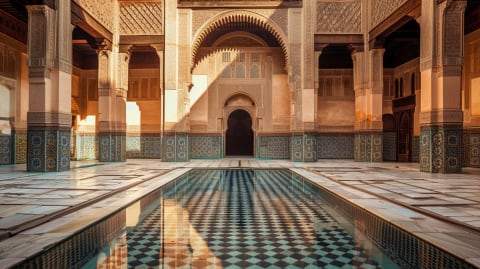
The tomb itself is closed to non-Muslims. You can see the entrance — a green-tiled doorway, a carved wooden screen — but you cannot enter. A wooden bar across the entrance marks the boundary. The boundary is respected.
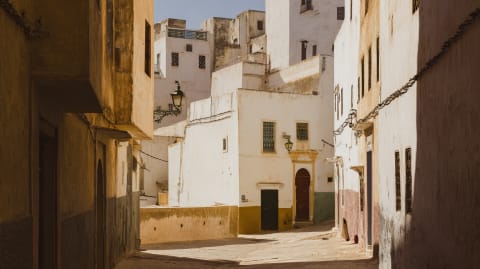
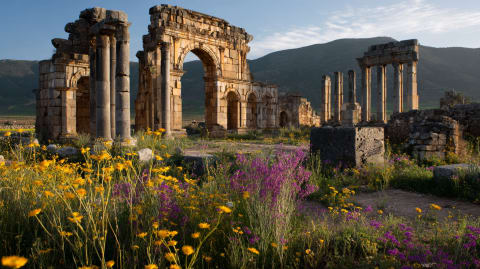
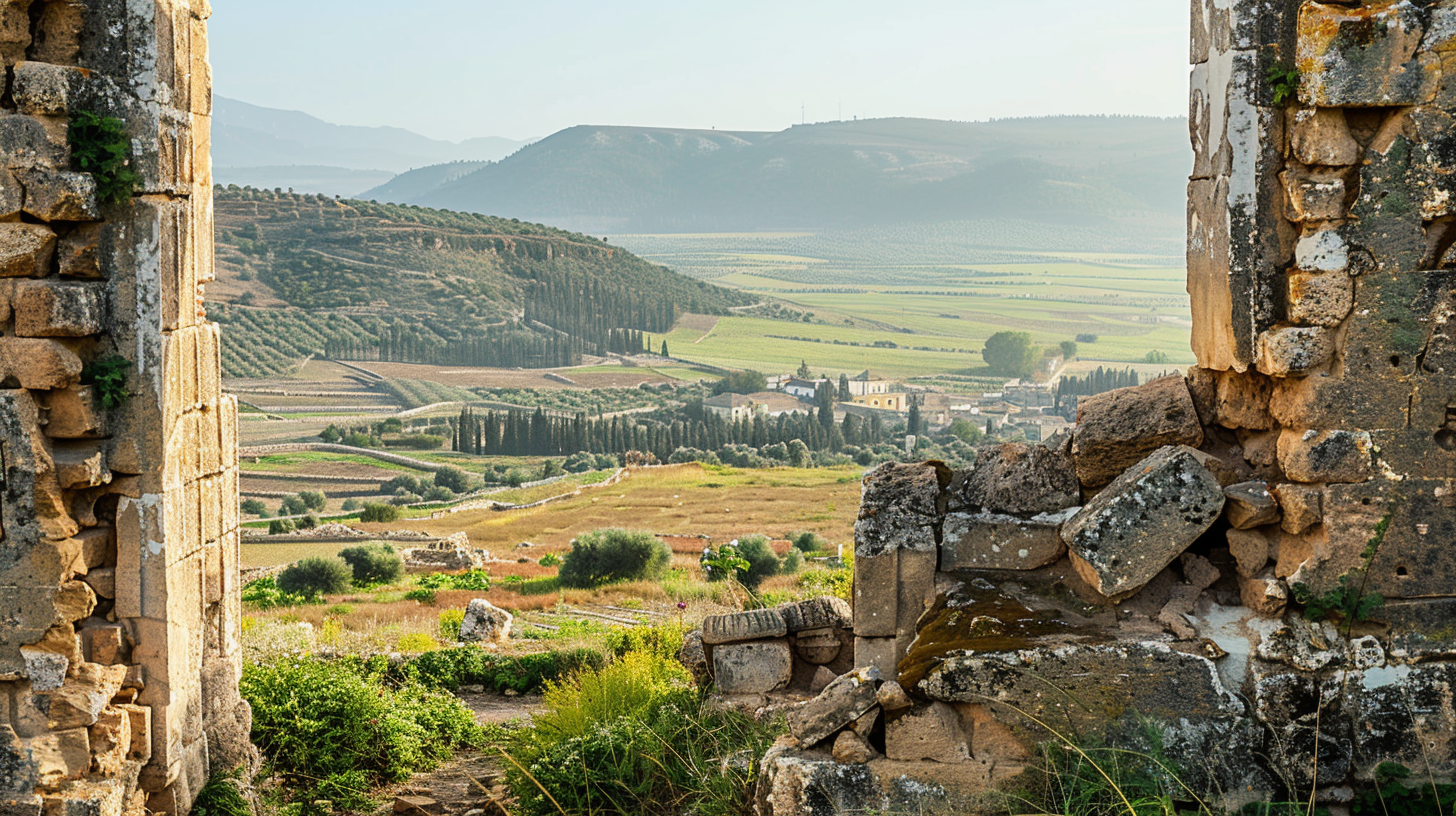
The town is built on two hills, with the tomb in the saddle between them. The houses stack vertically, white with green shutters, connected by steep lanes that are too narrow for cars. From the terrace at the top of the eastern hill, you can see the Roman ruins of Volubilis spread across the plain below — two civilisations visible from a single point, fifteen centuries apart.
Moulay Idriss has changed since tourists were allowed to stay overnight. A handful of guesthouses have opened. A few restaurants serve meals. But the town is not organised around visitors. It is organised around the tomb, as it has been for twelve hundred years. You are welcome to come. The town does not rearrange itself because you did.
The Facts
- —Until 2005, non-Muslims could not spend the night in Moulay Idriss.
- —He arrived in Morocco in 788, fleeing the Abbasids, and within a year had united enough Amazigh tribes to establish a kingdom.
- —He was assassinated in 791, probably by an Abbasid agent, and buried on this hill.
Sources
- Cornell, Vincent J. Realm of the Saint: Power and Authority in Moroccan Sufism. University of Texas Press, 1998
- Eickelman, Dale F. Moroccan Islam. University of Texas Press, 1976
- Abun-Nasr, Jamil. A History of the Maghrib in the Islamic Period. Cambridge University Press, 1987
Practical questions