
Architecture
The Walls That Are Melting
The walls are melting. Rain-carved channels, collapsing corners. A kasbah is built to return to the earth from which it came.
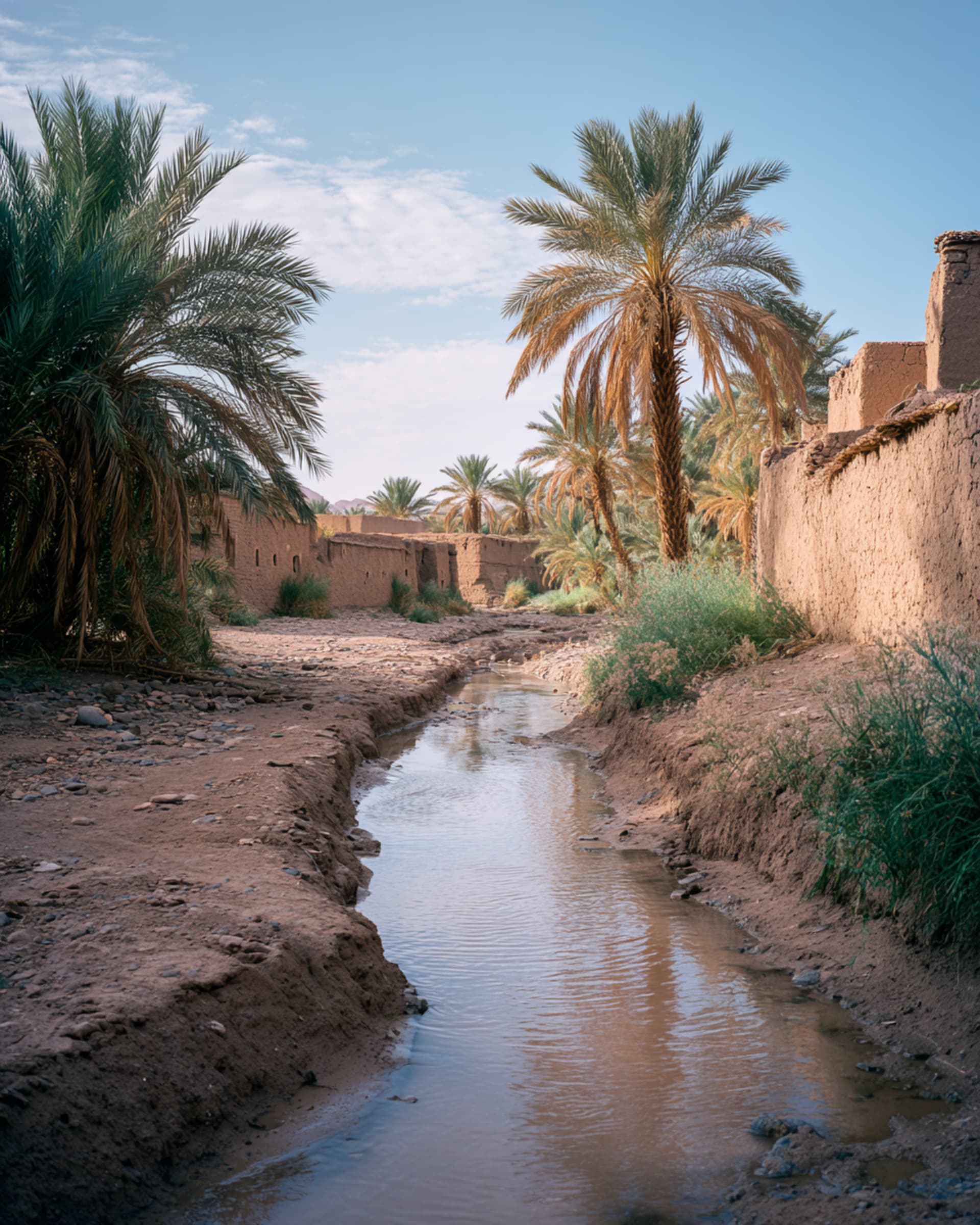
The Draa is the longest river in Morocco — over 1,000 kilometres from its source in the High Atlas to the Atlantic, though in most years the water disappears into the sand long before it reaches the sea. The valley it carved between Agdz and Zagora is one of the great landscapes of southern Morocco: a corridor of date palms, ksour, kasbahs, and oasis villages running through otherwise barren terrain.
The road from Ouarzazate crosses the Tizi n'Tichka pass, descends to Agdz, and follows the river south for 95 kilometres to Zagora. Along the way, the valley opens and narrows, opens and narrows. The villages are built from earth and sit among palm groves irrigated by ancient khettara — underground water channels that predate the Arab arrival.
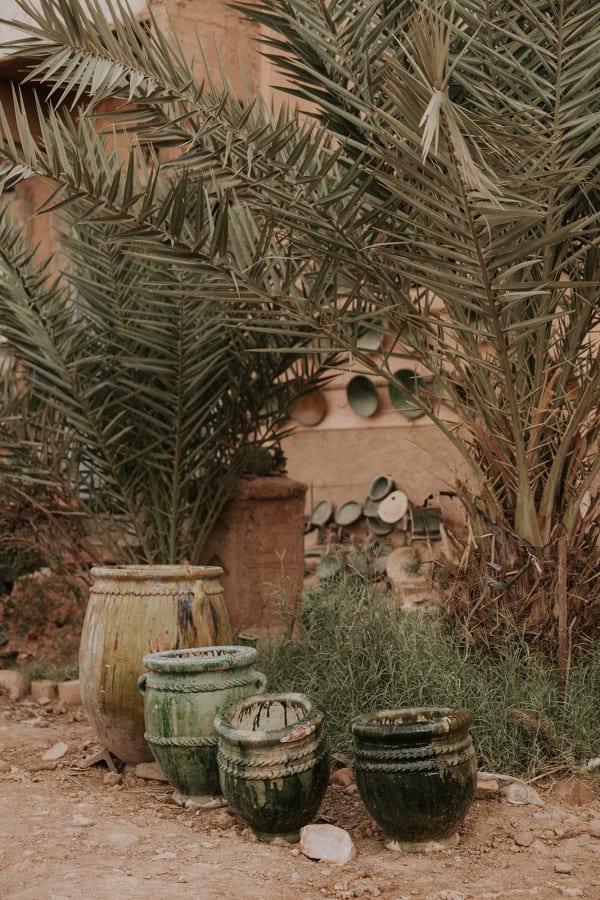
Tamegroute, near the southern end of the valley, houses one of Morocco's most important libraries — thousands of manuscripts, some dating to the 13th century, and a pottery workshop producing the distinctive green-glazed ceramics found across the country.
South of Zagora, the road continues to M'Hamid el Ghizlane — the last town before the Sahara. Beyond M'Hamid, there is only sand, sky, and the Algerian border.
Places
Kasbahs
Built before anyone started counting. The mellah — Jewish quarter — is still visible inside the walls.
Nature
The great palm grove of the Draa Valley stretches for over 200 kilometres from Agdz to Mhamid — the longest oasis in Morocco and one of the longest in the world. Two million date palms, irrigated by a system of khettara channels that has functioned since the 11th century. The dates from the Draa Valley — particularly the Medjool variety grown around Zagora — are among the finest in the world.
Architecture
The N9 road through the Draa Valley passes more kasbahs per kilometre than anywhere else in Morocco — mud-brick fortified residences in varying states of preservation, from inhabited and maintained to spectacularly ruined. Each kasbah belongs to a specific tribe or family. The architectural vocabulary is consistent: crenellated towers, geometric geometric patterning in the pisé, arched gateways facing east.
Stories from Draa Valley
Architecture
The walls are melting. Rain-carved channels, collapsing corners. A kasbah is built to return to the earth from which it came.

Architecture
Step through the doorway. The temperature drops fifteen degrees in three seconds. The kasbah walls are two feet thick, made of rammed earth that has been absorbing and releasing heat for four hundred years.
Design
The green is like nothing else. No two pieces match. The glaze formula has stayed in one family for four hundred years at the end of the salt road.

Systems
Three layers of life, each making the next possible. It looks like nature. It is engineering. A machine disguised as paradise.

History
The riverbed is dry. The palms are green. The wells are full. Morocco's longest river hasn't abandoned its valley. It went underground.
History
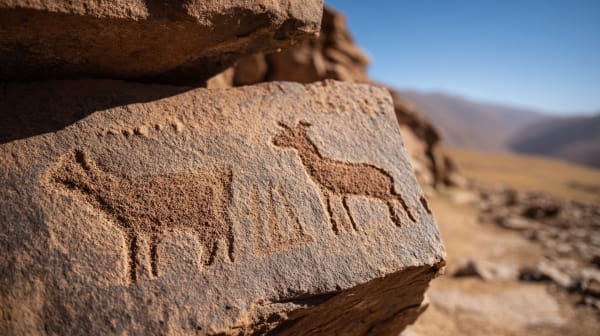
More than 300 rock art sites. Elephants, rhinoceroses, warriors with daggers. The Sahara was not always a desert.
You might also consider
Journeys that pass through Draa Valley
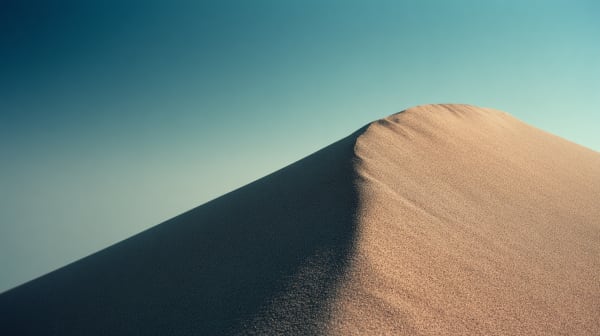
Mountains to sand and back. Stars so dense they press against your chest — and a silence that rewrites what you thought quiet meant.

Descent through ancient rhythms. Return through gorges where the stone remembers everything — and your phone camera remembers nothing accurately.

Deeper into emptiness. Longer roads. Sand that holds a silence your bones will remember when your ears have forgotten.
Plan your visit
Every journey we design includes private guiding, accommodation chosen for character rather than category, and the kind of access that takes years in Morocco to arrange.
Plan Your TripWritten from the medina. Sent when it matters.