
Bab Boujloud (The Blue Gate), Fes
The front door of the oldest living medina on earth. Blue on one side, green on the other.
The most famous gate in Morocco is also the newest. Bab Boujloud was built in 1913 — not by a sultan, not by a dynasty, but by Captain Mellier of the French colonial municipal services, who decided the old city needed a grander entrance.
The original gate stood just to the left of where the current one rises. You can still see it: smaller, angled, positioned with the defensive logic of medieval fortification — a bent entrance designed so that a battering ram could not build momentum in a straight line. It dates to the 12th century, when walls were walls and gates were military infrastructure. It is now sealed shut.
Mellier's replacement abandoned all pretense of defense. Three horseshoe arches — one large central arch flanked by two smaller ones — frame a straight passage into the heart of Fes el-Bali. The exterior, facing the modern city, is covered in cobalt blue zellige, the colour that has defined Fes since its potters first achieved that particular shade in the 14th century. The interior, facing the medina, is green — the colour of Islam, of paradise, of the faith that built the city the gate protects.
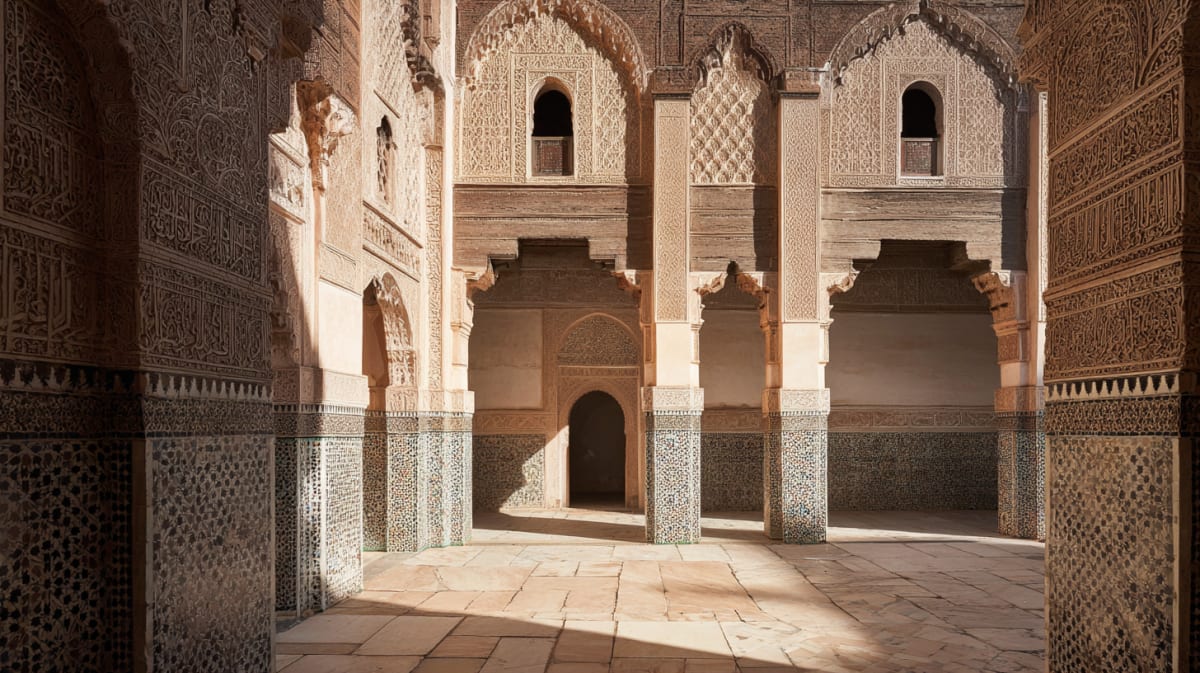
Stand outside at the right angle and you can see two minarets through the central arch. The one on the left belongs to the Sidi Lazzaz mosque, a crumbling 20th-century building usually crowned with a stork's nest. The smaller one on the right is the Bou Inania Madrasa, built in the 1350s — six centuries older than the gate framing it. This accidental composition of colonial architecture framing medieval skyline is the most photographed view in Fes.
The name Bou Jeloud predates the current gate by centuries. One theory traces it to Abu al-Junud — "Father of the Troops" — referencing military garrisons once stationed nearby. The area around the gate was not always a grand entrance; it contained stables and shops, some of which funded charitable endowments. Mellier had to negotiate the purchase and demolition of these properties before construction could begin in December 1912. The gate went up fast — completed in 1913.
There is an unsettling detail that Frommer's notes: a massive bolt on the outside of the French-built gate. During the protectorate, the medina was locked from the outside at night. The gate that was built to welcome visitors was also built to contain a population.
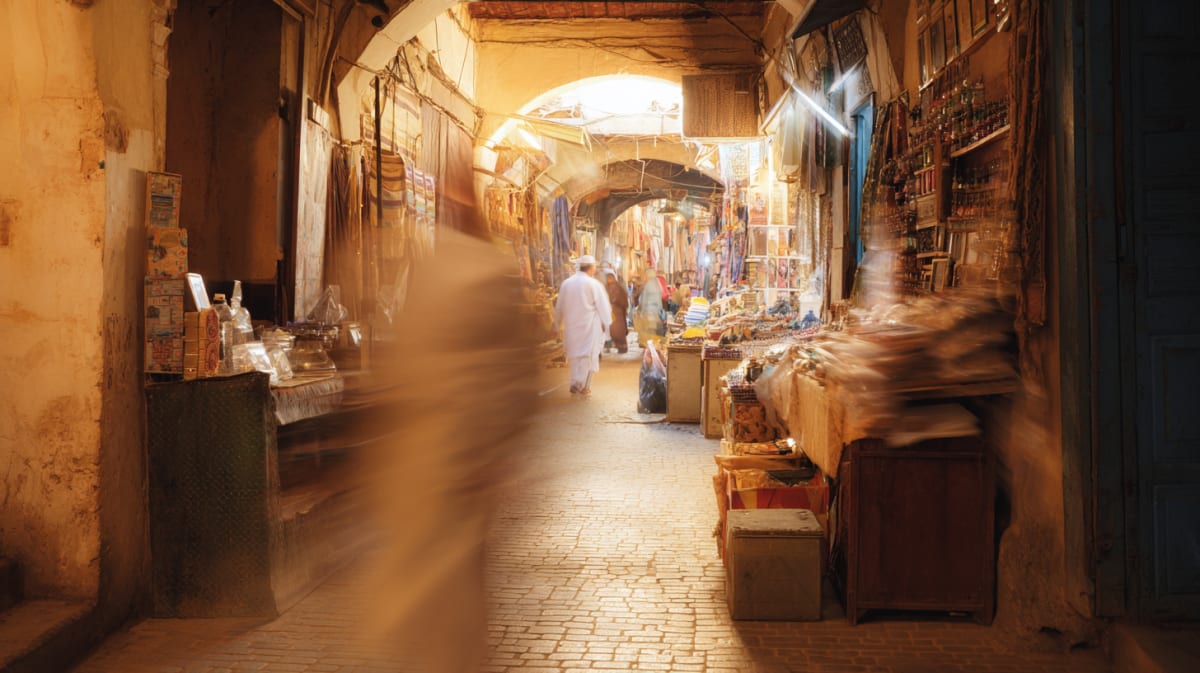
Today, Bab Boujloud is pure theatre. Rooftop cafés on both sides serve mint tea and tagines to tourists photographing each other against the zellige. Inside, the cobbled street splits immediately: Talaa Kebira — the big climb — angles right toward Al-Qarawiyyin. Talaa Seghira — the small climb — heads left into the medina's deeper folds. Both are lined with shops, workshops, and restaurants for as far as you can see before the alleys swallow the light.
Visitor Information
Address
Western edge of Fes el-Bali, between Bou Jeloud Square and Talaa Kebira
Hours
Always open
Entry Fee
Free
Tips
The most photographed gate in Morocco. Blue on the outside (colour of Fes), green on the inside (colour of Islam). The original 12th-century gate — smaller, angled to block battering rams — is still visible to the left, now sealed. Rooftop cafés on both sides for the best vantage. From here, Talaa Kebira leads straight to Al-Qarawiyyin. Allow 15 minutes for photos; combine with Bou Inania Madrasa, 2 minutes inside.
Explore More
Related Stories
Discover the history and culture of Fes
Explore More
Multi-day journeys featuring this place
Curated routes that pass through Fes
3 Days
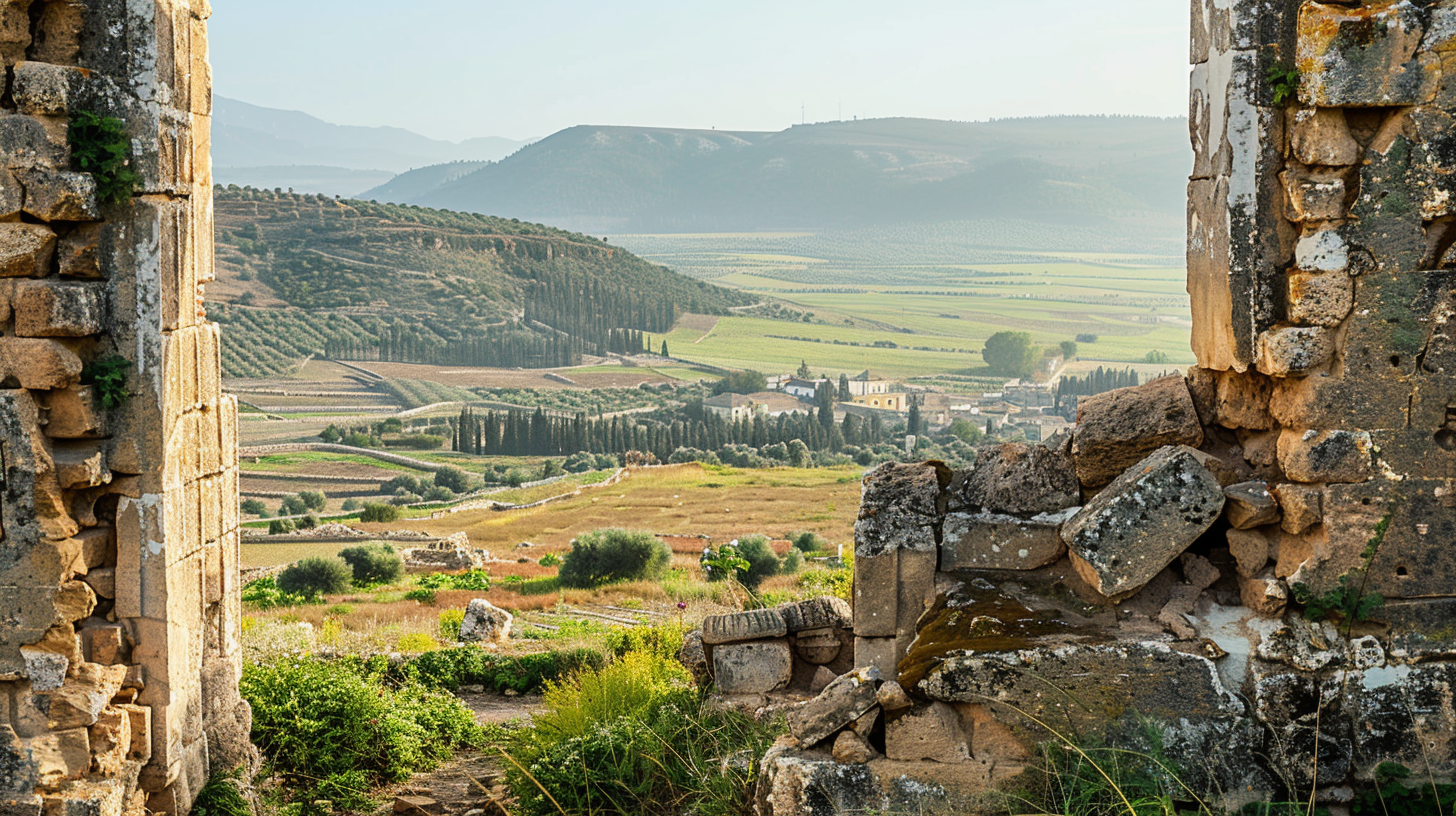
Volubilis & the Holy City
Roman columns and Morocco's holiest shrine, an hour apart.

3 Days
Fes, Meknes & Wine Country
Imperial cities, Roman mosaics, and a vineyard lunch that quietly dismantles everything you assumed about North African soil.
3 Days
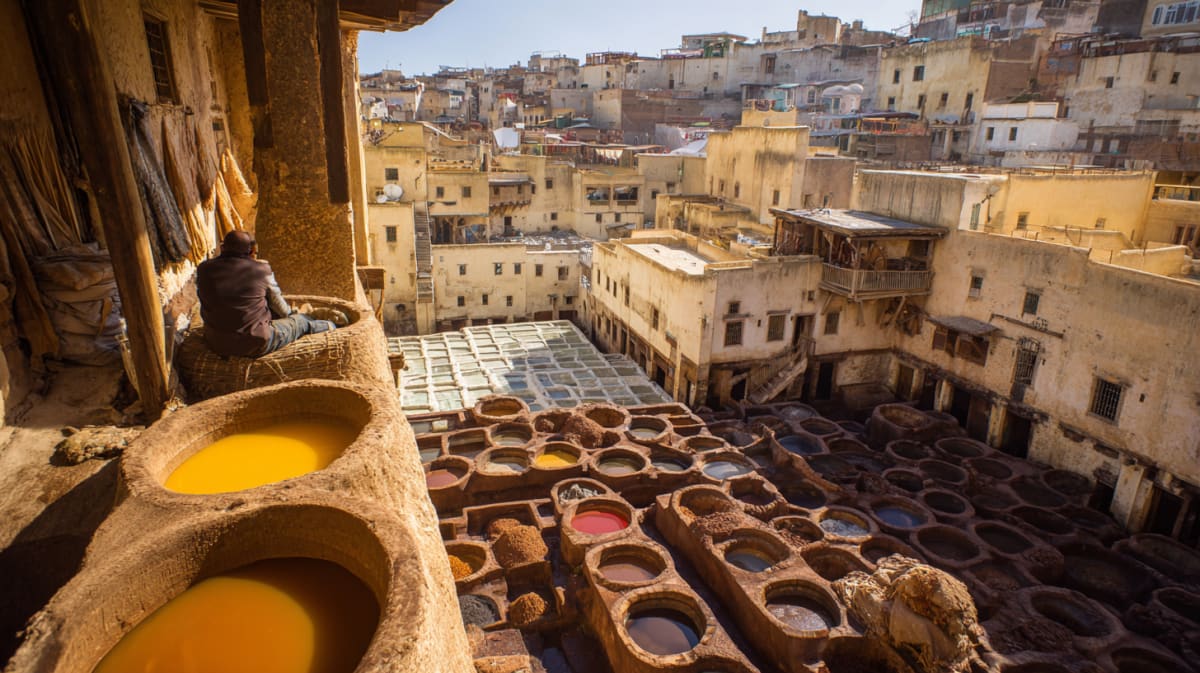
Fes City Break
Three days in the world's largest car-free urban area — tanneries, foundouks, and the sound of hammering brass.


Sources: Wikipedia: Bab Bou Jeloud;;Frommer's: Bab Boujloud;;Atlas Obscura: The Blue Gate of Fes;;Lonely Planet: Bab Bou Jeloud