
Al-Attarine Madrasa, Fes
A perfume seller's madrasa. Every surface worked until there was nowhere left.
The Al-Attarine Madrasa was named for the market at its door, not the sultan who built it. That tells you something about Fes.
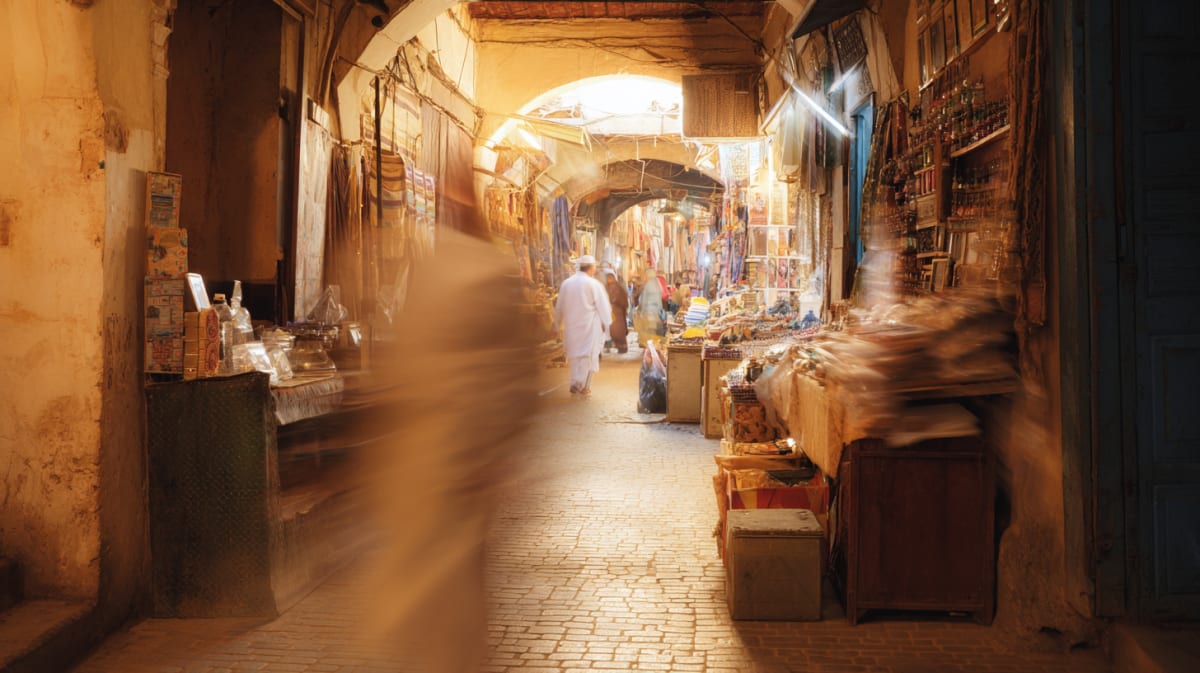
The Souk al-Attarine — the spice and perfume market — wraps around the madrasa's entrance in a narrow alley thick with the smell of cumin, saffron, dried roses, and the sharp edge of black pepper. You buy your spices, you turn a corner, and you step into one of the most refined interiors in Morocco. The transition is the experience.
Sultan Abu Said, a Marinid ruler, commissioned the building in 1325. He entrusted supervision of the construction to Sheikh Abu Muhammad Abdallah ibn Qasim al-Mizwar, and attended the laying of the foundation stones himself alongside the city's religious scholars. This was not a casual commission. The Marinids used madrasas as political instruments — demonstrations of Sunni orthodoxy that bolstered their legitimacy with Fes's fiercely independent religious elite.
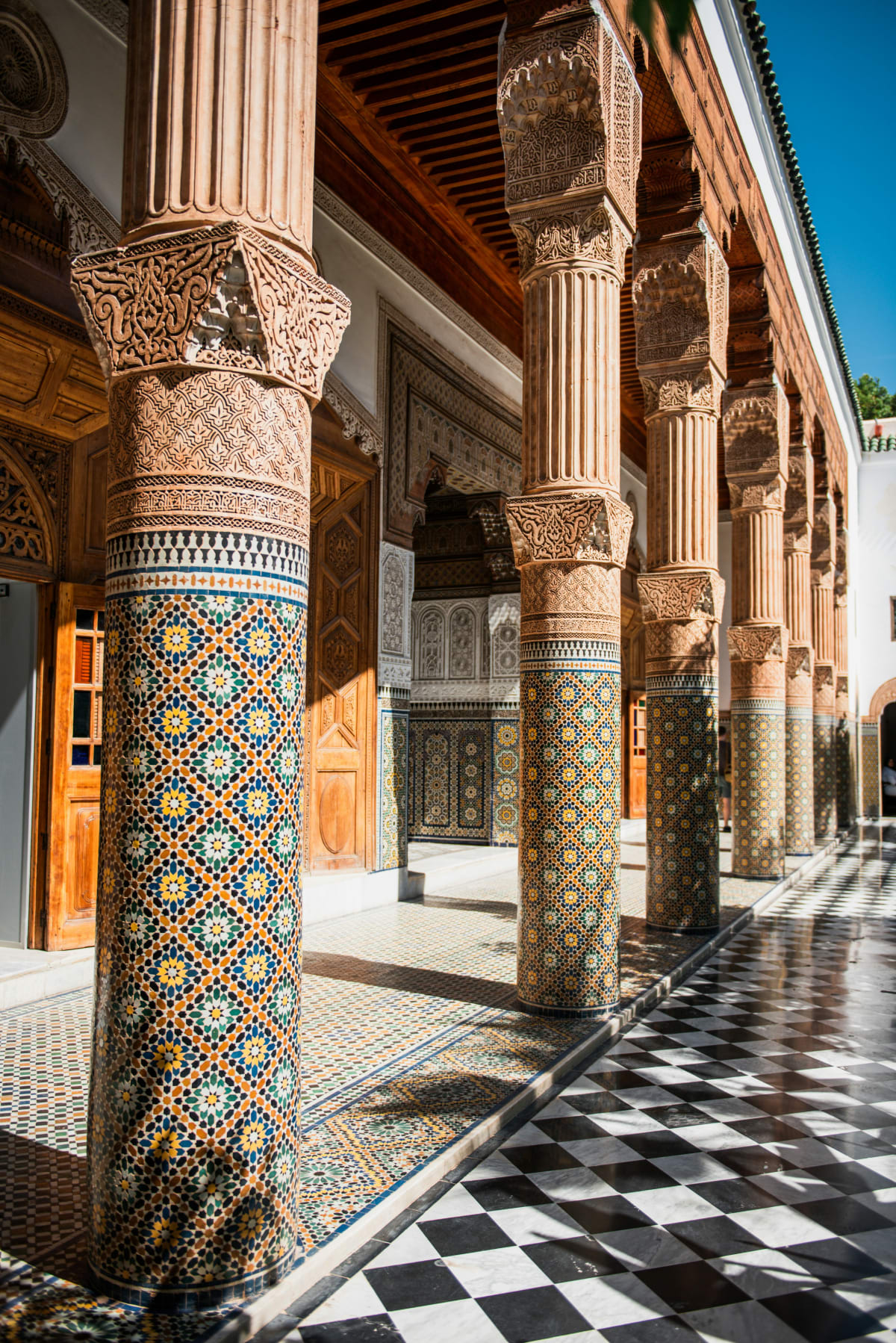
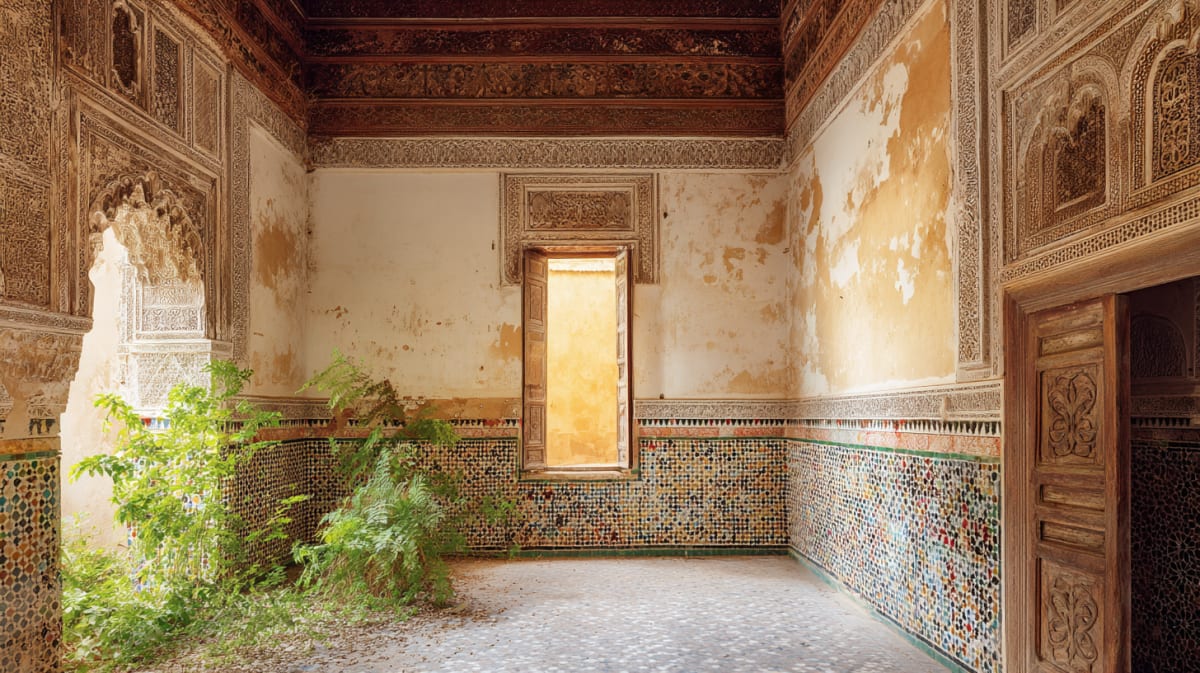
The Al-Attarine is small. That is its power. Where the Bou Inania sprawls across a complex of buildings, the Al-Attarine concentrates everything into a single courtyard that functions as a jewel box. Zellige mosaic covers the lower walls in geometric patterns that use the full Marinid palette — cobalt, emerald, amber, white, black. Above the zellige, carved plaster rises in increasingly intricate arabesques. Above the plaster, cedarwood — carved, painted, assembled into muqarnas that cascade from the ceilings like stalactites.
The fountain basin at the courtyard's centre is a single block of onyx marble. Onyx is not local to Morocco; this was imported, likely at extraordinary expense, to make a statement about the resources available to the Marinid state. Water still moves through it, channelled by a system older than anything else in the building.
The student cells occupy the upper floor. Look up and you will see carved cedarwood screens — the mashrabiya — through which students could look down onto the courtyard without being seen. They lived above the perfume market, studied steps from the greatest mosque-university in the Islamic world, and prayed in a room whose mihrab is considered one of the finest in Fes.
The proximity to Al-Qarawiyyin was deliberate. Most Marinid madrasas were built near established mosques so the two institutions could share religious and educational activities. The Al-Attarine's students walked ten metres to attend lectures at the university that had been running since 859 CE. Their school was new; their curriculum was ancient.
Visitor Information
Address
Souk al-Attarine, adjacent to Al-Qarawiyyin Mosque, Fes el-Bali
Hours
Daily 9am–5pm (closed during prayer times)
Entry Fee
30 MAD
Tips
Smaller and more intimate than Bou Inania. Named for the spice and perfume market at its door — you will smell the souk before you enter. The onyx marble fountain basin is a single block. Student cells on the upper floor look down through carved cedarwood screens. 20 minutes is enough; combine with Al-Qarawiyyin and Place Seffarine.
Explore More
Related Stories
Discover the history and culture of Fes

Explore More
Multi-day journeys featuring this place
Curated routes that pass through Fes
3 Days
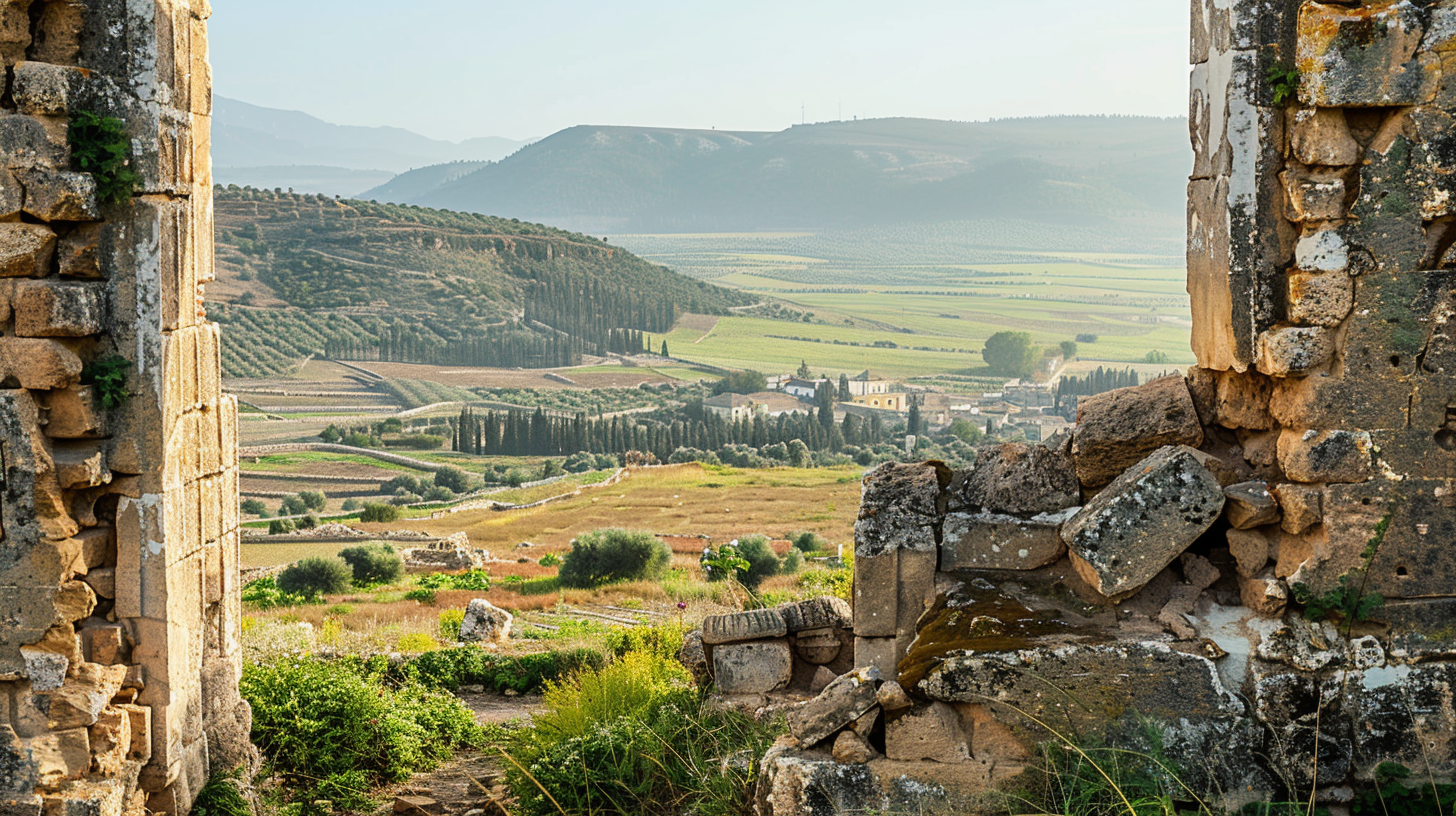
Volubilis & the Holy City
Roman columns and Morocco's holiest shrine, an hour apart.

3 Days
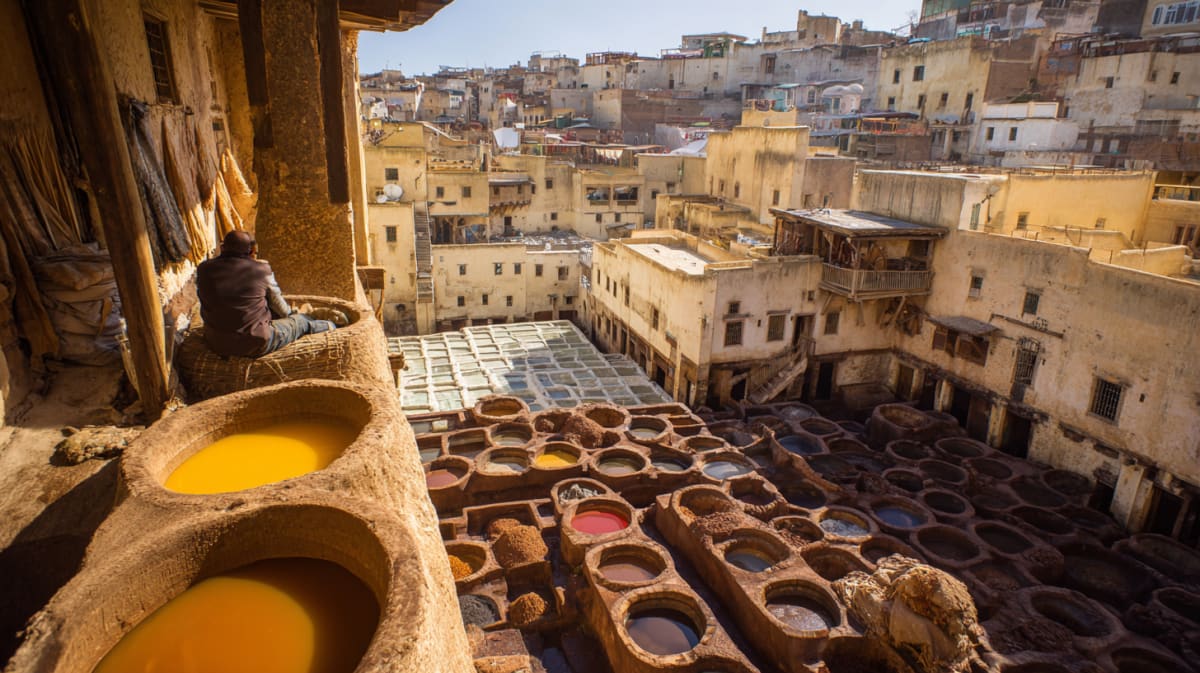
Fes, Meknes & Wine Country
Imperial cities, Roman mosaics, and a vineyard lunch that quietly dismantles everything you assumed about North African soil.
3 Days
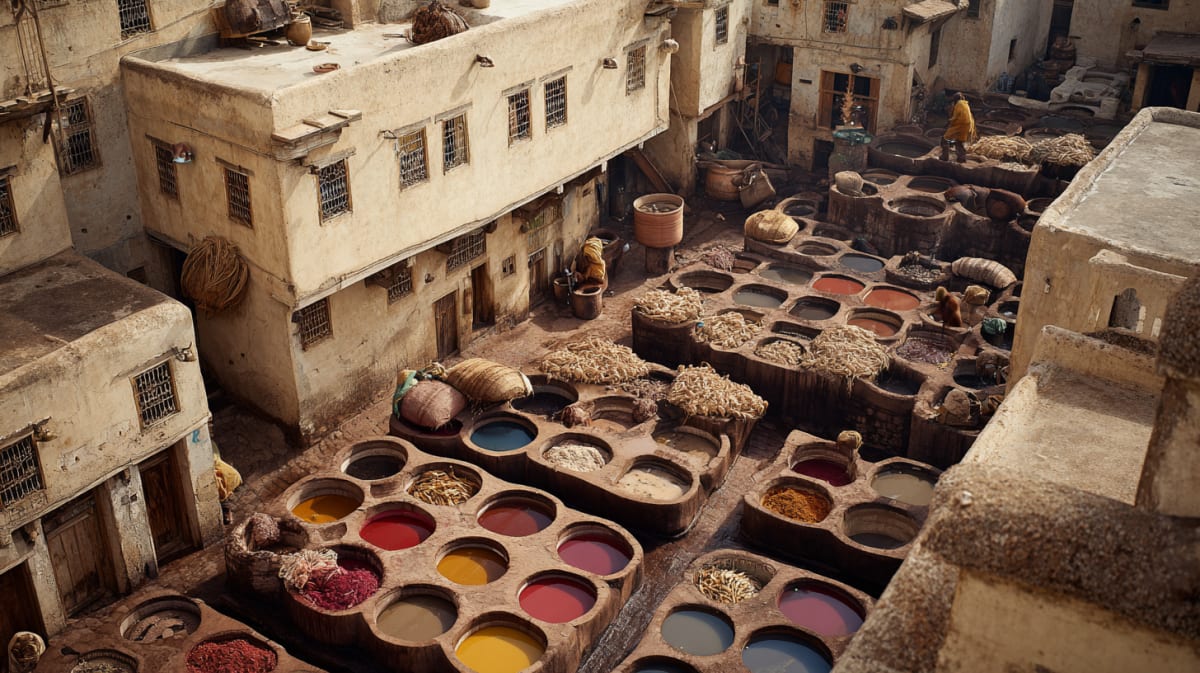
Fes City Break
Three days in the world's largest car-free urban area — tanneries, foundouks, and the sound of hammering brass.



Sources: Le Tourneau R. (1949) Fès avant le Protectorat;;The Moorish Times: The Madrasa, an Ancestral Architectural Jewel;;UNESCO Fez nomination file (1981)