
Place Seffarine (Coppersmiths' Square), Fes
The square where the sound of hammering copper has not stopped since the 13th century.
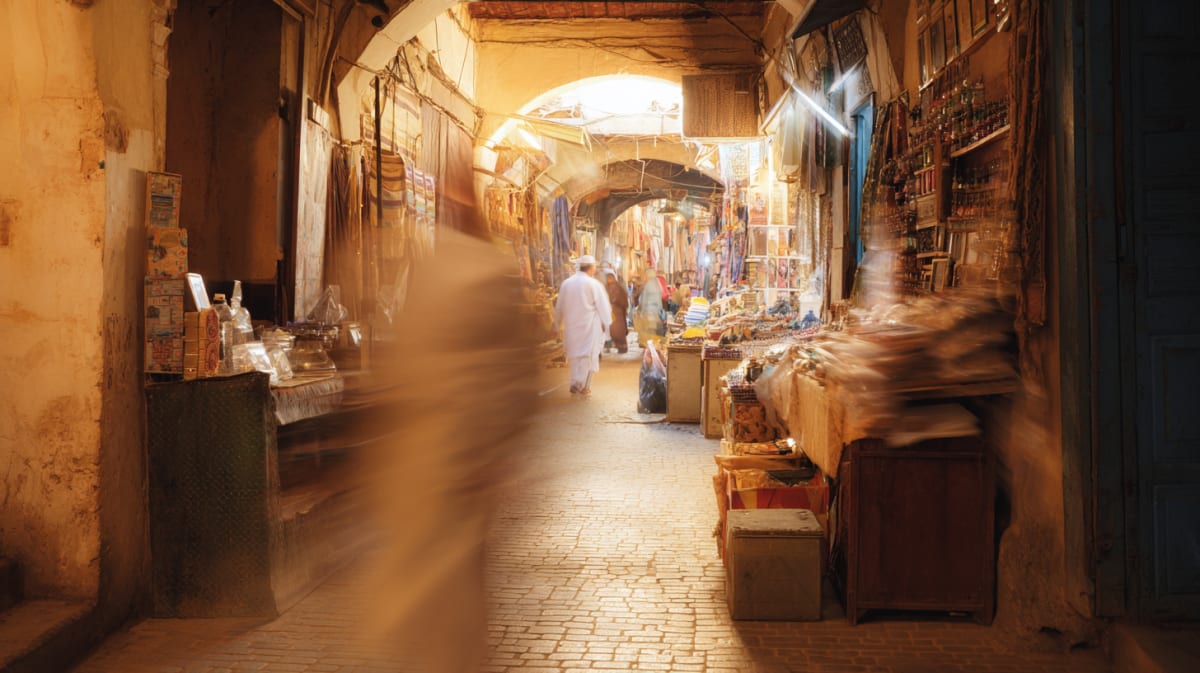
You hear Place Seffarine before you see it. The rhythmic clanging of hammer on copper travels through the surrounding alleys like a pulse, growing louder with every step until you emerge into a small, sunlit square that smells of hot metal and mint tea.
The coppersmiths — the seffarin who gave the square its name — have worked here since at least the 16th century, when Leo Africanus noted their presence. The Arabic word saffar means "worker of yellow copper," and the square's identity is built entirely on this single craft. Men sit on low stools in workshops barely wider than their arms' reach, hammering sheets of copper, brass, and bronze into teapots, trays, lanterns, and the enormous communal cooking vessels that families rent for weddings and festivals.
The square sits on the south side of the Qarawiyyin Mosque, close to where the Bou Khrareb River runs beneath the medina's streets. To the northwest, the entrance to the Qarawiyyin Library — first built by Sultan Ahmad al-Mansur in the late 16th century, expanded and reopened in its current form in 1949, and recently restored by architect Aziza Chaouni. To the east, the Seffarine Madrasa, built in 1271, Morocco's oldest purpose-built theological college. To the southwest, the Seffarine Hammam, a 14th-century bathhouse recently restored as part of an Austrian-led Mediterranean preservation project.
Every building around this square carries centuries of function. The library stores knowledge. The madrasa houses students. The hammam cleans bodies. The workshops make objects. And the square itself — small enough to cross in thirty seconds — holds all of it together.
The giant cooking pots stacked at the edges of the workshops are the ones people don't expect. Some are large enough to feed a hundred guests. Families rent them for weddings, for communal meals during Ramadan, for the annual moussem celebrations. The metalworkers who make and repair them work with techniques unchanged since the Marinid era — no electric tools, no power hammers. Heat, metal, arm, hammer.
Café Abdullah sits on the square. Mint tea. A plastic chair. The view is the workshop opposite, where a man is turning a flat sheet of copper into something useful. No menu. No Wi-Fi password on the wall. This is not curated Fes. This is Fes.
Visitor Information
Address
South side of Al-Qarawiyyin Mosque, Fes el-Bali
Hours
Always open — coppersmiths work roughly 8am to 6pm
Entry Fee
Free
Tips
One of the most atmospheric squares in Morocco. The sound arrives before you do — rhythmic hammering on copper echoing through the alleys. The Qarawiyyin Library entrance is on the northwest side. Café Abdullah on the square for mint tea. No tourist infrastructure, no entrance fee, no signs. Real Fes.
Explore More
Related Stories
Discover the history and culture of Fes

Explore More
Multi-day journeys featuring this place
Curated routes that pass through Fes
3 Days
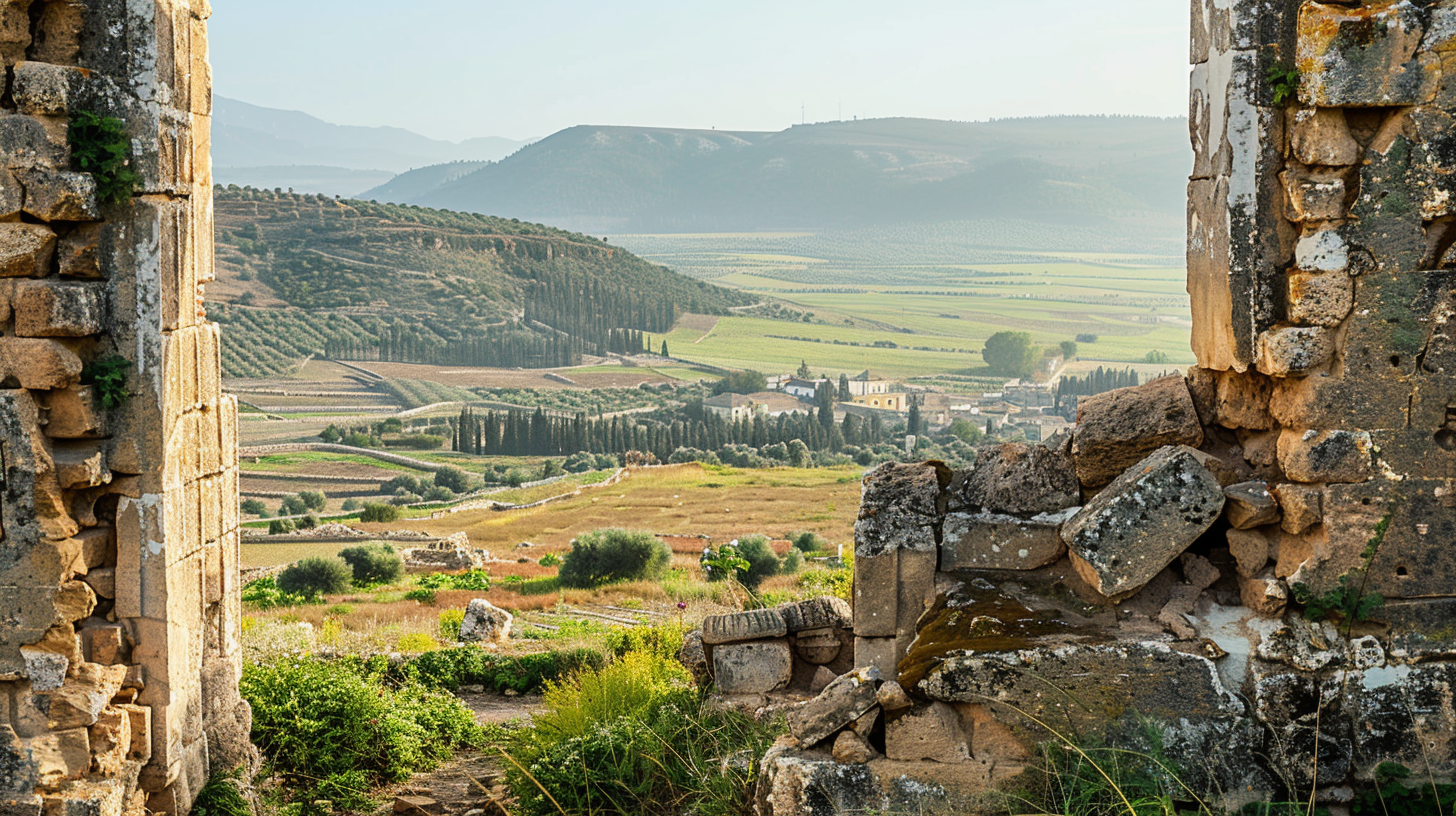
Volubilis & the Holy City
Roman columns and Morocco's holiest shrine, an hour apart.

3 Days
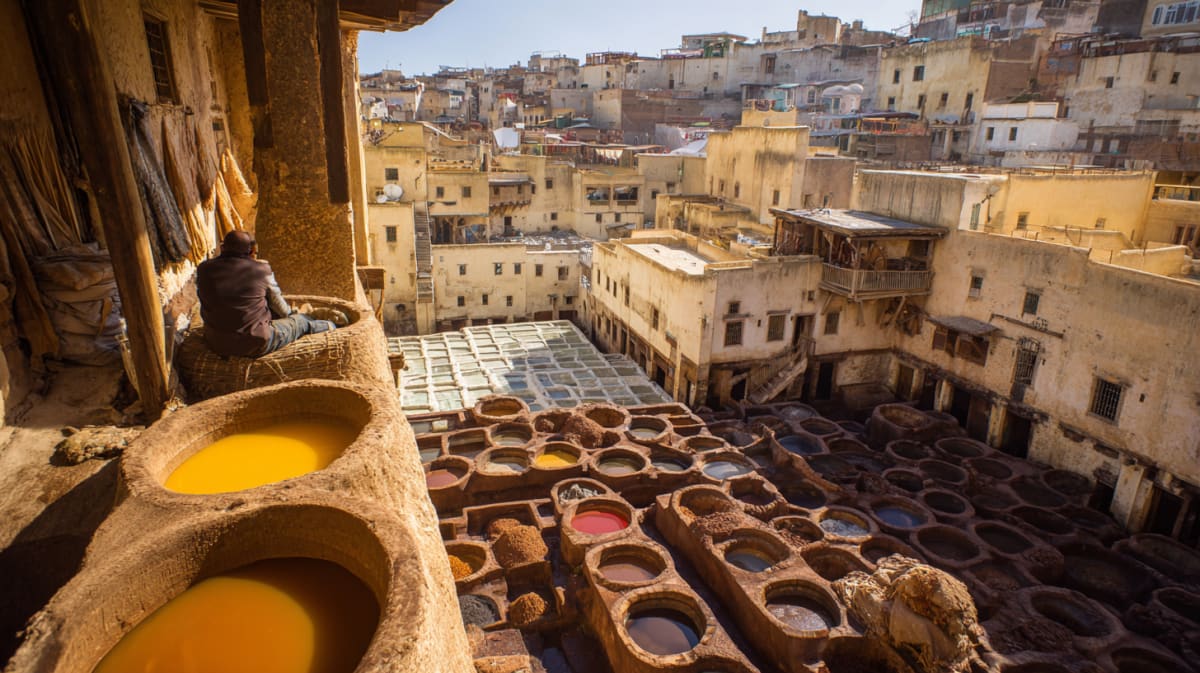
Fes, Meknes & Wine Country
Imperial cities, Roman mosaics, and a vineyard lunch that quietly dismantles everything you assumed about North African soil.
3 Days
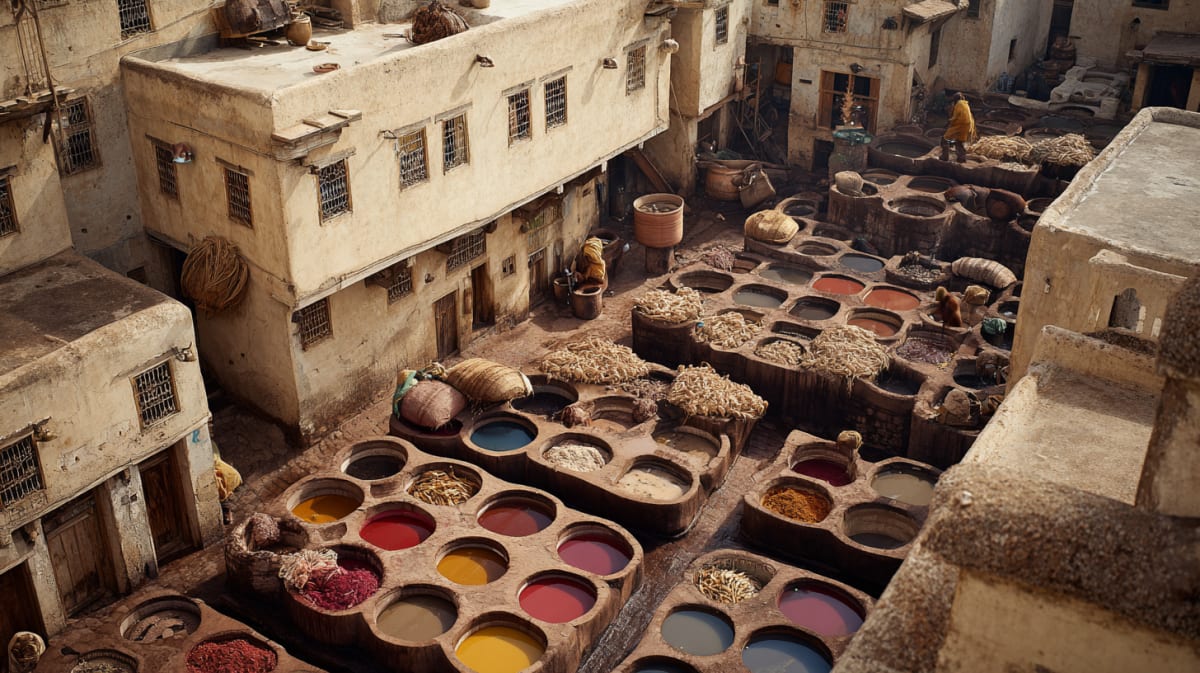
Fes City Break
Three days in the world's largest car-free urban area — tanneries, foundouks, and the sound of hammering brass.



Sources: Wikipedia: Place Seffarine;;Leo Africanus, Description of Africa (16th century);;Barceló Experiences: Place Seffarine, the beating heart of Fez