
Dar al-Magana: The Water Clock of Fes
A 14th-century hydraulic clock whose mechanism nobody alive can explain.
Look up from the Talaa Kebira and you will miss it entirely. That is the point. The most mysterious piece of engineering in Morocco sits on the busiest street in the oldest medina on earth, and almost everyone walks underneath it without a second glance.
Dar al-Magana — the House of the Clock — was completed on May 6, 1357, commissioned by the Marinid sultan Abu Inan Faris as part of the same building campaign that produced the Bou Inania Madrasa directly across the street. The engineer was Abu al-Hassan Ali ibn Ahmed al-Tlemsani, a mathematician and astronomer from Tlemcen whose speciality was trigonometry and the practical measurement of time.
What he built was a hydraulic clock with 13 windows arranged in a row along the facade. Behind each window sat a bronze bowl on a wooden beam. Every hour, a mechanism involving water reservoirs, floats, weighted ropes, and a small cart moving horizontally behind twelve doors would trigger a window to open. A metal ball dropped into the corresponding brass bowl with an audible clang. The entire medina could hear the hours pass.
The clock regulated prayer times for the Bou Inania mosque — the only madrasa in Morocco that also functioned as a Friday congregational mosque, meaning precise timekeeping was not decorative but theologically necessary. The muwaqqit, the official timekeeper, relied on al-Tlemsani's mechanism to call the faithful to prayer at the correct moments.
And then it broke. Nobody knows exactly when. Nobody knows exactly how it worked. The mechanism fell silent centuries ago, and despite multiple restoration attempts — most recently by ADER-Fes, the agency responsible for the medina's monuments — no engineer has been able to reconstruct the system. The brass bowls were removed in 2004 for study. As of today, they have not been returned.
A postcard from more than a century ago shows the bowls still sitting on the beams beneath each window. The 14th-century chronicler al-Jazna'i described the clock as having "cups and bowls of brass" where "to mark the hour, a weight falls in one of the cups and a window opened." The 11th-century engineer al-Muradi wrote a manuscript called Kitab al-Asrar fi Nata'ij al-Afkar — The Book of Secrets as the Results of Thoughts — describing similar mechanisms, but no direct connection to the Fes clock has been proven.
What survives is the facade itself: 13 intricately carved cedar corbels projecting from the wall, panels of wood-carved arabesques and Kufic calligraphy between them, and stucco decoration surrounding the windows above. The building also carries a second legend — it was once called the House of Maimonides, based on a tradition that the Jewish philosopher lived here during his years in Fes in the 1160s. No evidence supports this, but the story persists.
The best view is from the entrance of the Bou Inania Madrasa, looking directly across the street and up. In the morning, when the light hits the carved wood, the beams throw shadows across the facade that make the 13 windows look like they might still open.
Visitor Information
Address
Rue Talaa Kebira, directly opposite Bou Inania Madrasa, Fes el-Bali
Hours
Exterior only — visible 24 hours
Entry Fee
Free
Tips
Easy to walk past without noticing. Look up across from the Bou Inania entrance. The 13 wooden beams and windows are the clock. No signage. Best combined with Bou Inania — they were built as a single complex.
Explore More
Related Stories
Discover the history and culture of Fes


Explore More
Multi-day journeys featuring this place
Curated routes that pass through Fes
3 Days
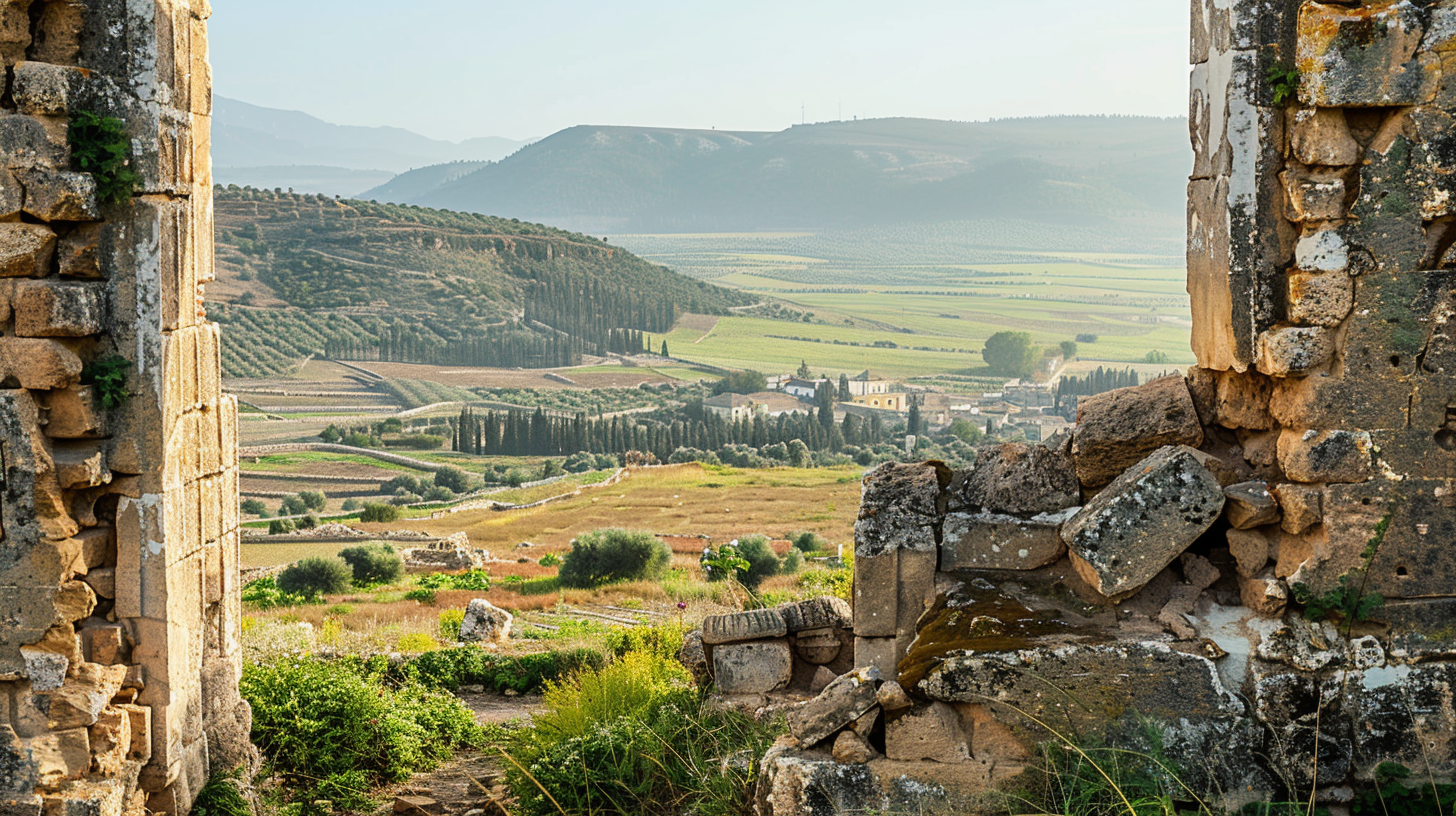
Volubilis & the Holy City
Roman columns and Morocco's holiest shrine, an hour apart.

3 Days
Fes, Meknes & Wine Country
Imperial cities, Roman mosaics, and a vineyard lunch that quietly dismantles everything you assumed about North African soil.
3 Days
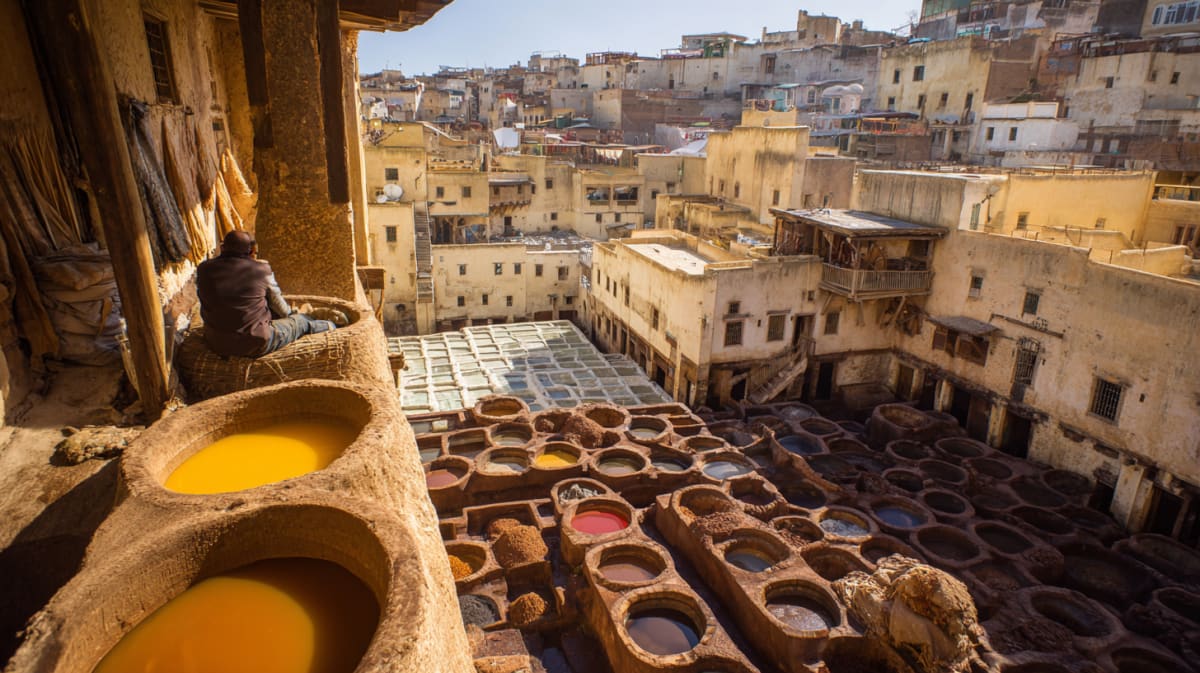
Fes City Break
Three days in the world's largest car-free urban area — tanneries, foundouks, and the sound of hammering brass.



Sources: Al-Jazna'i, Zahrat al-As (14th century);;Wikipedia: Dar al-Magana;;FUNCI: The Rise of Hydraulic Clocks in Morocco (2022);;Atlas Obscura: Dar al-Magana