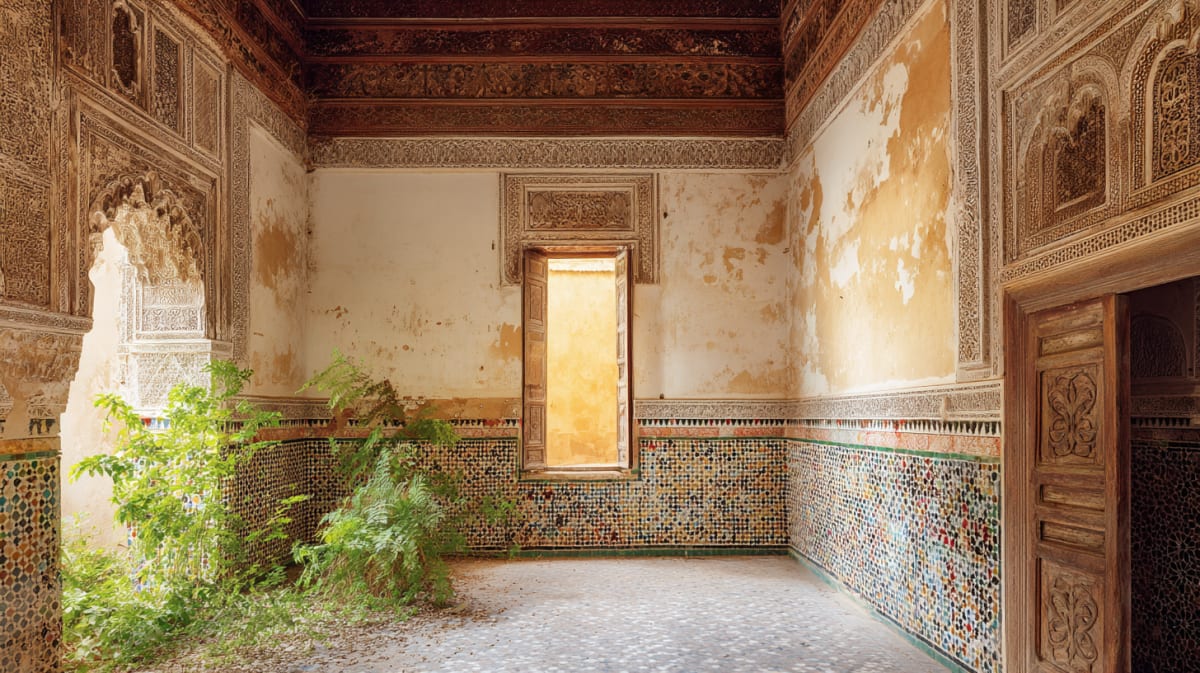
Palais Glaoui, Fes
Faded grandeur in active decay. The most photogenic ruin in the medina.
The Glaoui family kept palaces the way other families kept horses — too many, too expensive, and impossible to give up. The Palais Glaoui in Fes is the one they lost control of first.
The Glaoui were the most powerful Berber clan of the late 19th and early 20th centuries. Thami el-Glaoui, the Pasha of Marrakech, was the family's most famous figure — a man who hosted Winston Churchill, controlled the trans-Atlas trade routes, and collaborated with the French protectorate until Moroccan independence made collaboration a liability. The family's properties were seized. Their palaces — in Marrakech, in Telouet, in Fes — entered a long, slow decline.
The Fes palace is the most atmospheric of the ruins. Unlike Telouet, which sits remote in the High Atlas, the Palais Glaoui stands in the heart of the medina, in a neighbourhood that continues to function around it. Neighbours live on either side. Children play in the derb outside. And through a doorway that barely announces itself, you step into rooms where painted ceilings are peeling in long strips, zellige walls are cracking along fault lines, and courtyards that once held fountains are now open to rain and pigeons.
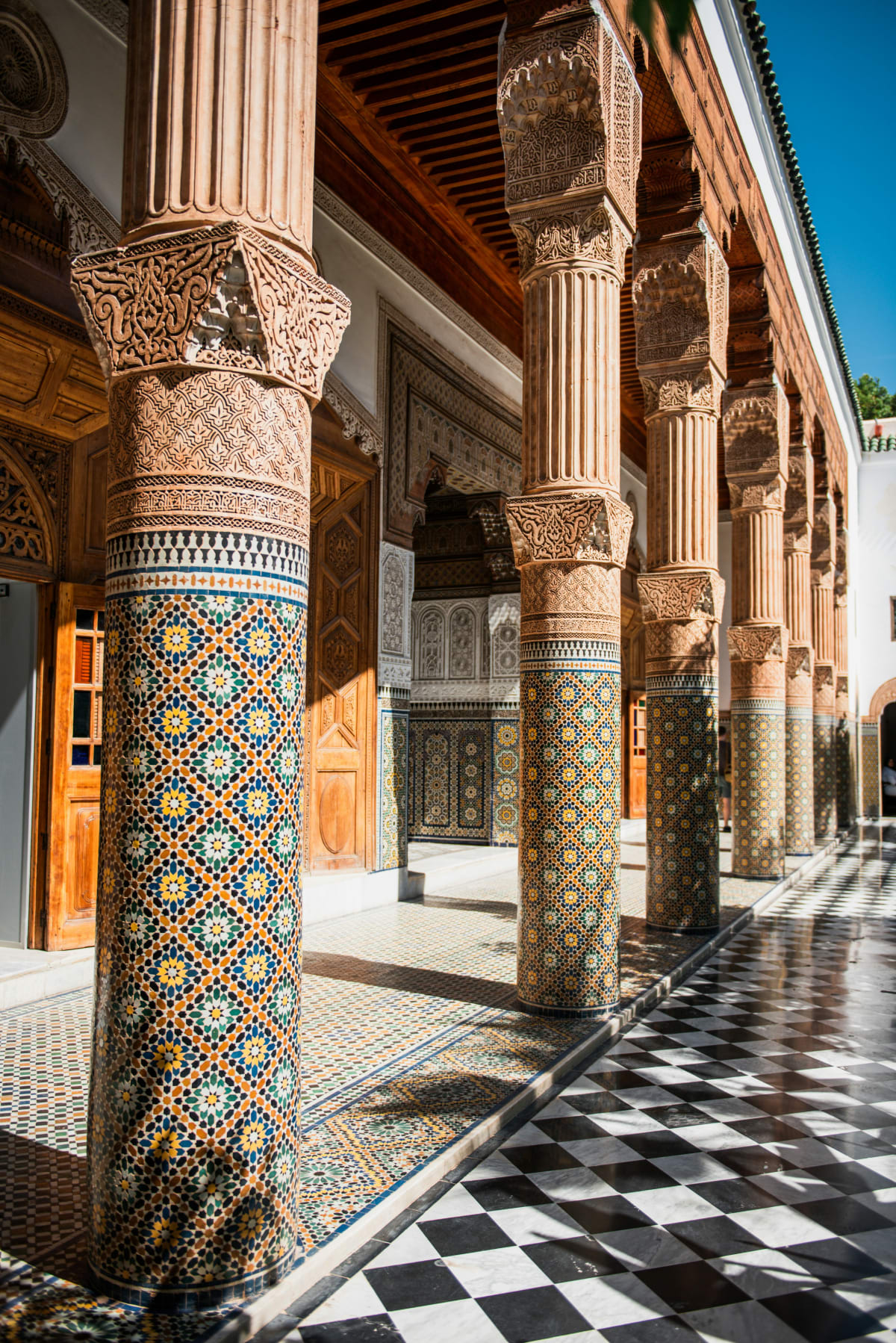
The craftsmanship visible beneath the decay is extraordinary. Geometric painted wood ceilings in colours that have faded to precisely the palette that interior designers spend thousands trying to achieve. Carved plaster arabesques where half the pattern has fallen away, revealing the rough wall beneath — a cross-section of construction technique that no intact building can show you. Zellige floors where tiles have shifted over decades, creating accidental patterns more interesting than the originals.
A caretaker usually sits at the entrance. The fee is informal. The tour is informal. Nothing is roped off because nothing is curated. You walk through rooms where the roof has partially collapsed and the sky pours in. You stand in a courtyard where the fountain basin is dry and full of leaves. The light in these spaces — filtered through holes in the ceiling, bouncing off whitewashed walls gone grey — is unlike anything in the restored monuments.
Photographers know this place. It appears in portfolios more often than the Bou Inania, because ruin photographs better than perfection. The tension between the quality of the original work and the indifference of time creates images that restored buildings, with their crisp zellige and fresh paint, cannot match.
Visit before they restore it. Or before it falls down. Either outcome is possible.
Visitor Information
Address
Derb el Miter, Fes el-Bali
Hours
Daily 9am–5pm (irregular — confirm at door)
Entry Fee
20 MAD (approximate — paid to caretaker)
Tips
Not a restored showpiece. This is a palace in active decay. That is the point. Painted ceilings peeling, zellige cracking, courtyards open to the sky. Photography is extraordinary here — the light through collapsed roofs creates effects no intact building can match. Combine with Mellah nearby.
Explore More
Related Stories
Discover the history and culture of Fes

Explore More
Multi-day journeys featuring this place
Curated routes that pass through Fes
3 Days
Volubilis & the Holy City
Roman columns and Morocco's holiest shrine, an hour apart.

3 Days
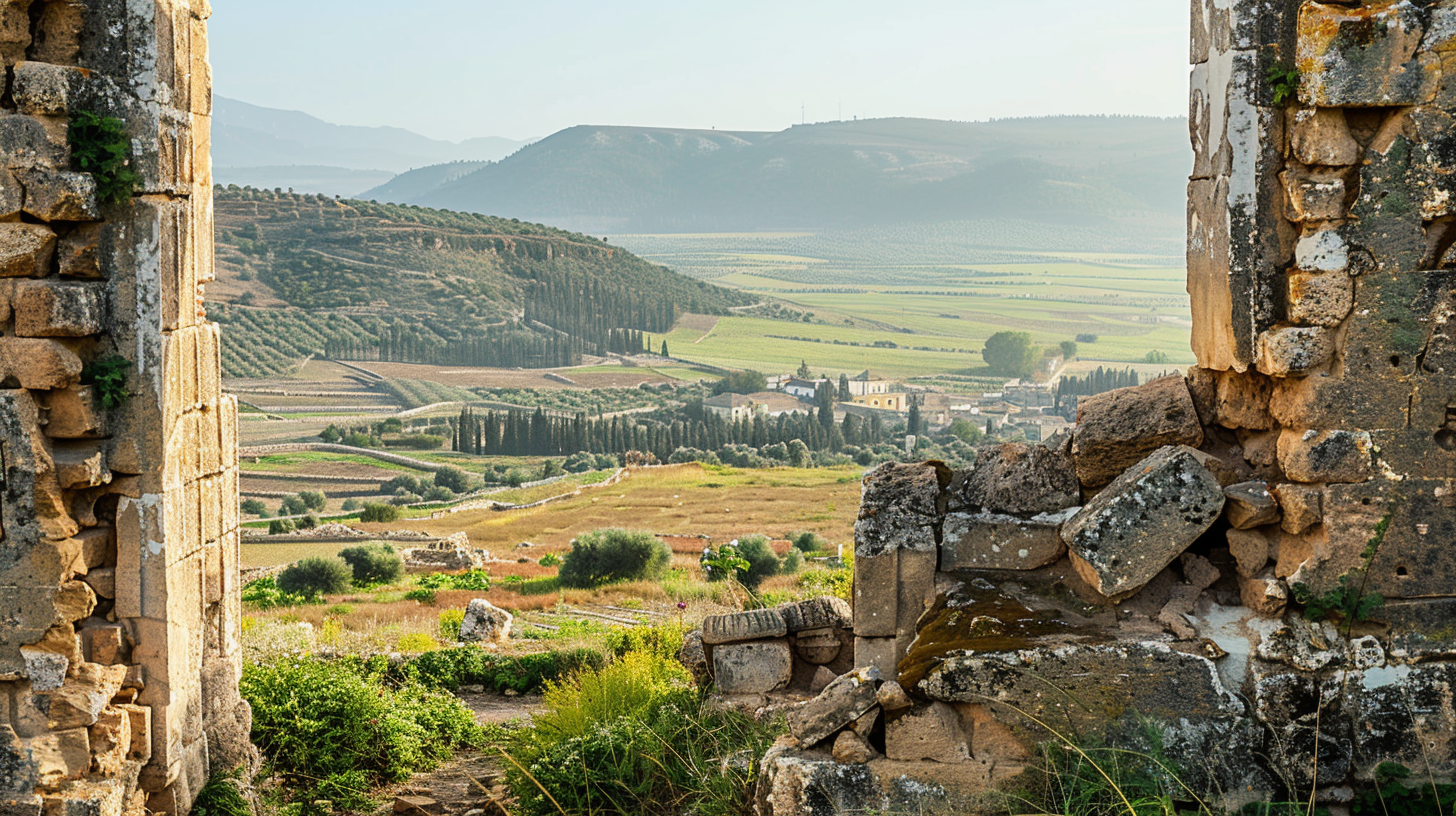
Fes, Meknes & Wine Country
Imperial cities, Roman mosaics, and a vineyard lunch that quietly dismantles everything you assumed about North African soil.
3 Days
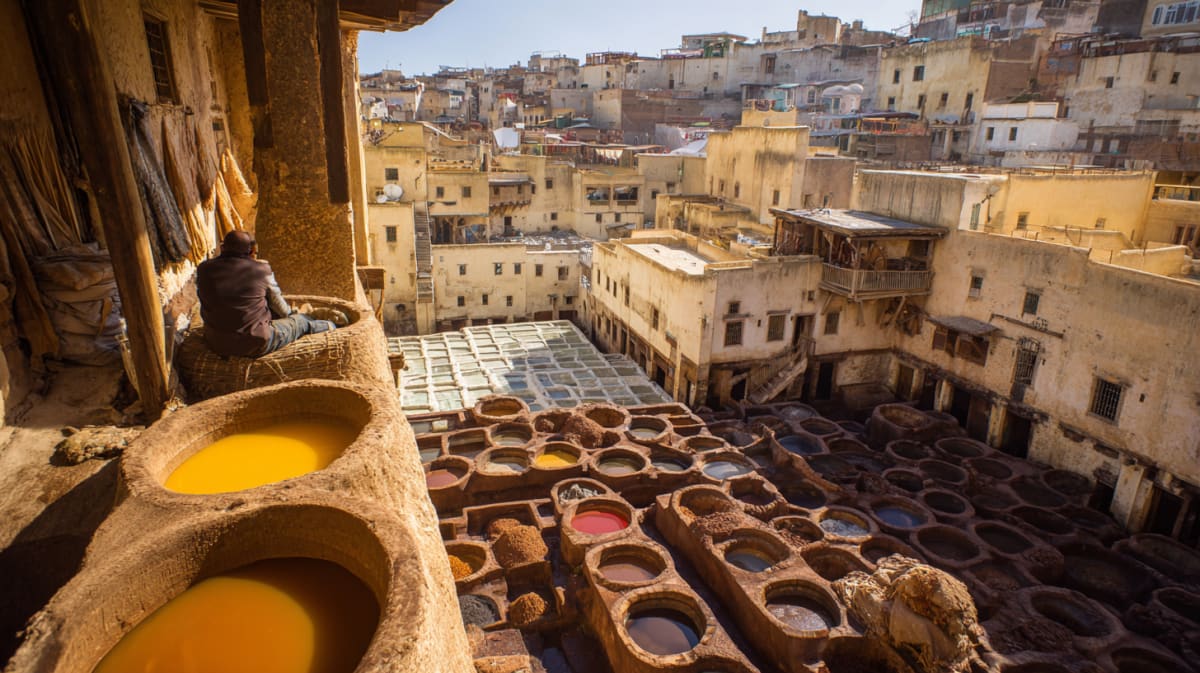
Fes City Break
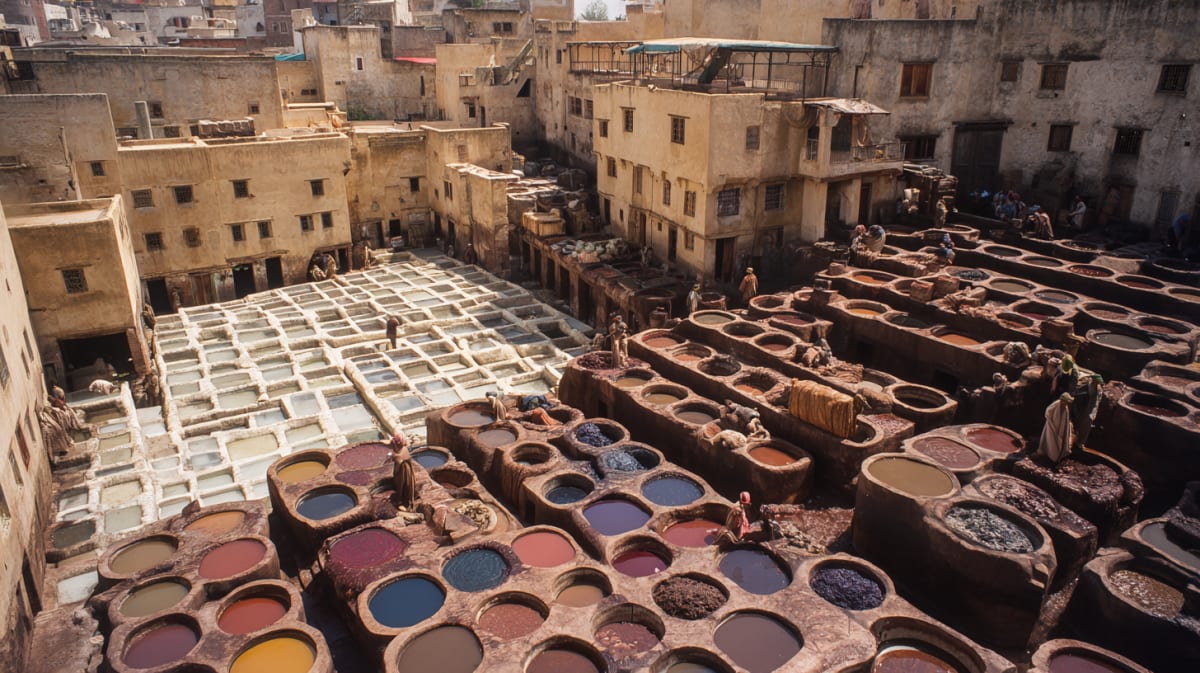
Three days in the world's largest car-free urban area — tanneries, foundouks, and the sound of hammering brass.



Sources: Maxwell, Gavin. Lords of the Atlas (1966);;Peyron, Michael. The Berbers of Morocco (2005)