Design
The Geometry That Lives in His Hands
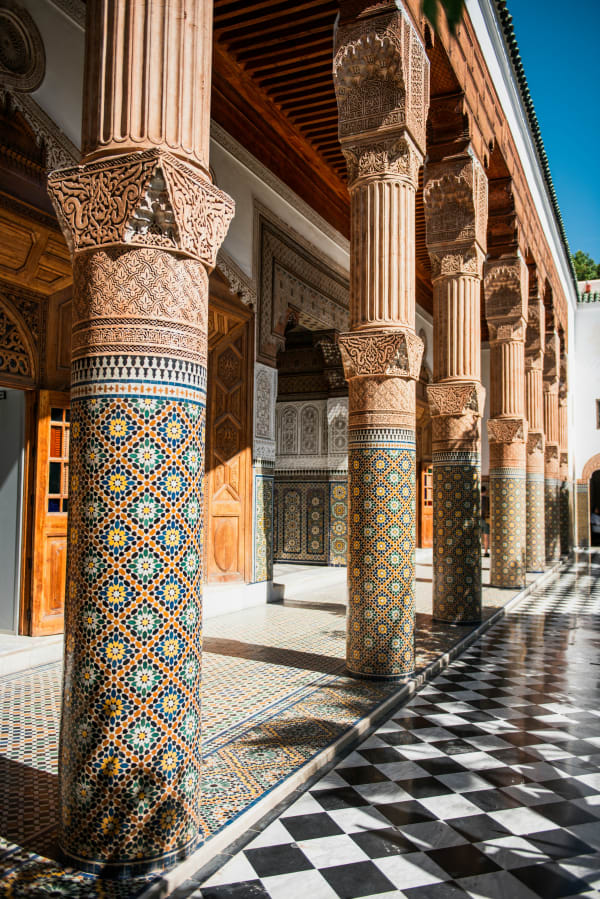
The hammer falls. A chip of clay spins away. He doesn't look. Forty years of cutting. No ruler. The geometry lives in his hands.
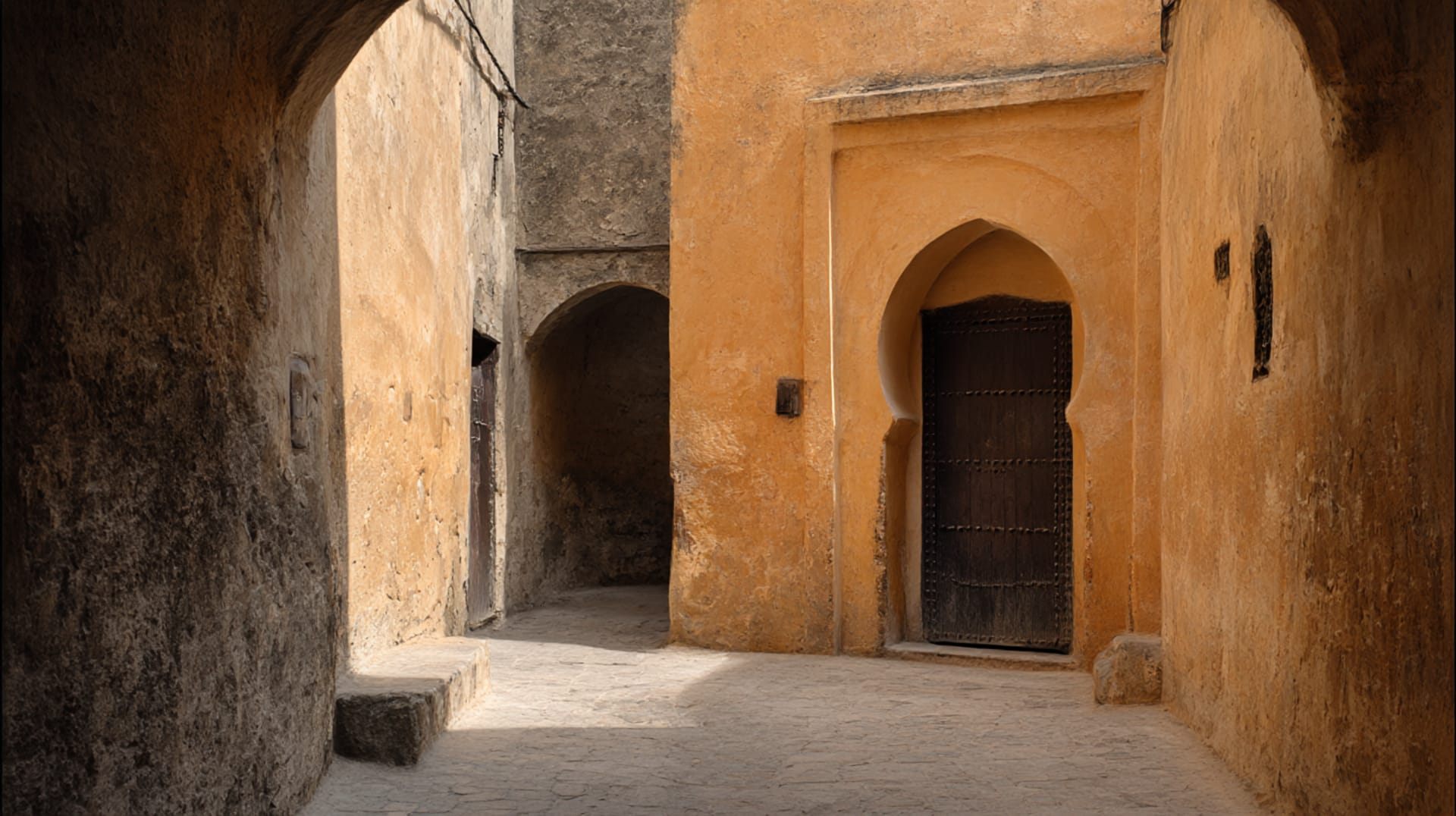
Fes el-Bali — the old city — is the largest car-free urban area in the world. Nine thousand alleys, 150,000 residents, and not a single road wide enough for a motor vehicle. The medieval logic that built it is still the logic it runs on. The tanneries have been processing leather the same way since the eleventh century: pigeon dung to soften, poppy to redden, saffron to yellow, indigo to blue, mint to lighten. The smell reaches you two streets before the view.
The city was founded in 789 CE by Idriss I, the first Arab dynasty to rule Morocco. His son Idriss II completed it and made it a capital. In 859, Fatima al-Fihri — the daughter of a wealthy Tunisian merchant — founded a mosque and school that would become the University of Al-Qarawiyyin. It is the oldest continuously operating university in the world, issuing degrees in theology, grammar, and rhetoric eight hundred years before Oxford. Fatima al-Fihri was twenty-three.
The medina divides into two halves. Fes el-Bali is the ancient city, UNESCO-listed since 1981, the one that appears in every photograph. Fes el-Jedid — new Fes, founded in 1276, which gives a measure of the city's age — contains the royal palace and the mellah. The mellah of Fes was the first in Morocco, established in 1438 when the Marinid sultan moved the Jewish community inside the city walls for protection that was also a form of controlled separation. Jewish families had been in Fes since before the city's founding.
Navigation in the medina is best understood as a game played without a map. The major landmarks — the Al-Qarawiyyin mosque, the Bou Inania madrasa, the Chouara tanneries — are reachable by asking. The logic of the streets is not random but it is not legible from outside. Every souk sells one thing: the street of the coppersmiths, the street of the candle-makers, the street of the tanners. The medieval guild system built the geography and the geography preserves the guild system.
The medersas — the medieval student residences attached to the mosque-universities — are the finest buildings in the city and among the finest in the medieval Islamic world. The Bou Inania, built in 1350, has a water clock along its facade that no one has successfully explained. The Attarine, built in 1325, has cedar screens carved so finely they look like lacework.
Fes is not a summer city. July and August push 40°C. The best time is March to May — spring wildflowers on the slopes above the city — and September to November. The medina is cold and damp in January. Bring layers in any season: the temperature can drop fifteen degrees between noon and midnight.
The train from Casablanca takes four and a half hours. From Marrakech, no direct train — bus or car via the mountains, six hours. The airport (FEZ) has direct flights from most European cities, which makes Fes an efficient starting point for a northern itinerary.
Places
Workshops
The smell announces it before you see it — pigeon droppings, quicklime, the chemical reality of medieval leatherwork. Take the mint they offer. The methods haven't changed since the 11th century.
Monuments
The only religious building in Fes that non-Muslims can fully enter, and arguably the finest Marinid architecture anywhere. Every surface — zellige, stucco, cedar — is relentlessly worked.
Museums
A caravanserai restored to showcase woodworking arts. The building matters more than the collection. The rooftop café is the quietest perch in Fes.
Museums
The collection that explains Fes: the blue ceramics, the Berber carpets, the instruments from the Qarawiyyin. The Andalusian gardens are the city's finest; summer concerts continue a royal tradition.
Monuments
A 14th-century hydraulic clock whose mechanism nobody alive can explain.
Squares & Markets
The square where the sound of hammering copper has not stopped since the 13th century.
Monuments
The front door of the oldest living medina on earth. Blue on one side, green on the other.
Monuments
A perfume seller's madrasa. Every surface worked until there was nowhere left.
Monuments
Faded grandeur in active decay. The most photogenic ruin in the medina.
Market
The spice and perfume market adjacent to the Al-Qarawiyyin mosque — the most prestigious commercial address in Fes, and in medieval Morocco. The proximity to the mosque was deliberate: incense for prayer, remedies for the sick who came to the zaouias, perfume for the scholars. The market still sells all three.
Craft
The pottery quarter on the southern edge of Fes el-Bali, where the blue-and-white Fassi ceramic tradition has been maintained since the 14th century. The clay comes from deposits outside the city. The cobalt blue comes from imported mineral oxide. The forms — plates, tagines, decorative tiles — have not changed in seven centuries.
Architecture
The oldest library in the world, founded in the 9th century alongside the mosque. Restored in 2016 by architect Aziza Chaouni. It holds 4,000 manuscripts, including a 9th-century Quran written in Kufic script on camel skin and a copy of Ibn Khaldun's Muqaddimah in the author's own handwriting. Accessible by appointment only.
Stories from Fes
Design
The hammer falls. A chip of clay spins away. He doesn't look. Forty years of cutting. No ruler. The geometry lives in his hands.

Design
The smell hits you first — animal, vegetal, chemical, ancient. Then you see the pits: a hundred stone circles filled with liquids in every shade of brown and yellow. Men stand waist-deep in them, turning hides with their bare hands.
Design
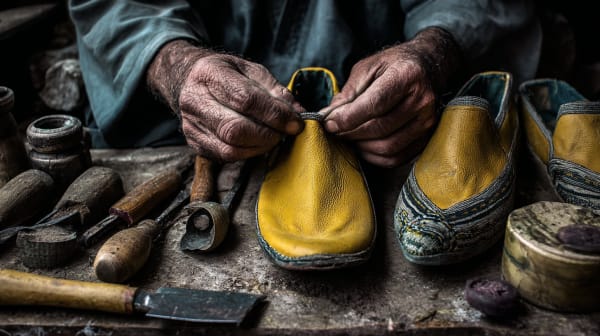
Three men. Three shops. Same alley. The first cuts. The second sews. The third finishes. One slipper, six hands, a week.
Art
Matisse arrived in Tangier expecting sunshine. He got two weeks of rain. When the clouds finally broke, he never painted the same way again.

People
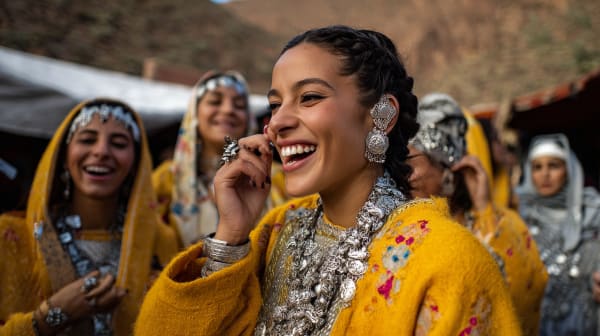
The white tents appear overnight, a thousand of them, spreading across the valley like a sudden blooming. The tribe has come to honor its saint.
People
High in the Atlas Mountains, two lakes sit on either side of a ridge. The Berbers say they were formed from the tears of star-crossed lovers — a boy from one tribe, a girl from another, forbidden to marry. They wept themselves to death. Now, every September, their descendants gather for a festival where anyone can marry anyone. It's Morocco's Romeo and Juliet, but with a happy ending.
Journeys to Fes
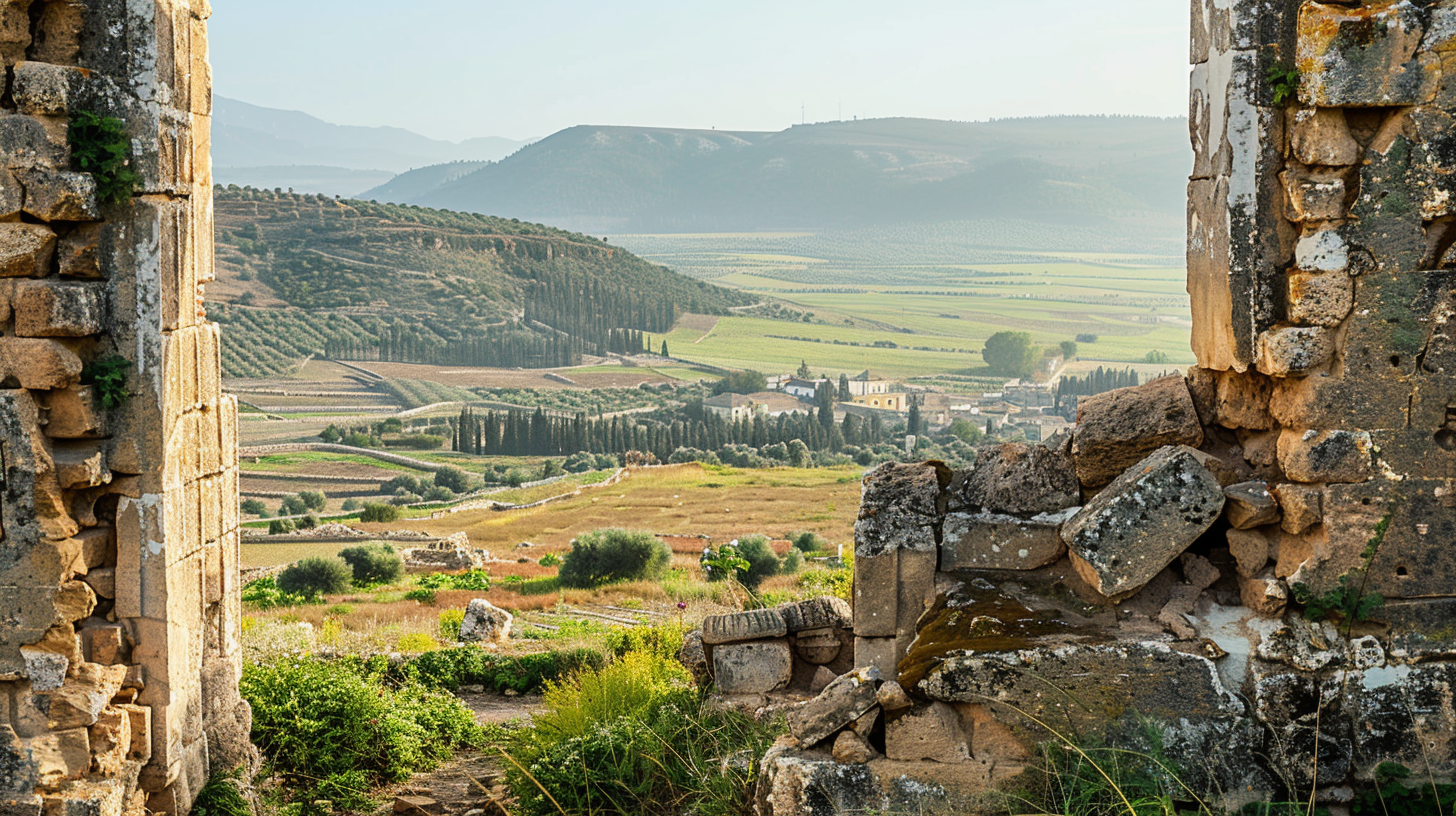
Roman columns and Morocco's holiest shrine, an hour apart.

Imperial cities, Roman mosaics, and a vineyard lunch that quietly dismantles everything you assumed about North African soil.

Three days in the world's largest car-free urban area — tanneries, foundouks, and the sound of hammering brass.

The classic desert crossing — medieval labyrinth to red city, with the Sahara in between.

The cedar forests above Azrou hide Barbary macaques and trees older than the Alaouite dynasty. Four days at altitude, where Morocco gets cold and quiet.

The range tourists drive past on the way to the Sahara. Cedar forests, lakes, Amazigh villages, the Barbary macaque. Five days where Morocco breathes.
You might also consider
Journeys that pass through Fes
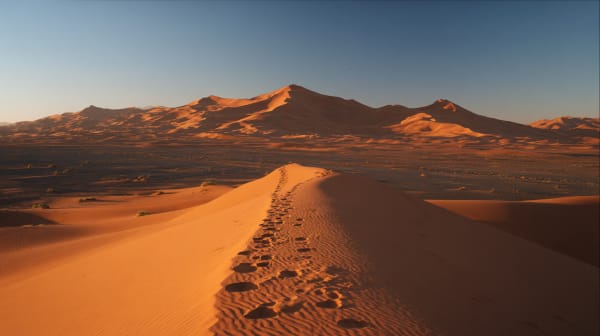
The classic — red city to medieval labyrinth via the Sahara. The corridor that defines Moroccan travel.

Volubilis, Chellah, Lixus — following Rome's African frontier through ruins most visitors never find.

In 1832, Delacroix came to Morocco and rewrote the colour theory of European painting. The light is still here — and still winning.
FIFA World Cup 2030
Morocco will co-host the 2030 FIFA World Cup alongside Spain and Portugal — the first World Cup to span three continents. Six Moroccan cities will host matches, with Fes among them.
Stadium
Stade de Fès
Capacity
55,800
Status
Renovation planned
Currently 45,000 seats, scheduled for expansion to 55,800 with a new roof. The stadium hosts both football and athletics events and will receive a complete restyling for 2030.
Morocco is investing over $1.4 billion across its six World Cup venues. The high-speed rail network — already connecting Tangier to Casablanca — is planned to extend south to Marrakech and Agadir before 2030.
Interactive stadium & infrastructure map →Plan your visit
Every journey we design includes private guiding, accommodation chosen for character rather than category, and the kind of access that takes years in Morocco to arrange.
Plan Your TripWritten from the medina. Sent when it matters.