Skala de la Ville
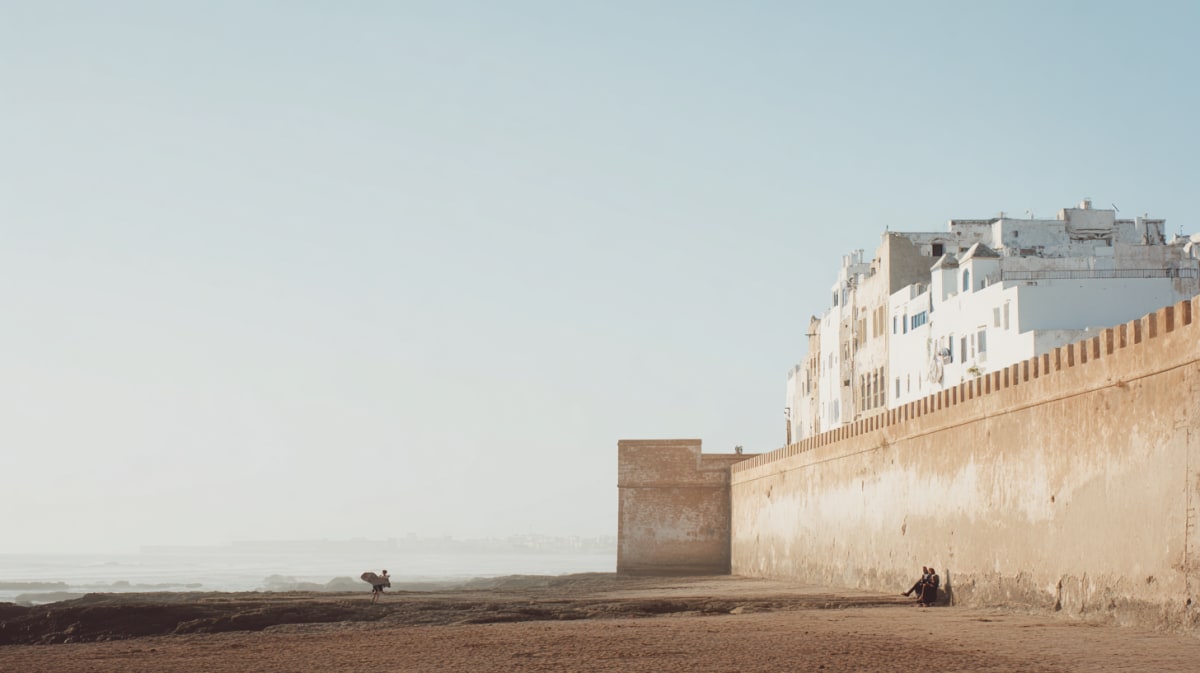
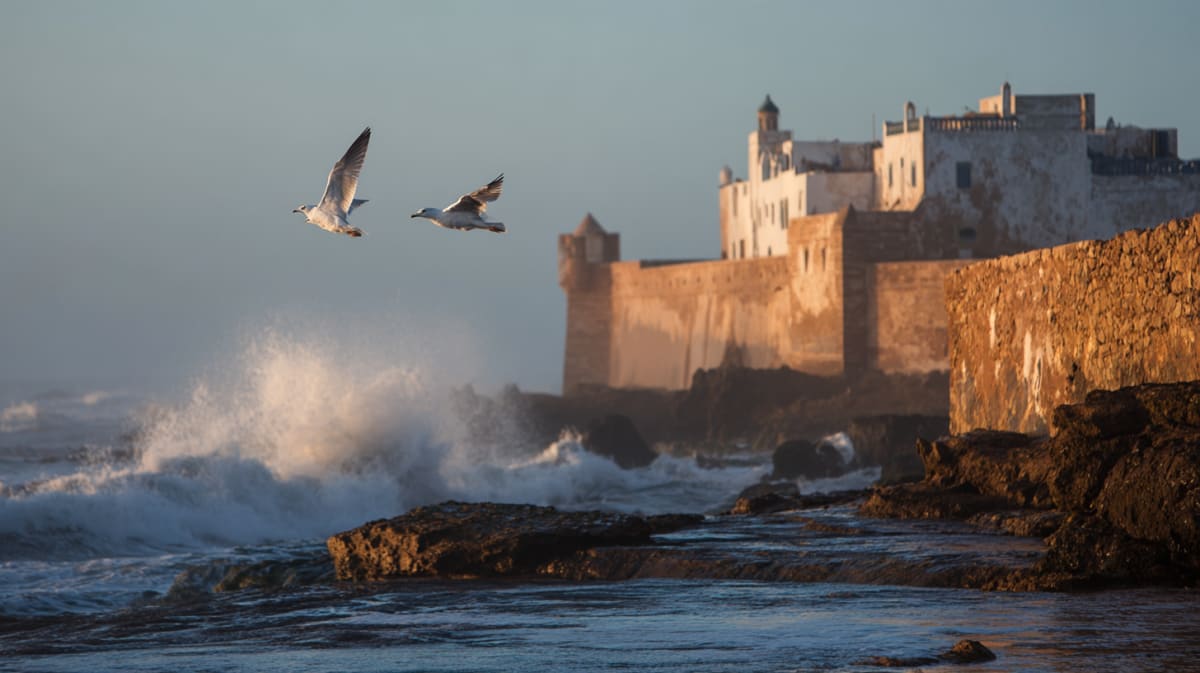
The great sea bastion of Essaouira, running the length of the northern medina wall above the Atlantic. Eighteen Portuguese cannons still point seaward from the battlements — none of them ever fired in anger. The view from the top is the one Orson Welles used as the backdrop for his opening scene of Othello, shot here in 1949.
The sea bastion on the western rampart of the medina, facing directly into the Atlantic. A platform of Portuguese-era cannons — bronze and iron, still mounted on their carriages — pointing out to sea from behind crenellated walls. This is the image of Essaouira that appears on every postcard.
The skala was built in the 18th century by Sultan Mohammed III as part of the city's fortifications, but the cannon positions and the military architecture draw on Portuguese models — Essaouira (then Mogador) had been a Portuguese trading post before the Saadians expelled them. Théodore Cornut, the French engineer who designed the medina, placed the skala to defend the harbour mouth from naval attack.
The cannons were never fired in anger. By the time they were installed, the age of naval bombardment of Moroccan ports was mostly over. They are European-made — Spanish, Dutch, Portuguese — acquired through trade or captured from wrecked ships.
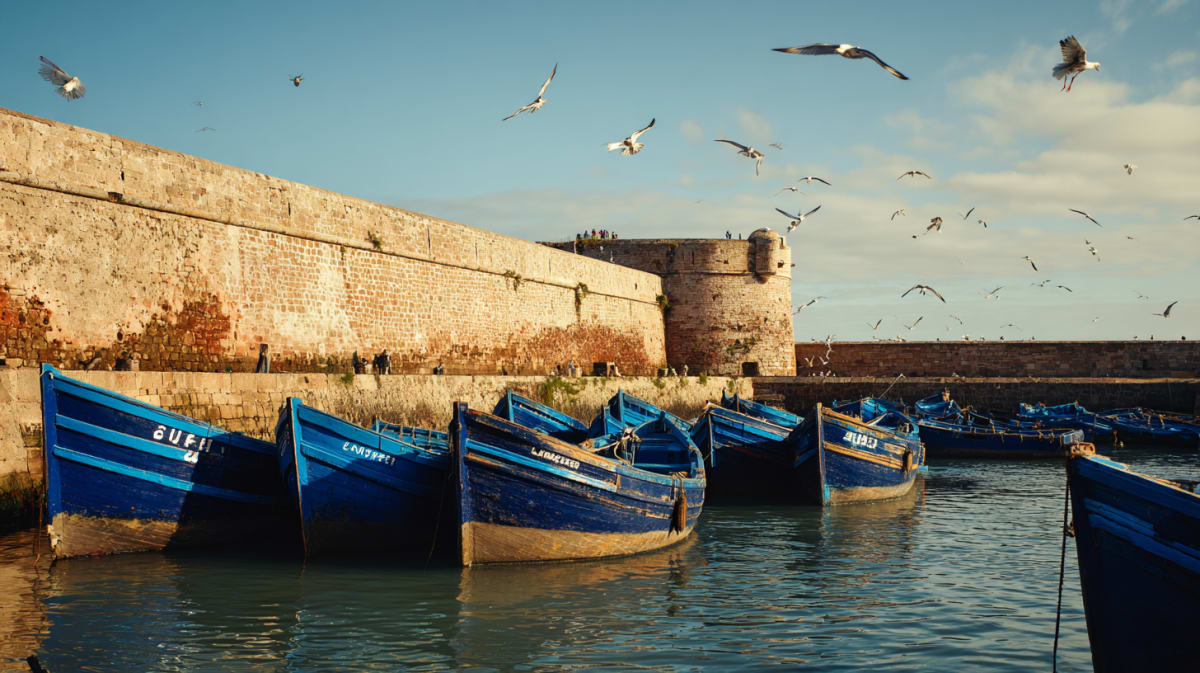
The platform runs the full length of the western wall. The light in the afternoon is the best — low sun, long shadows from the cannons, the Iles Purpuraires visible offshore. Essaouira's other skala, the Skala du Port, defends the harbour side and is less visited.
Visitor Information
Explore More
Related Stories
Discover the history and culture of Essaouira


Explore More
Multi-day journeys featuring this place
Curated routes that pass through Essaouira
4 Days
4-Day Essaouira & Coastal Villages
Wind, grilled fish, Atlantic light — four days where the sea rewrites your clock and nobody asks you to hurry.
4 Days
Majorelle & Marrakech Artists
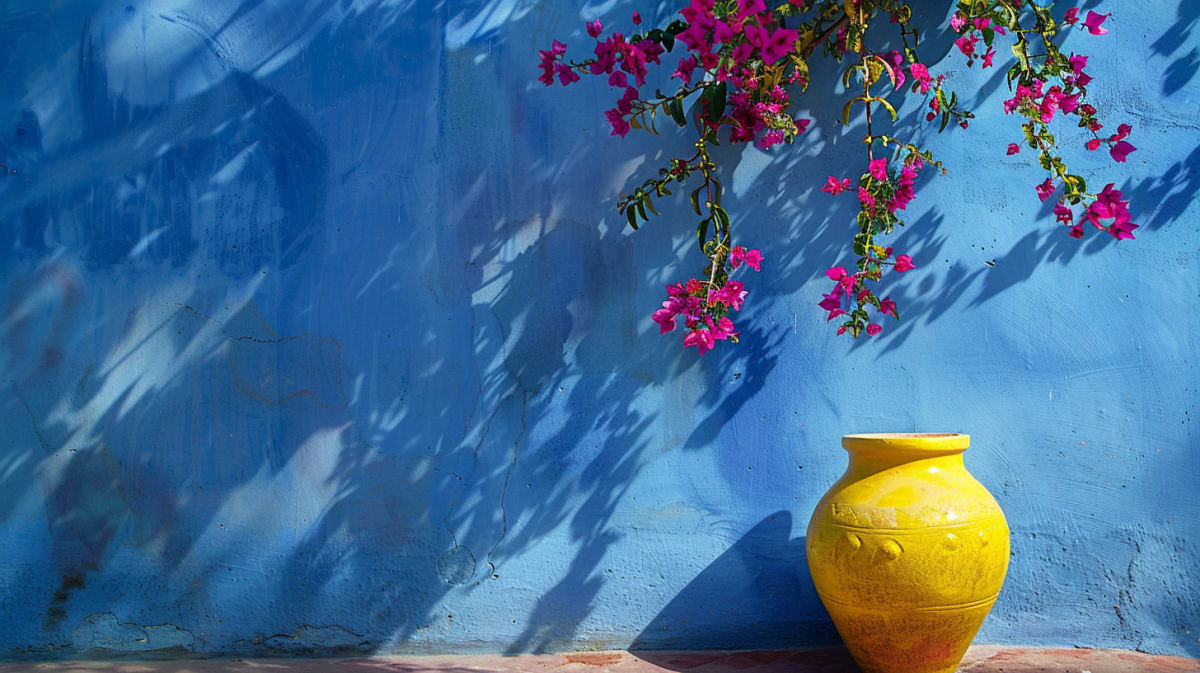
The blue garden, the red city, and the painters who came for a visit and never left — which says more about Marrakech than any guidebook.
4 Days
Oualidia Oysters & Lagoon
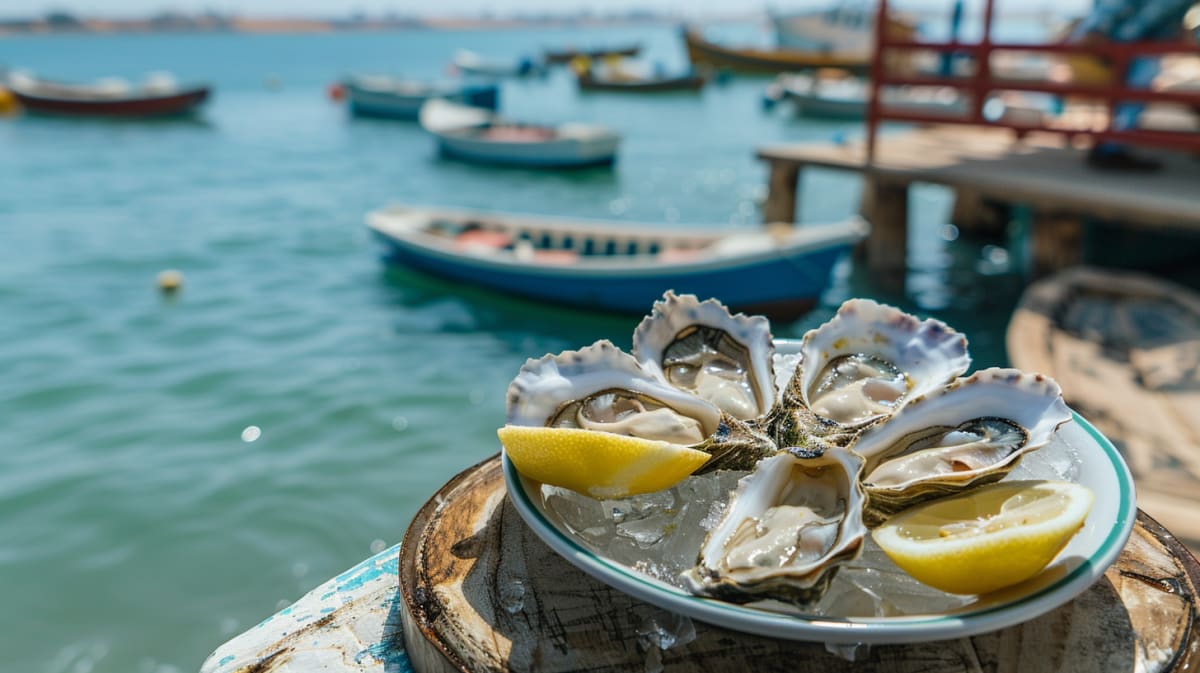
A lagoon between Casablanca and Essaouira produces the only oysters in Morocco. Four days of birds, salt marshes, and a kitchen that knows what to do with both.