
Architecture
The Door You Would Walk Past
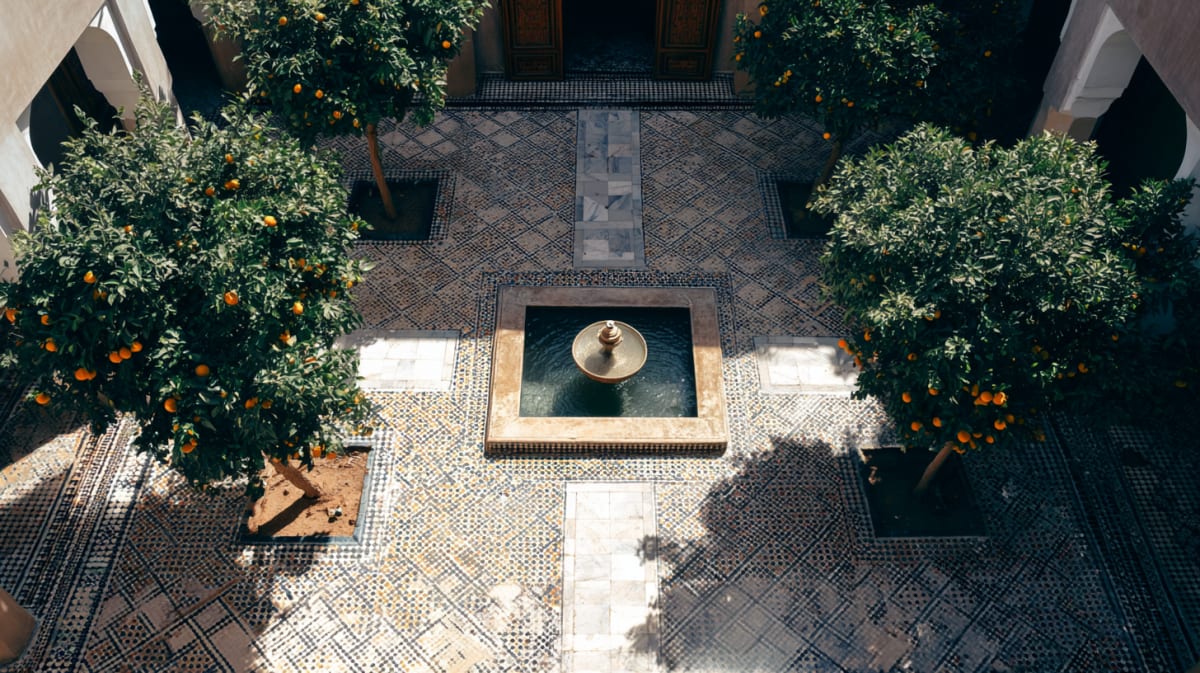
The door in the wall is plain. Ordinary. You would walk past it without looking. Then it opens, and you fall into a garden surrounded by sky.

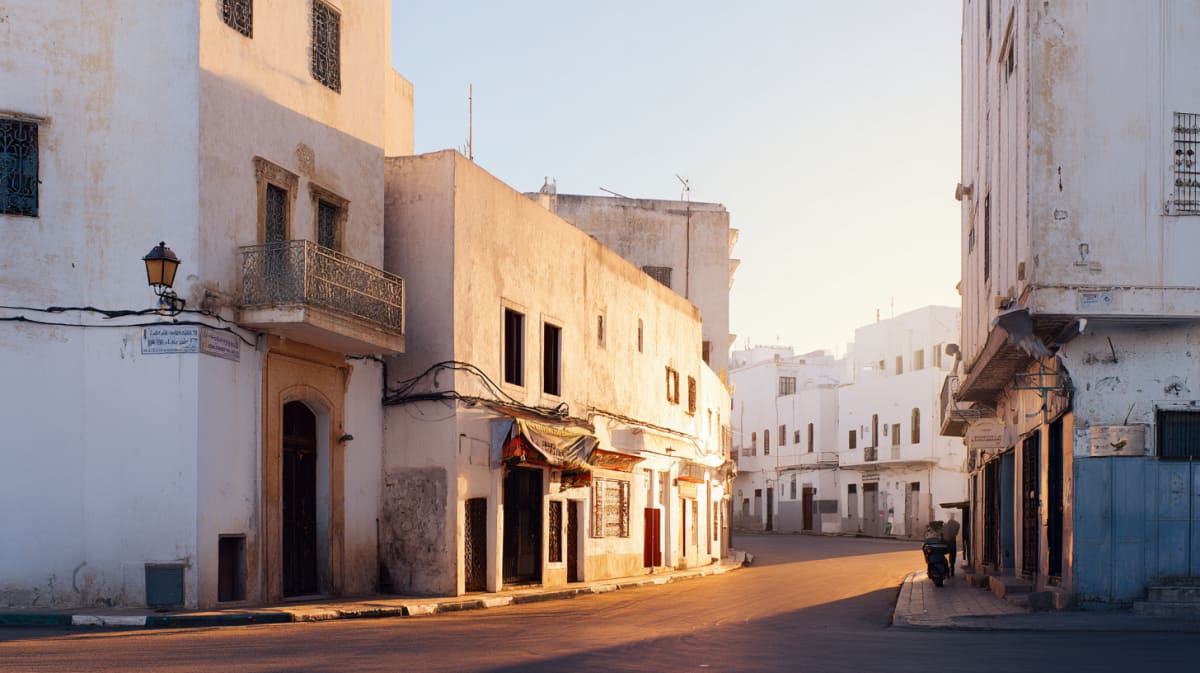
Morocco's imperial cities were each built to outshine the last. Marrakech, Fes, Meknes, Rabat — a thousand years of architectural ambition compressed into labyrinthine medinas, monumental gates, and the particular silence of a tiled courtyard at noon. The cities are where Moroccan history is legible and where it is most deliberately obscured.
Cities & destinations
Places

Towns
Morocco's holiest town, draped across two hills above the ruins of Volubilis.
Monuments
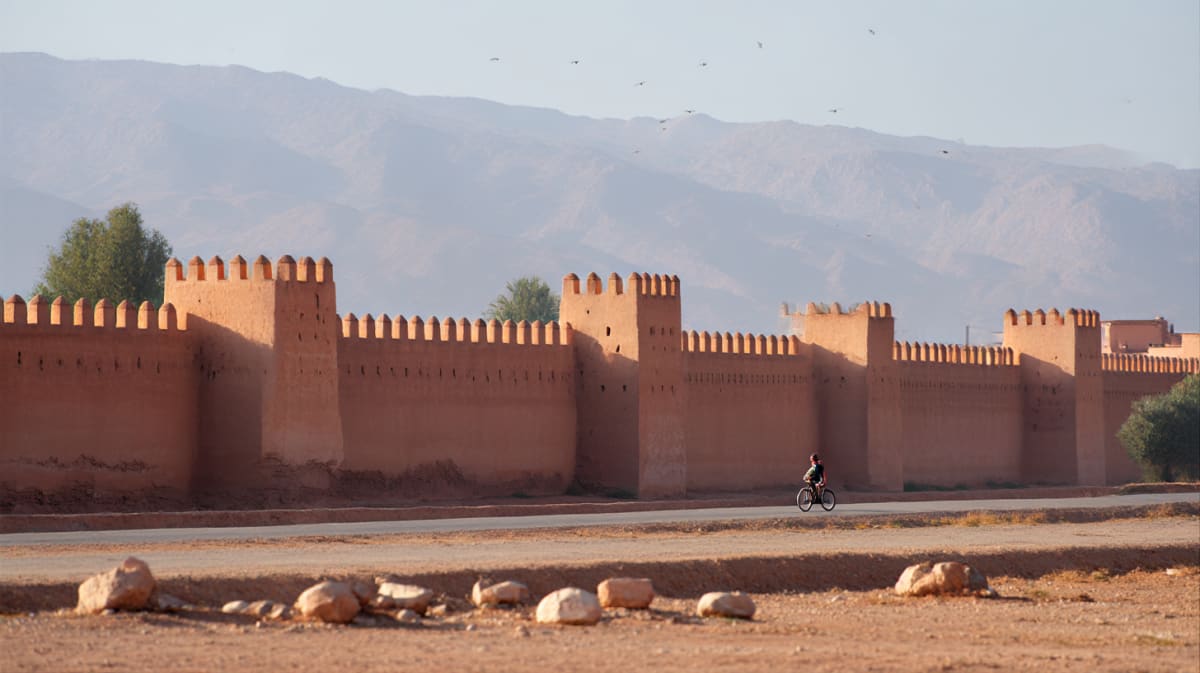
Seven kilometres of 16th-century Saadian pisé walls with 130 towers — the most complete earthen fortifications in Morocco. Best seen by calèche at sunset when the Anti-Atlas catches the last light.

Working areas
Ochre walls, two souks, no crowds. The Marrakech that Marrakech used to be — before the riads, before the influencers, before the tour groups arrived.
Stories
Architecture
The door in the wall is plain. Ordinary. You would walk past it without looking. Then it opens, and you fall into a garden surrounded by sky.
Architecture
Grand Vizier Ba Hmad had a problem: four wives, twenty-four concubines, and the need to keep them all happy — or at least separate. His solution was architectural. The Palais Bahia is eight acres of courtyards, gardens, and apartments designed so that no woman ever had to see another.
Architecture
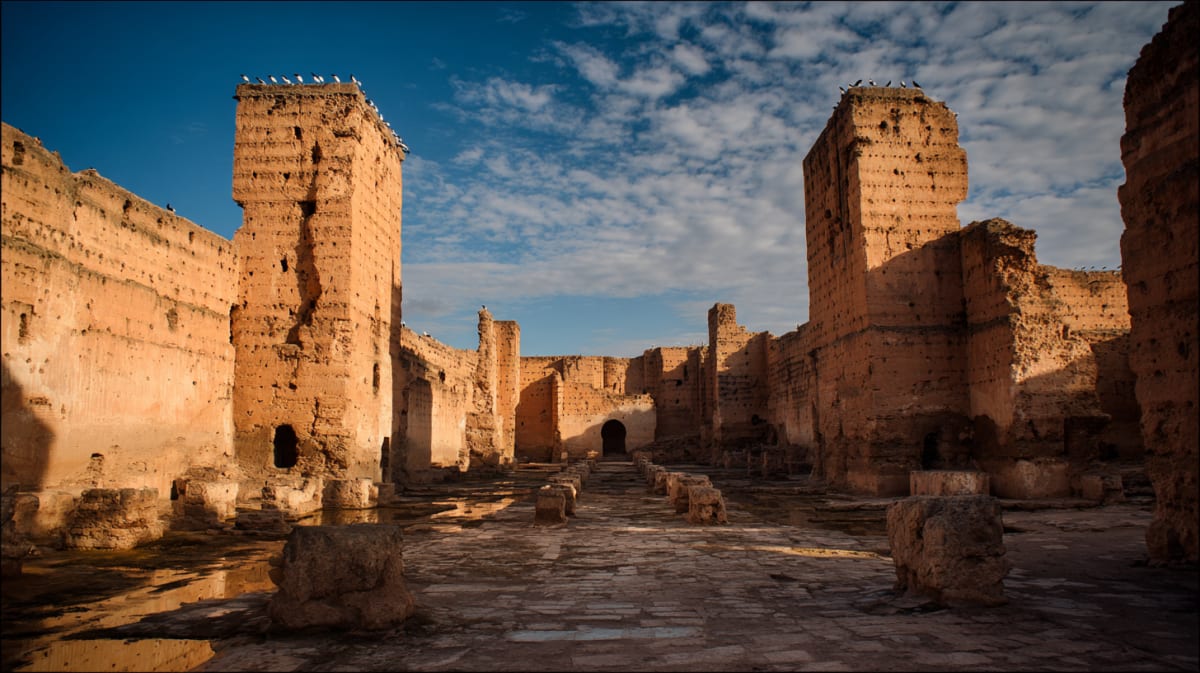
Ahmad al-Mansur built El Badi to show the Portuguese what they'd lost. Gold, onyx, Irish oak — 360 rooms of excess funded by ransom money. A century later, the Alaouites stripped it bare. What took 25 years to build took 10 years to dismantle. The ruins are the story.
Architecture
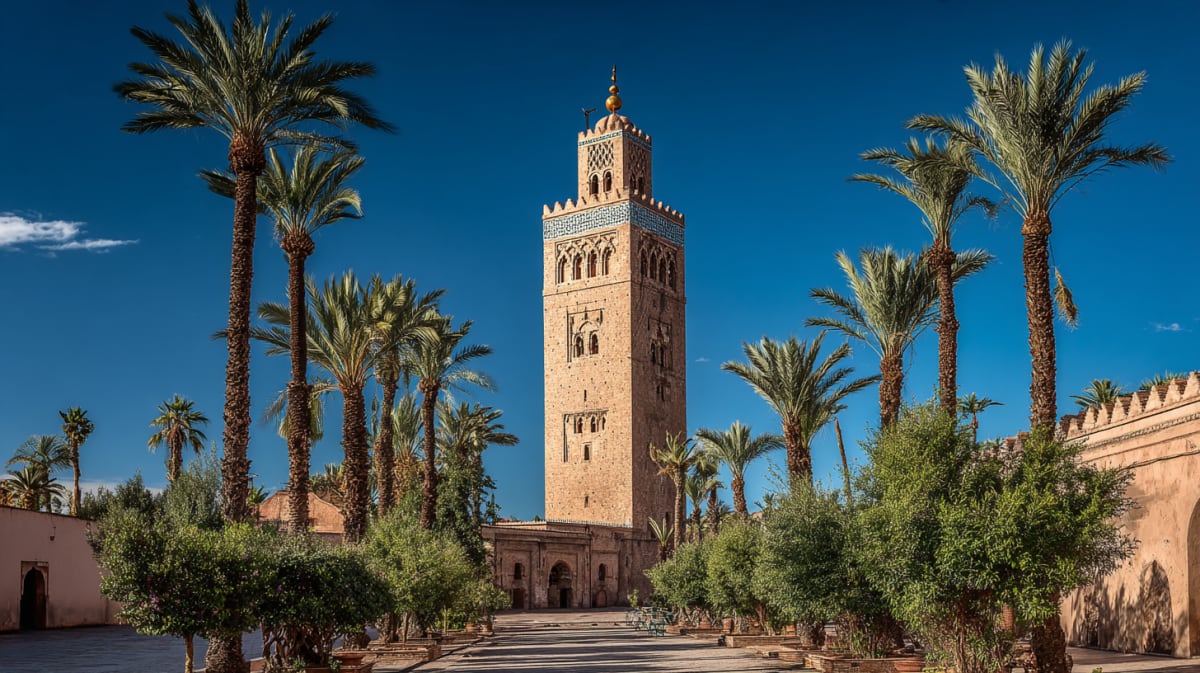
The Almohads built the Koutoubia Mosque. Then someone realized the mihrab wasn't aligned with Mecca. Rather than adjust the prayers, they rebuilt the entire mosque. The minaret they raised became the template for towers across three continents.
Architecture
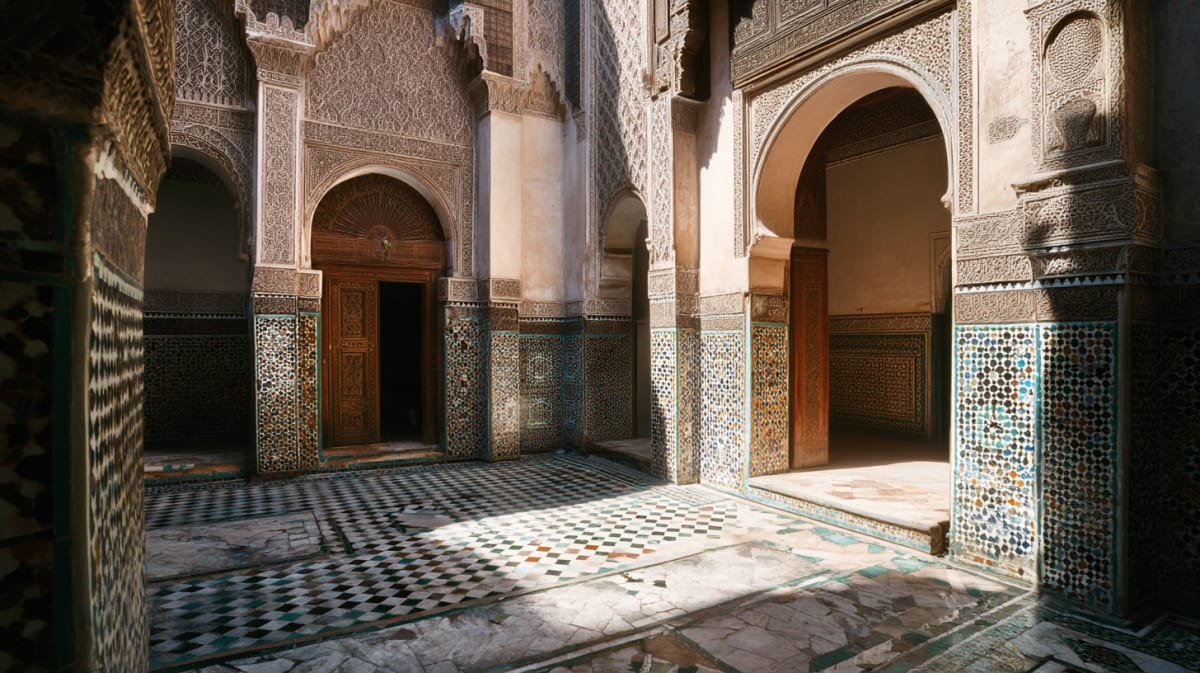
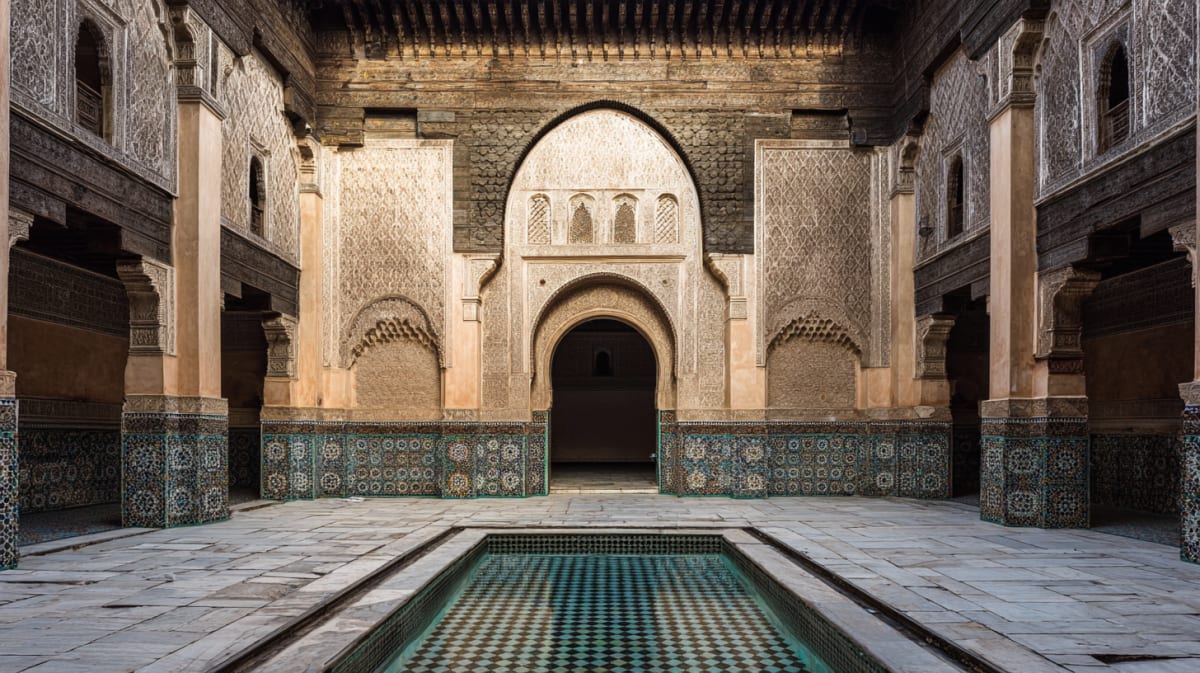
The Ben Youssef Medersa trained scholars for 500 years. 900 students lived in 130 cells the size of closets, memorizing the Quran by candlelight. The architecture was designed to focus the mind: no windows, no distractions, just text and silence.
Design
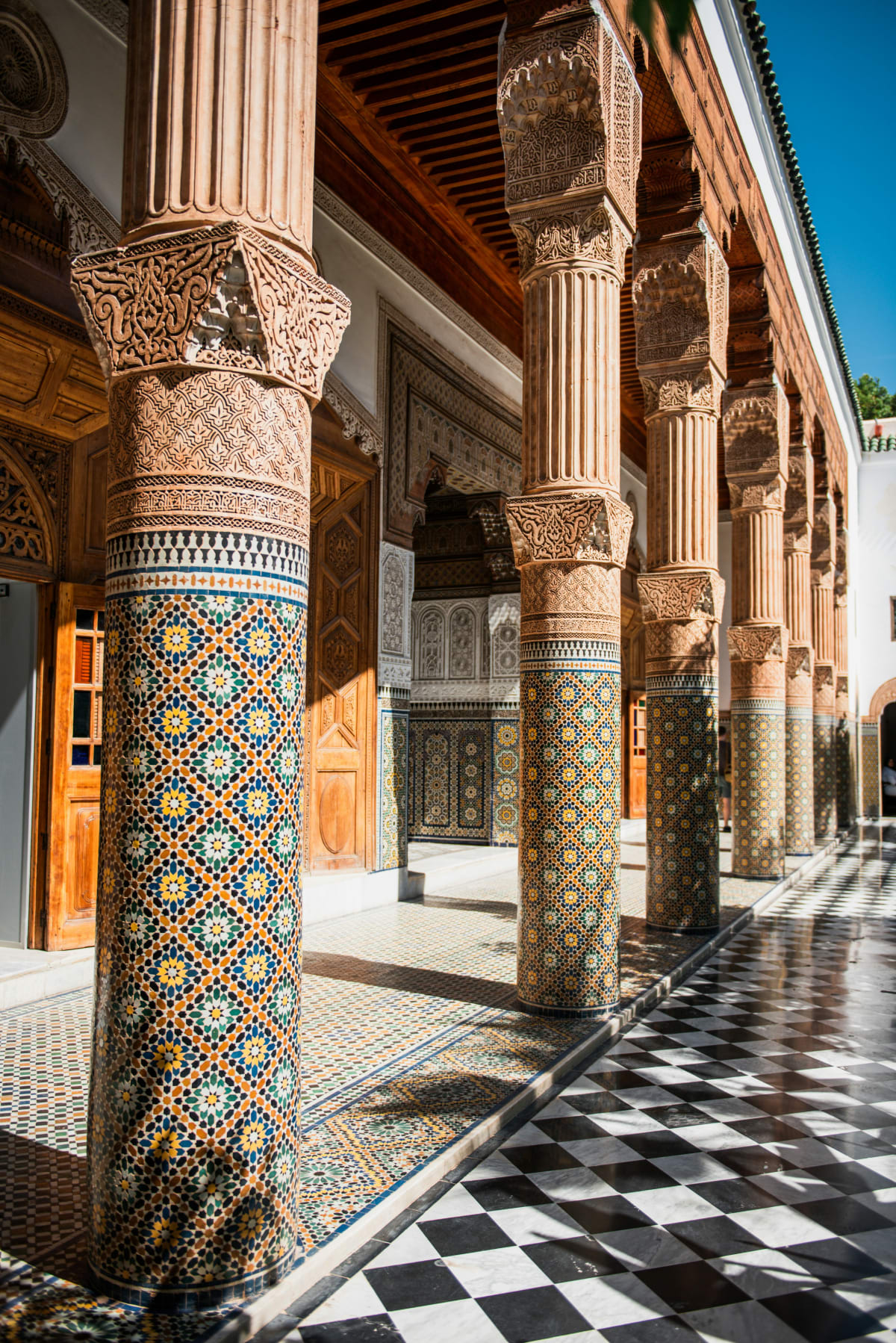
The hammer falls. A chip of clay spins away. He doesn't look. Forty years of cutting. No ruler. The geometry lives in his hands.
Journeys in Cities
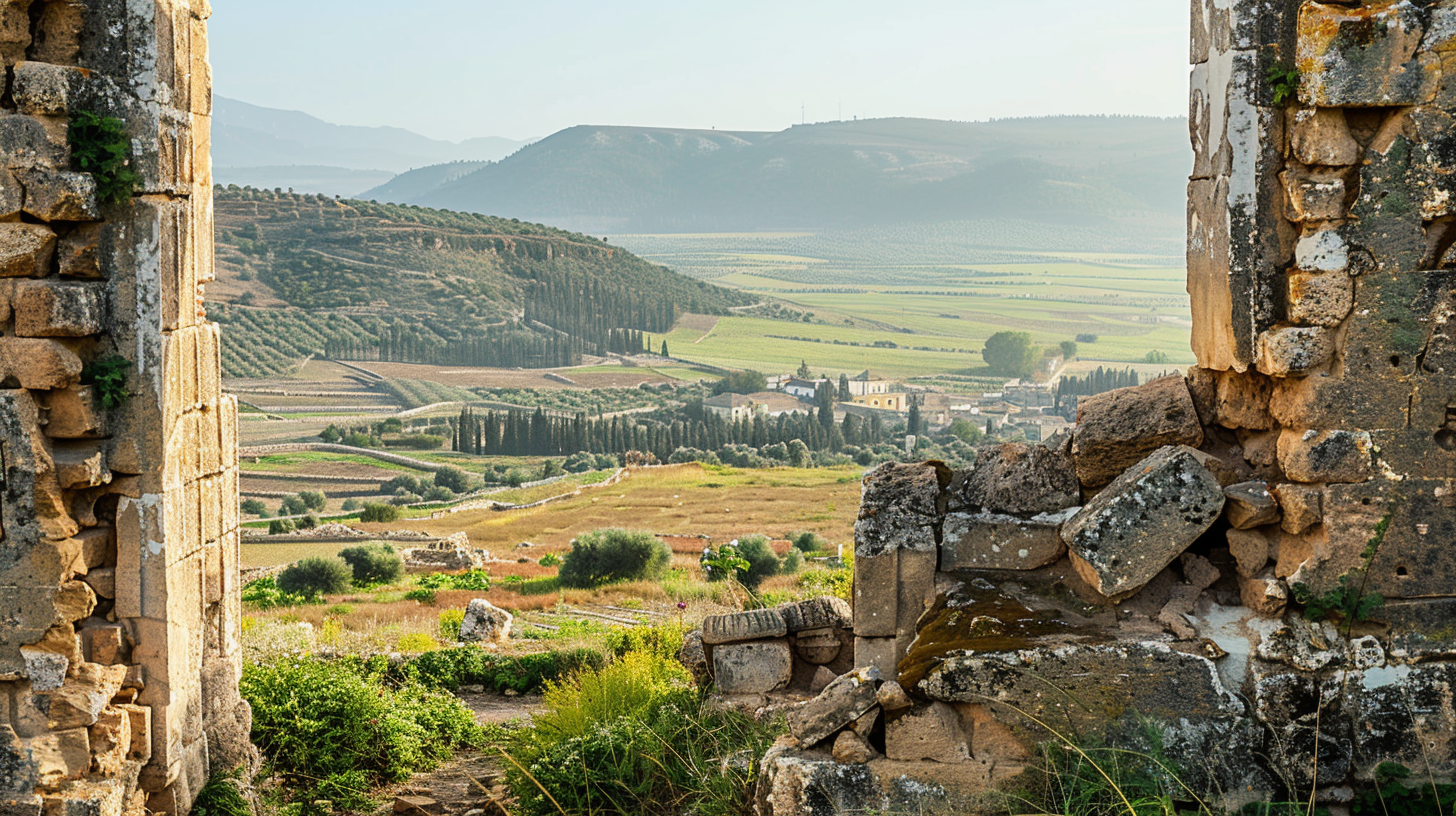
Roman columns and Morocco's holiest shrine, an hour apart.
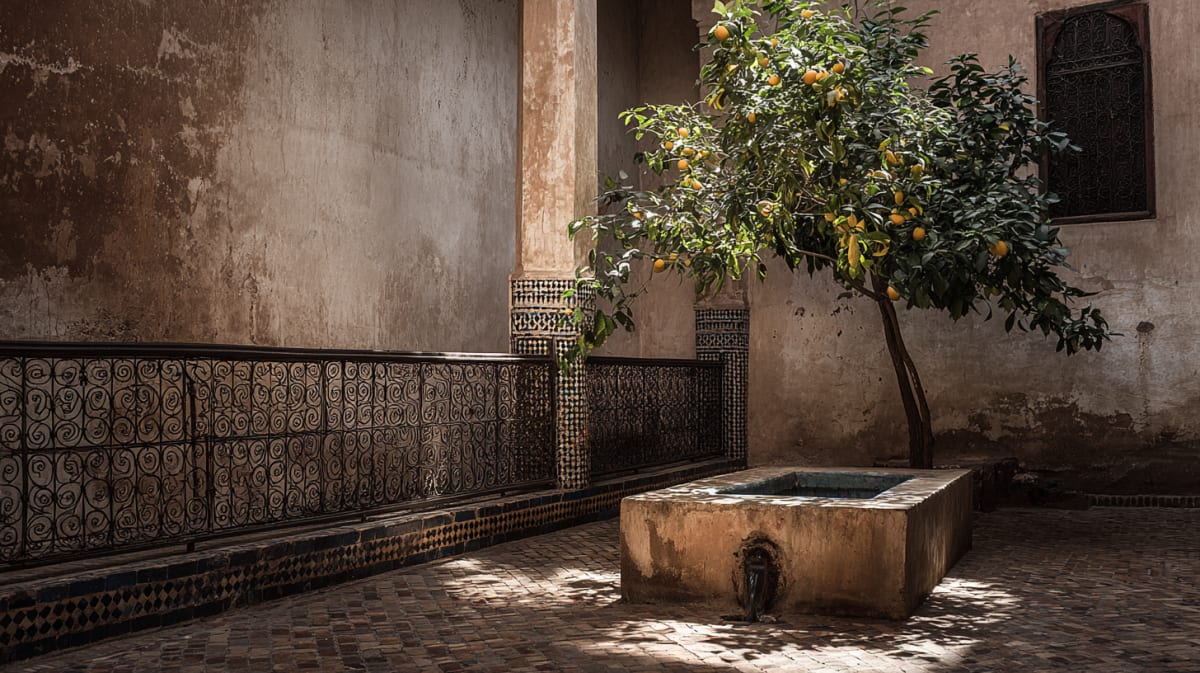
Three days to learn a medina's rhythm — souks at dawn, hidden gardens at noon, the square becoming a theatre at dusk.

Imperial cities, Roman mosaics, and a vineyard lunch that quietly dismantles everything you assumed about North African soil.
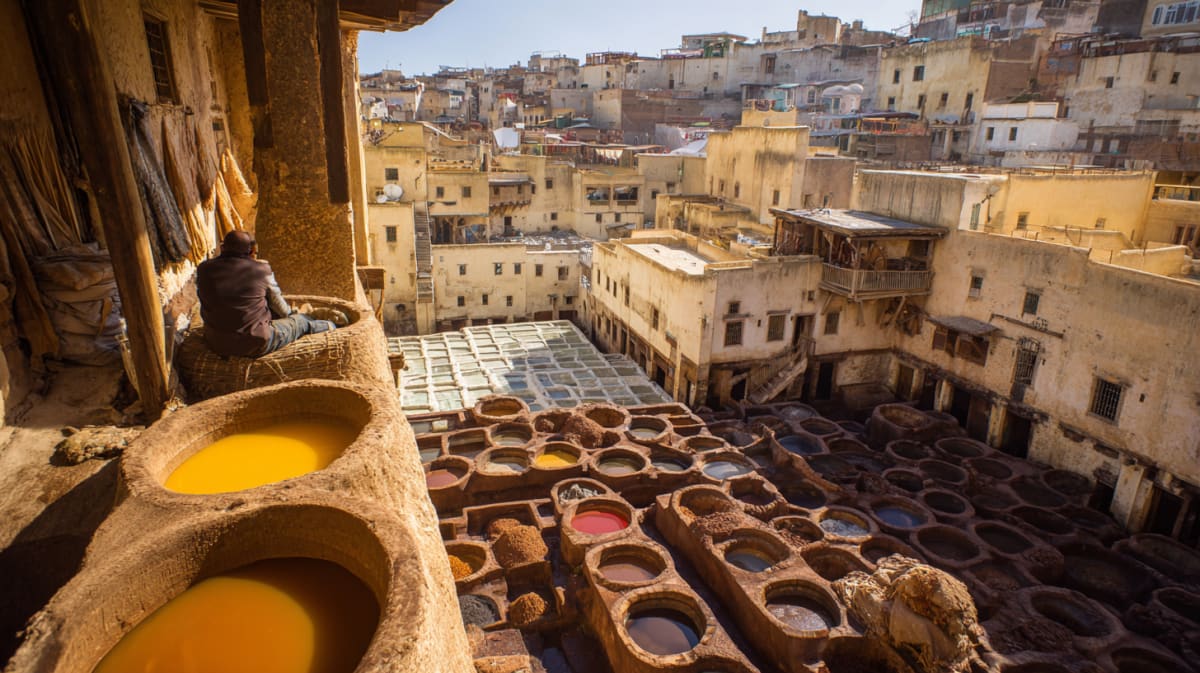
Three days in the world's largest car-free urban area — tanneries, foundouks, and the sound of hammering brass.
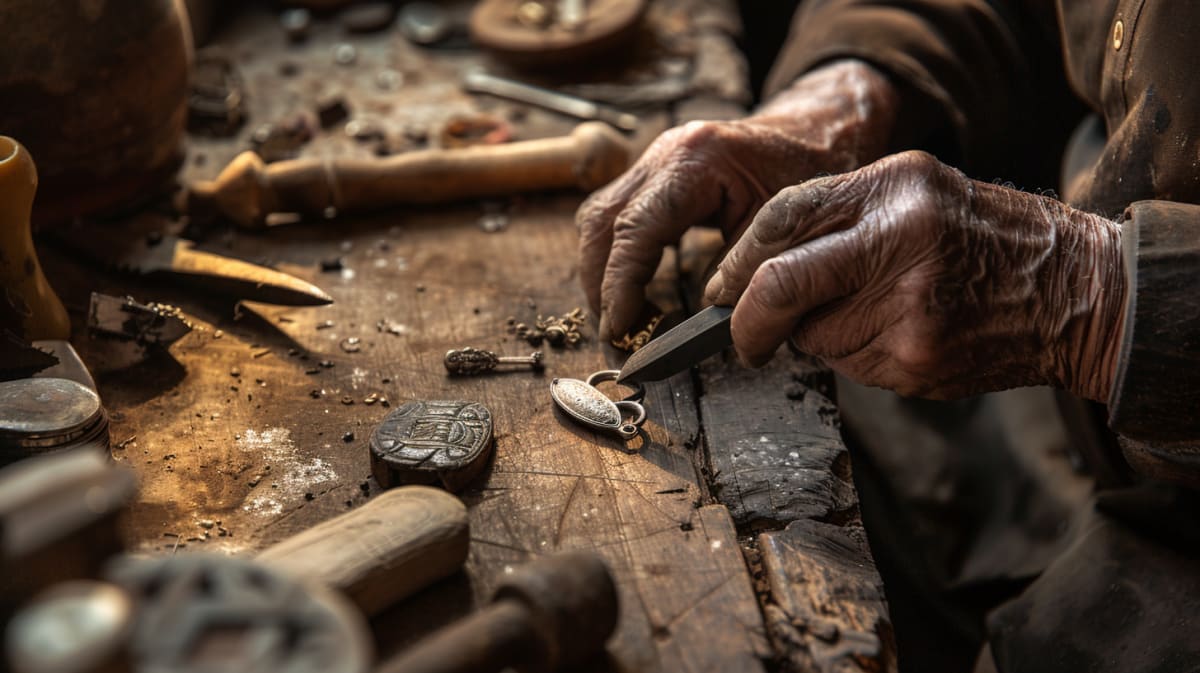
Morocco's silver capital — Berber jewelry, crenellated walls, and the hammering that sounds like rain.
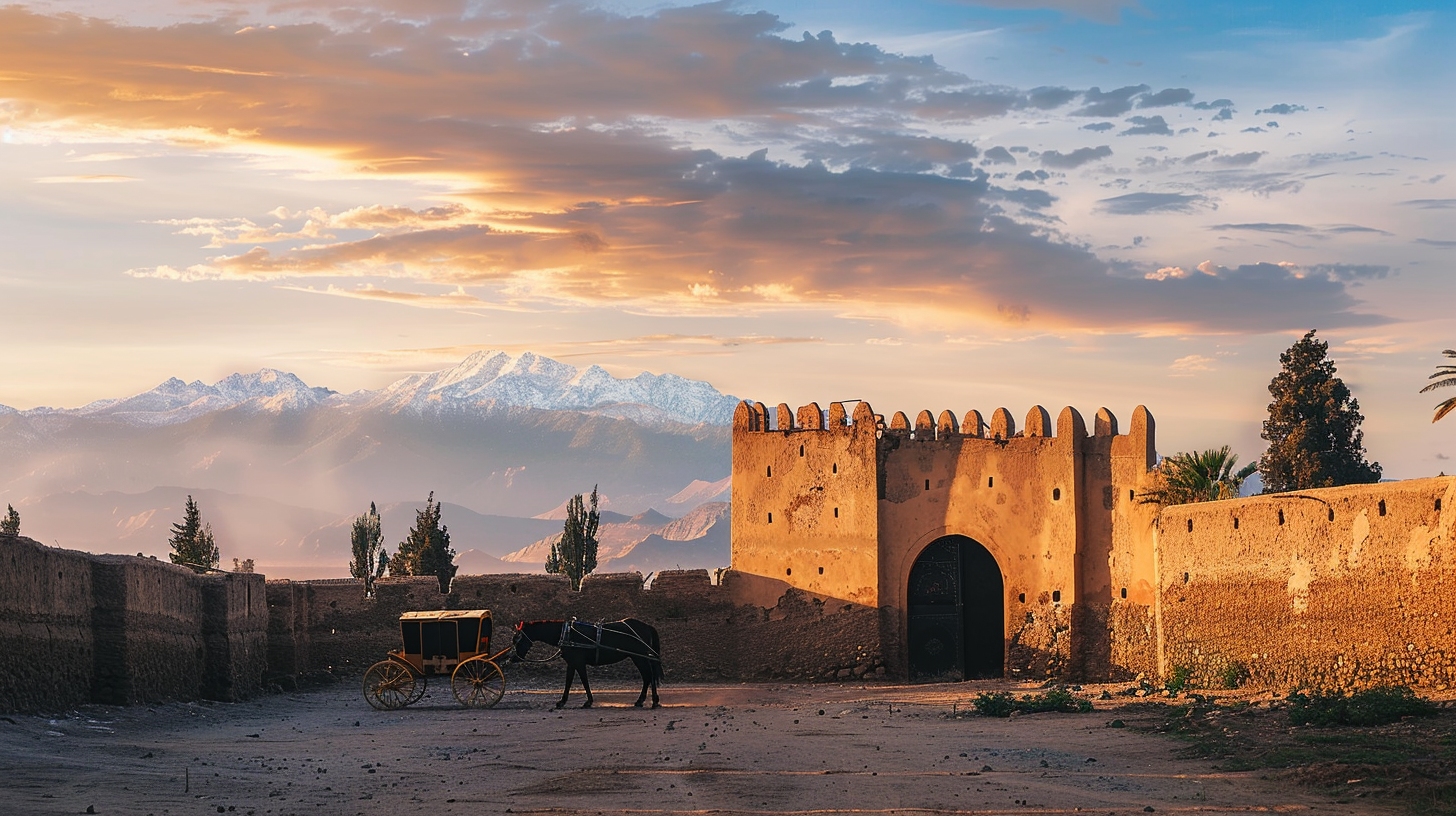
The little Marrakech — ochre walls, unhurried souks, and the Atlas rising behind like a standing ovation.
Private journeys
Every journey we design is private, built around what you want to see, and shaped by deep experience inside Morocco.
Plan Your TripWritten from the medina. Sent when it matters.