Four dynasties, four capitals, four very different ideas about what a city should be. Morocco rotated its throne the way some countries rotate crops — each new power planting itself in fresh ground, building a capital that announced exactly who they were and what they intended.
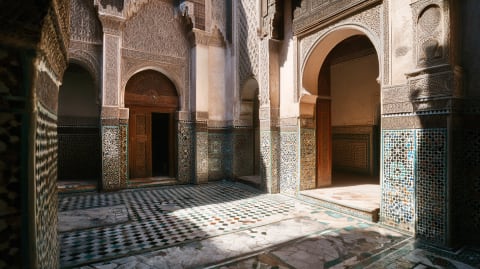
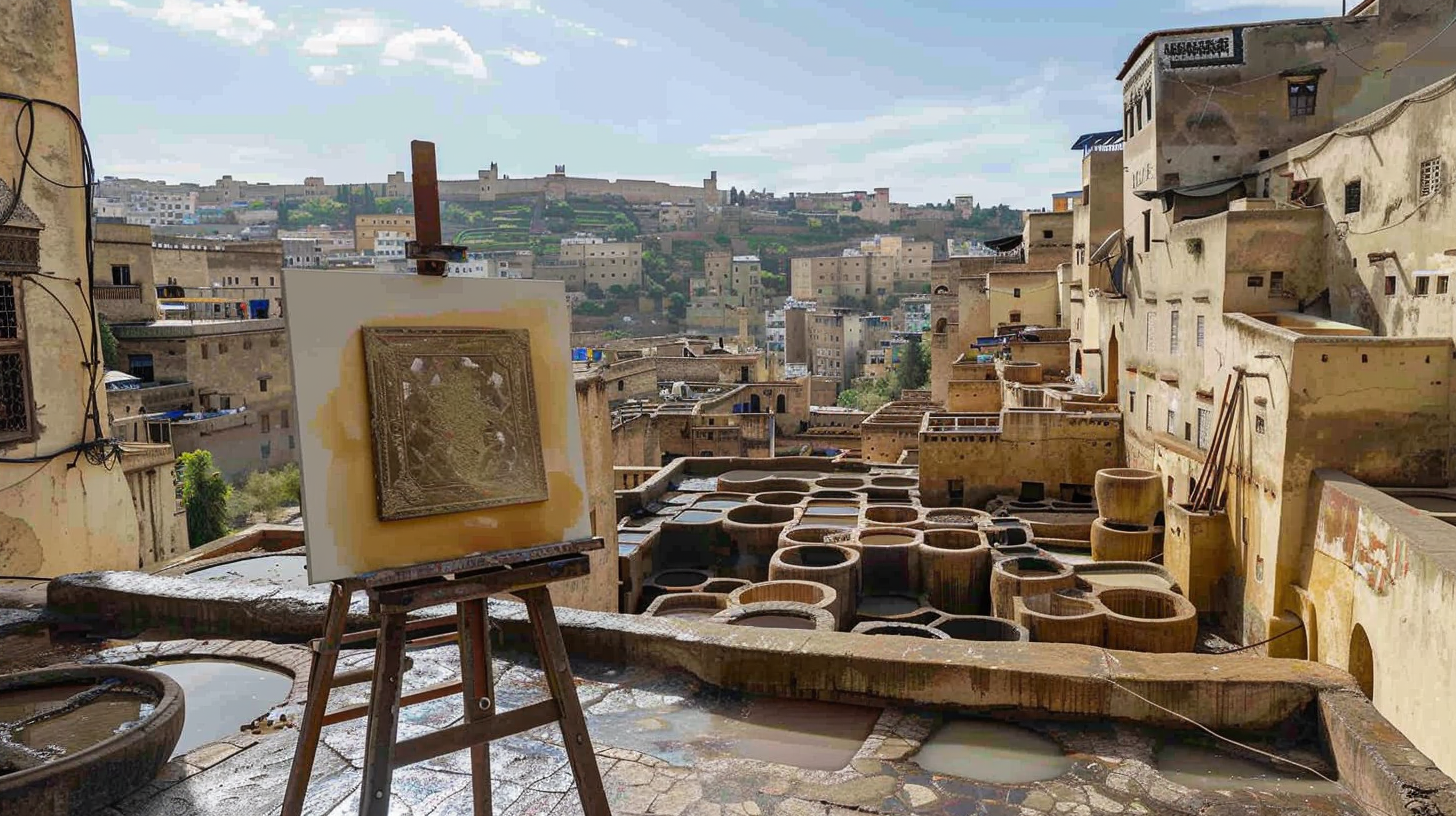
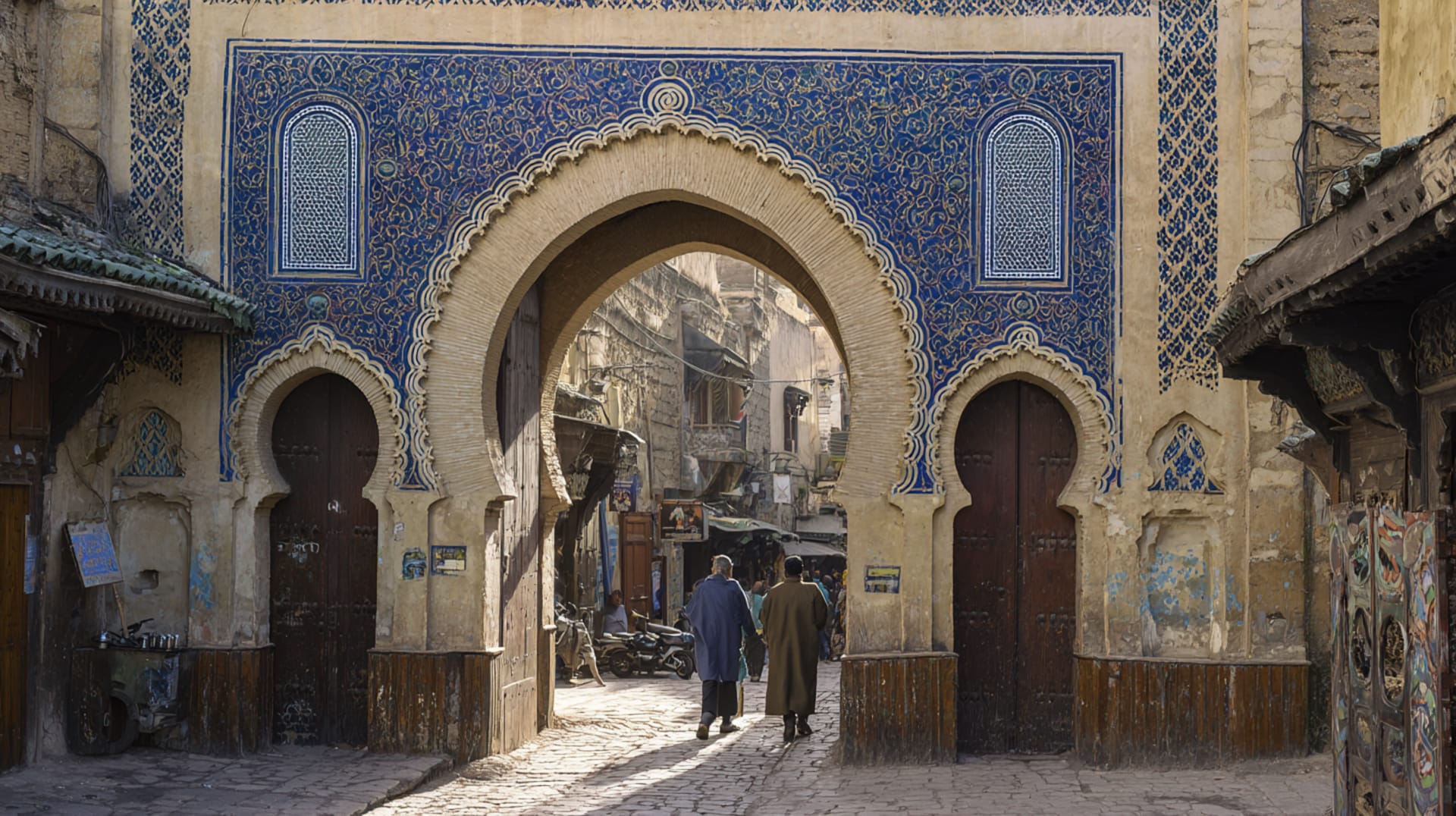
Fes was first. Founded in 789 by Idris I, expanded by his son Idris II, it became the intellectual and spiritual capital — a city of scholars, theologians, and craftsmen who produced ceramics and carpets and legal opinions with equal seriousness. The University of al-Qarawiyyin, founded in 859 by a woman named Fatima al-Fihri, is recognised by UNESCO as the oldest continually operating degree-granting university in the world. Fes remained the cultural heart of Morocco for most of recorded history. Its medina, Fes el-Bali, is the largest car-free urban area on earth — a fact that anyone who has tried to navigate it on foot can confirm with feeling.
Marrakech was the Almoravid answer — founded in 1070 by Youssef ibn Tachfin, a Saharan warrior who built an empire from Senegal to Spain and needed a capital that matched. The Almohads made it greater: the Koutoubia mosque, the ramparts, the Agdal gardens. The city's name may be the origin of the word "Morocco" itself — Marrakush, the land of God. Whether or not this is true, nobody in Marrakech has any interest in disputing it.
Meknes was one man's obsession. Moulay Ismail, the Alaouite sultan who ruled from 1672 to 1727, wanted his own Versailles and built something that in some ways surpassed it: 25 kilometres of walls, 20 gates, stables for 12,000 horses, granaries that could feed his army for 20 years. He used 25,000 slaves and 30,000 prisoners to build it. The Heri es-Souani — the royal granary and stables — is an engineering project so ambitious that even now, three centuries later, you walk through it with your mouth slightly open.
Rabat became the capital under the French protectorate in 1912 — chosen by Lyautey for its Atlantic coast position, its port, and its useful distance from the religious authority of Fes. It remains the administrative capital today. But Rabat's history runs deeper than the French: the Almohad Sultan Yacoub el-Mansour began the Hassan Tower in 1195, intending to build the largest minaret in the world. He died before it was finished. It still isn't. Rabat has been living with that unfinished tower for eight centuries, which gives the city a certain philosophical patience that the other three never quite managed.
The imperial cities circuit — Fes, Meknes, Marrakech, Rabat — is our most requested itinerary. Each capital tells a different dynasty's story.
Tell us about your trip →Data and visualisation by Dancing with Lions
The Facts
- —Fes: founded 789 by Idris I
- —Marrakech: founded 1070 by Almoravids
- —Meknes: capital under Moulay Ismail (1672-1727)
- —Rabat: current capital since 1912 Protectorate
- —Each dynasty moved the capital to its own city
- —All four are UNESCO World Heritage sites
- —Connected by road and rail (TGV: Tangier-Casablanca)
Sources
- Terrasse, Henri. Histoire du Maroc. Atlantides, 1949
- Deverdun, Gaston. Marrakech: des origines à 1912. 1959
- Le Tourneau, Roger. Fès avant le protectorat. IHEM, 1949
- Parker, Richard. A Practical Guide to Islamic Monuments in Morocco. Baraka Press, 1981