Architecture
The Walls That Are Melting
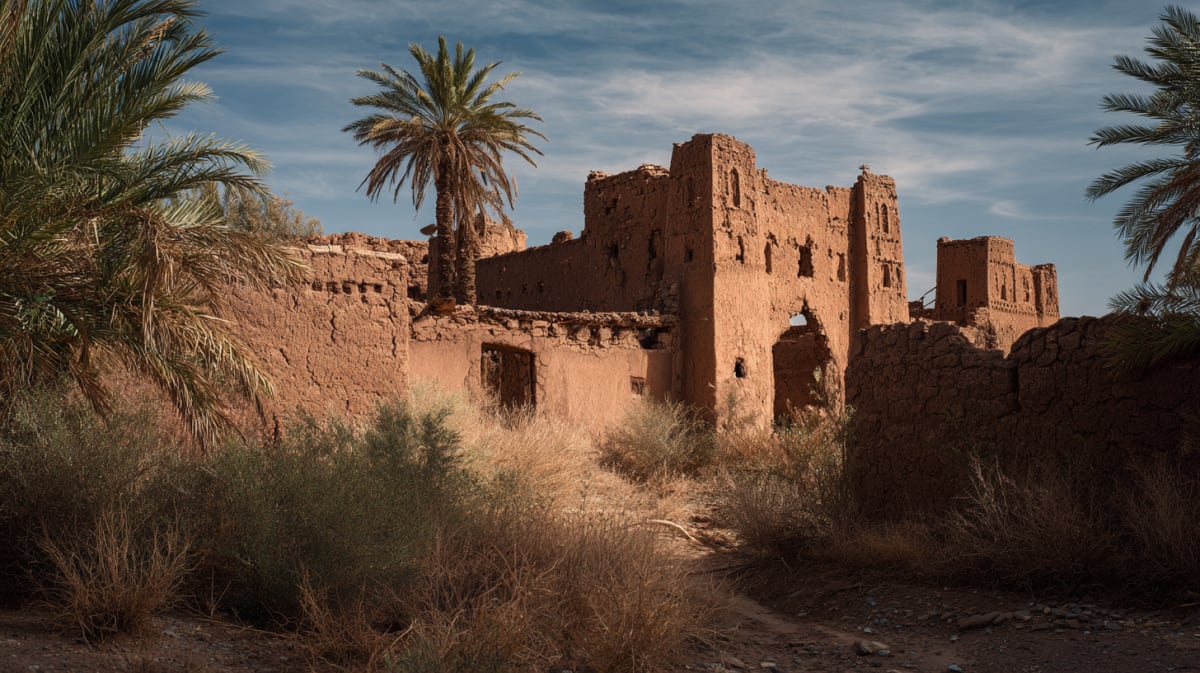
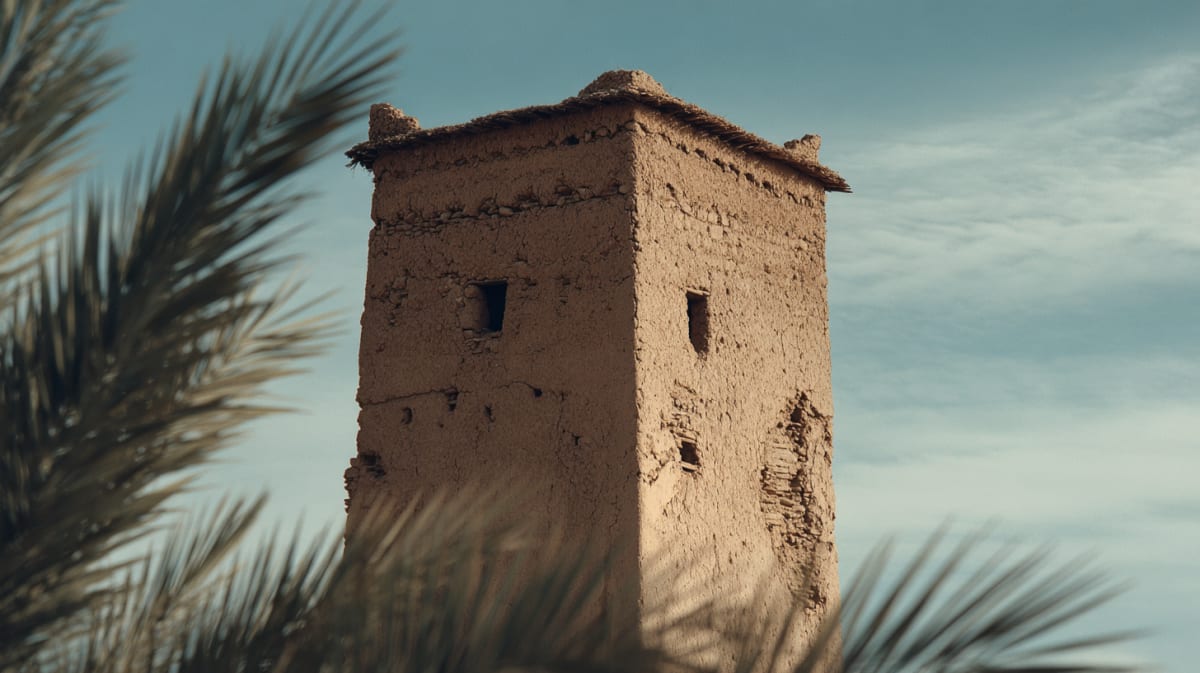
The walls are melting. Rain-carved channels, collapsing corners. A kasbah is built to return to the earth from which it came.

Beyond the mountains, the pre-Saharan plateau gives way to hammada — flat stone desert — and then to the great ergs, the sand seas. Erg Chebbi near Merzouga, Erg Chigaga near M'Hamid. Kasbahs built from the earth they stand on, already beginning the slow return. Oases threaded along ancient caravan routes. The Sahara is not empty — it is full of things that require stillness to see.
Cities & destinations
The road of a thousand kasbahs
Dades Valley
The dunes everyone comes for
Merzouga
The river, the kasbahs, the route south
Draa Valley

The kasbah on the road from Marrakech to everywhere
Ait Benhaddou
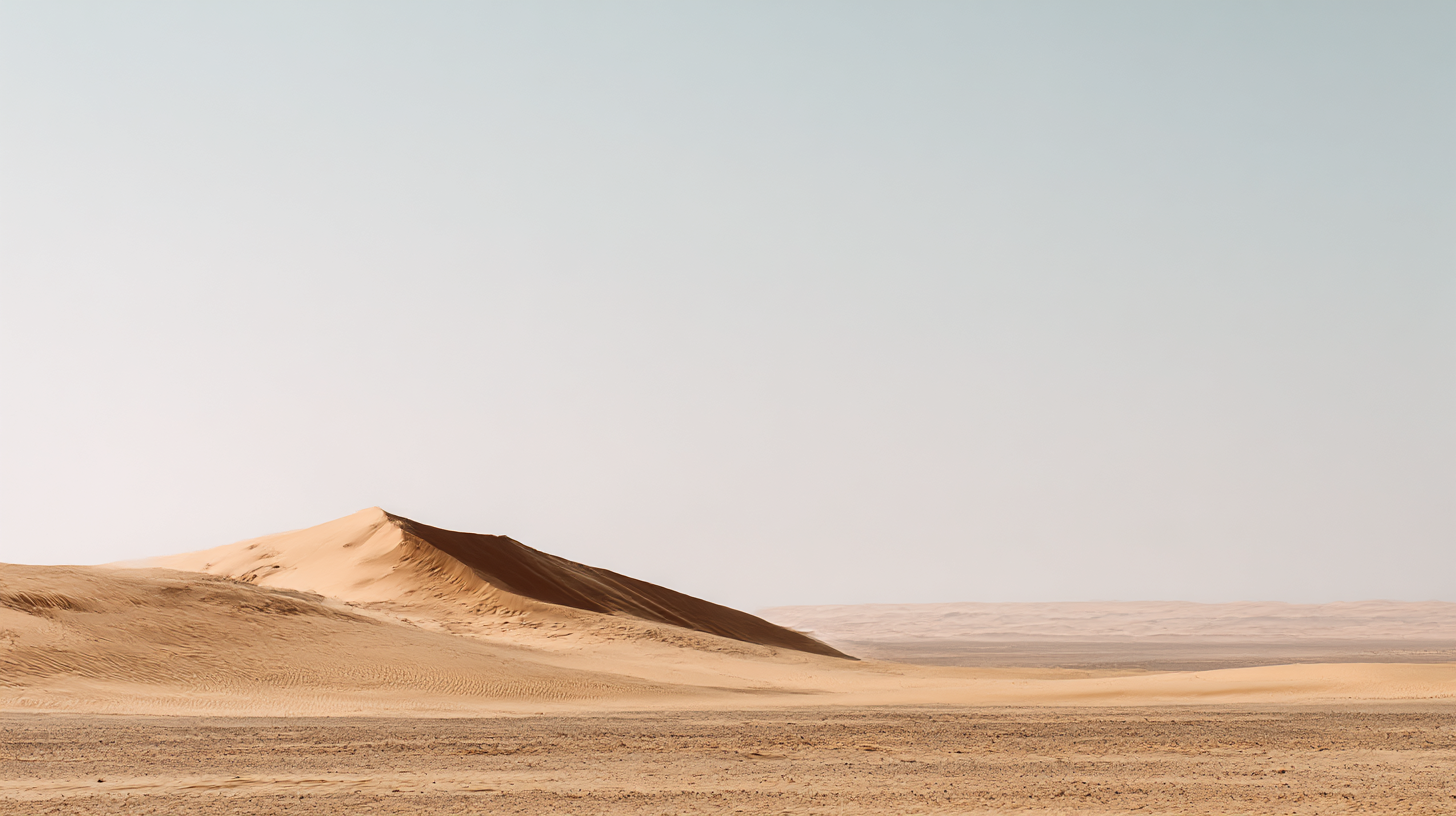
The last town before the sand
M'Hamid
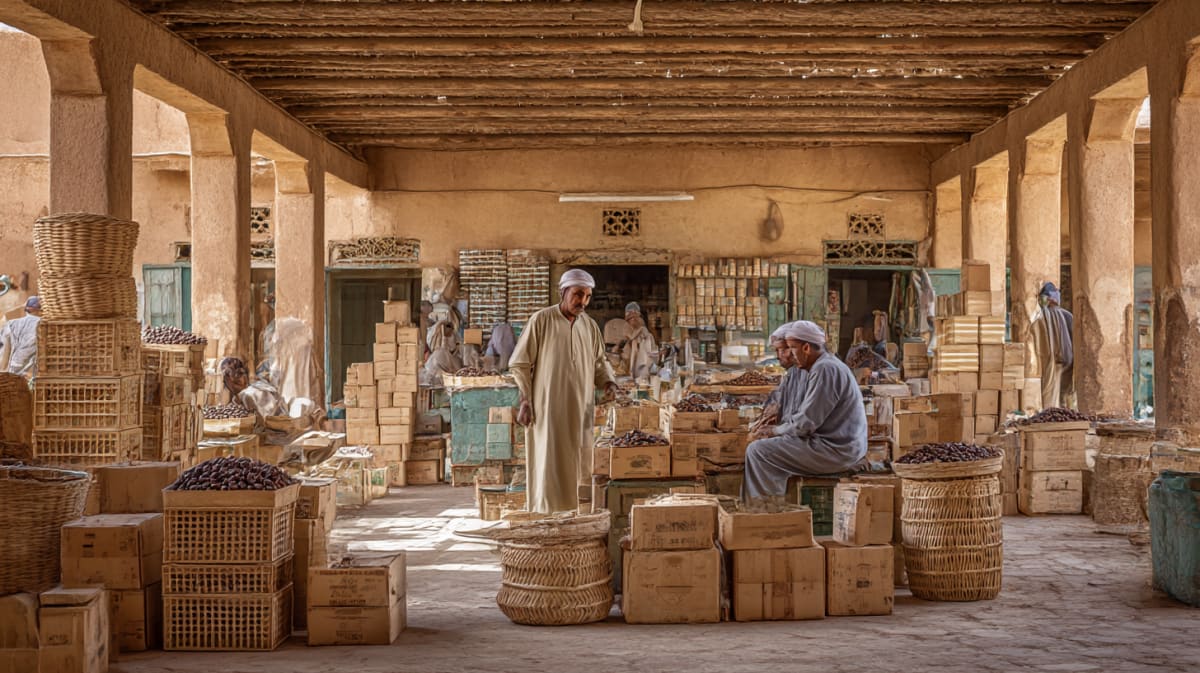
The last souk before the Sahara
Rissani

A palmery of kasbahs on the Dadès River
Skoura

Manuscripts and green pottery in the Draa Valley
Tamegroute

The Anti-Atlas plateau the French conquered last
Jbel Saghro
Places
Natural
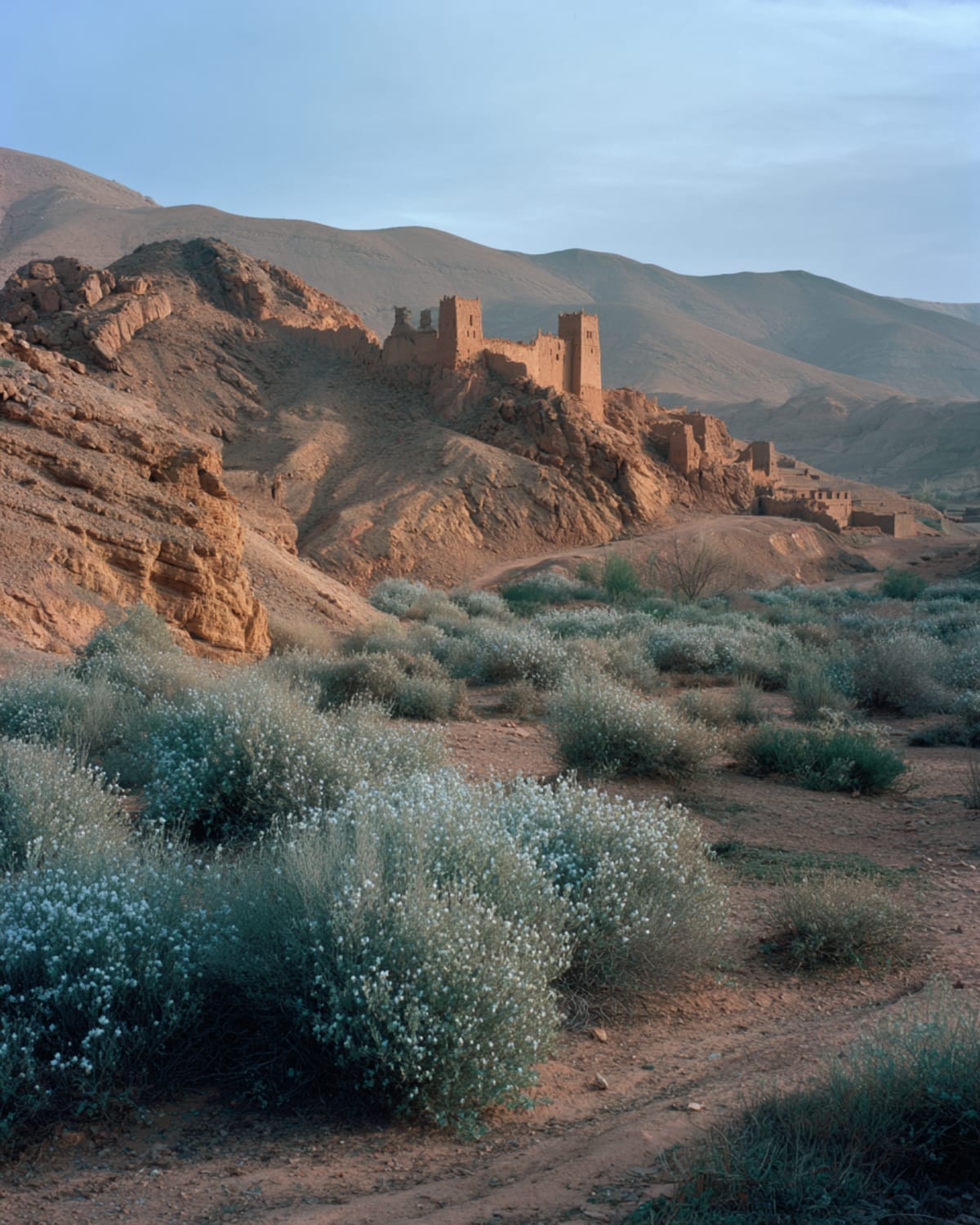
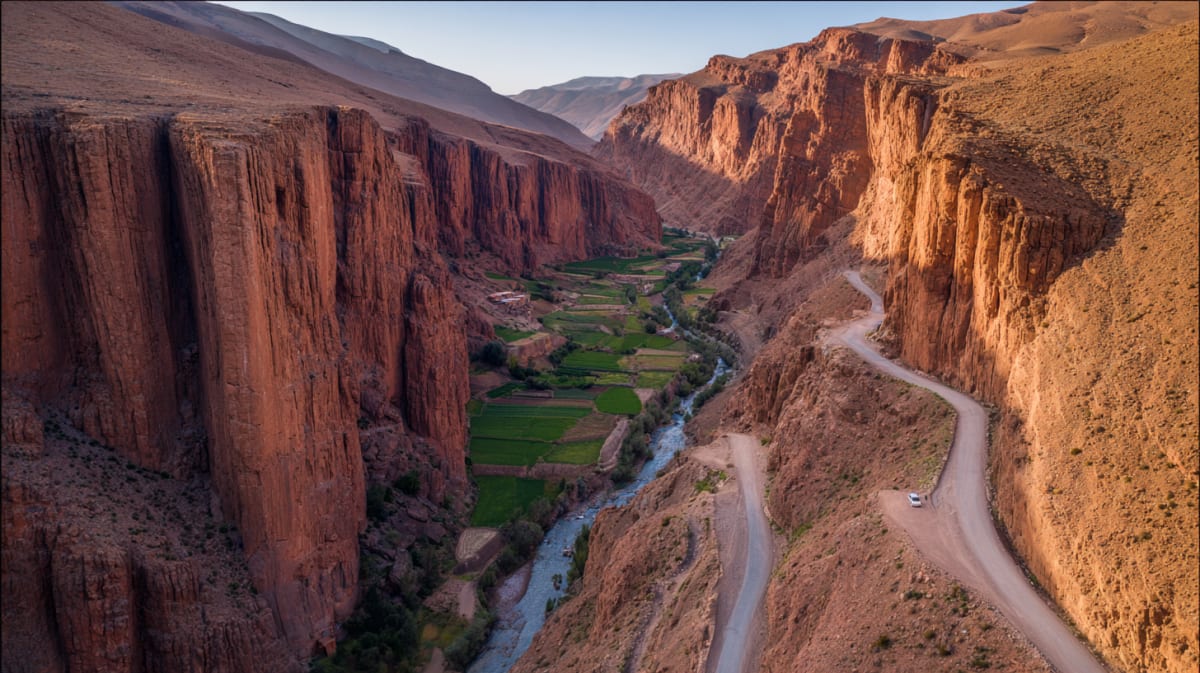
The Road of a Thousand Kasbahs — the number isn't hyperbole. Ruined fortresses line the valley; the famous switchbacks stack against cliffs. The vertigo is universal.
Natural
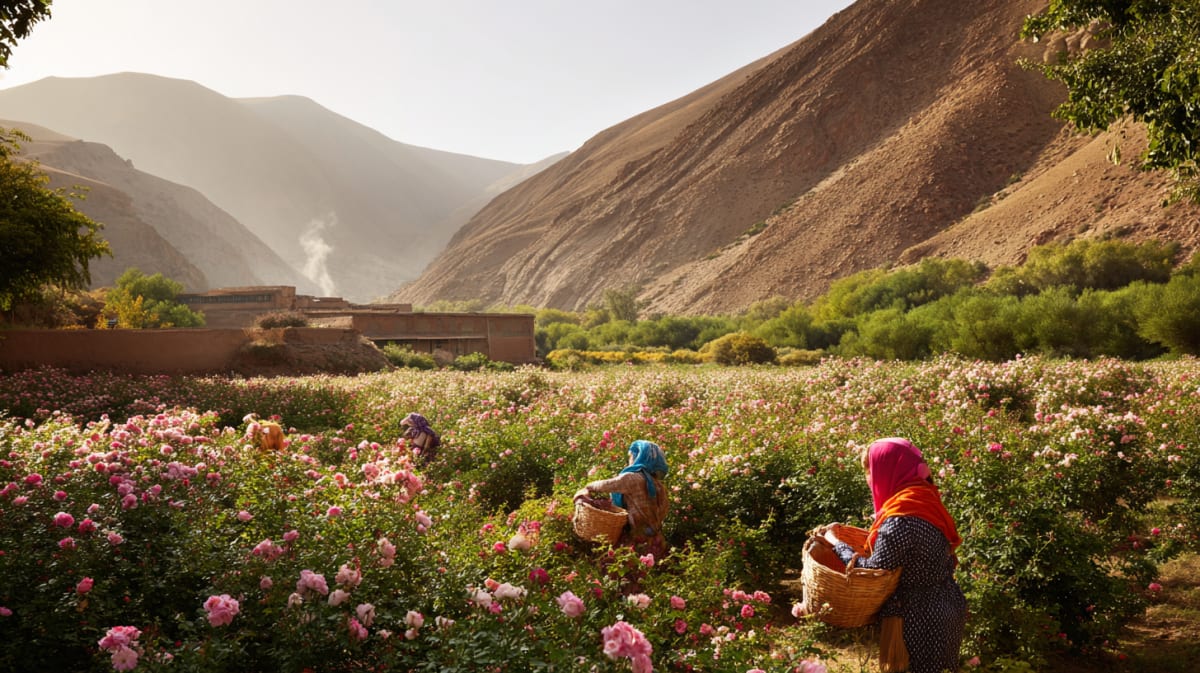
In May, the Dades Valley turns pink. Damask roses bloom along irrigation channels; the harvest lasts three weeks; the perfume, in rosewater and local cooking, lasts all year.
Nature
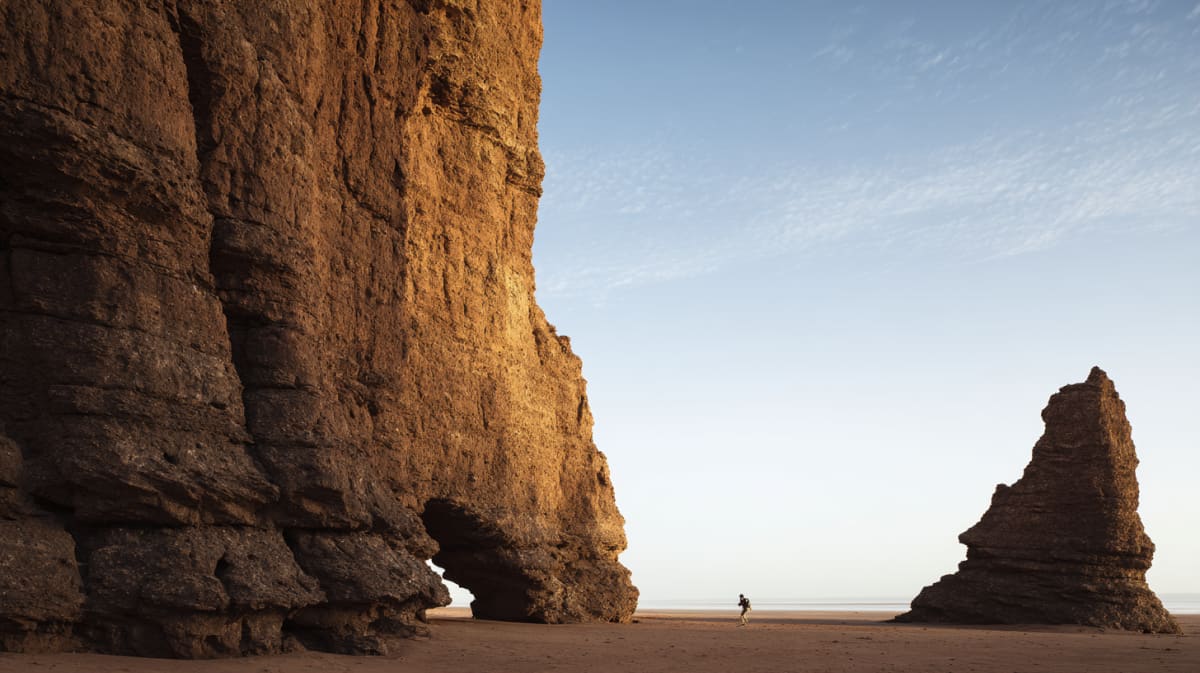
The eroded rock formations above Aït Arbi in the upper Dades Valley — columns of pale limestone worn by water and wind into forms that resemble fingers, hands, or whatever the traveller needs them to be. The Moroccan name is more direct: the Hands of God. The formations are best at sunrise when the low light catches the pale stone against the dark gorge below.
Natural
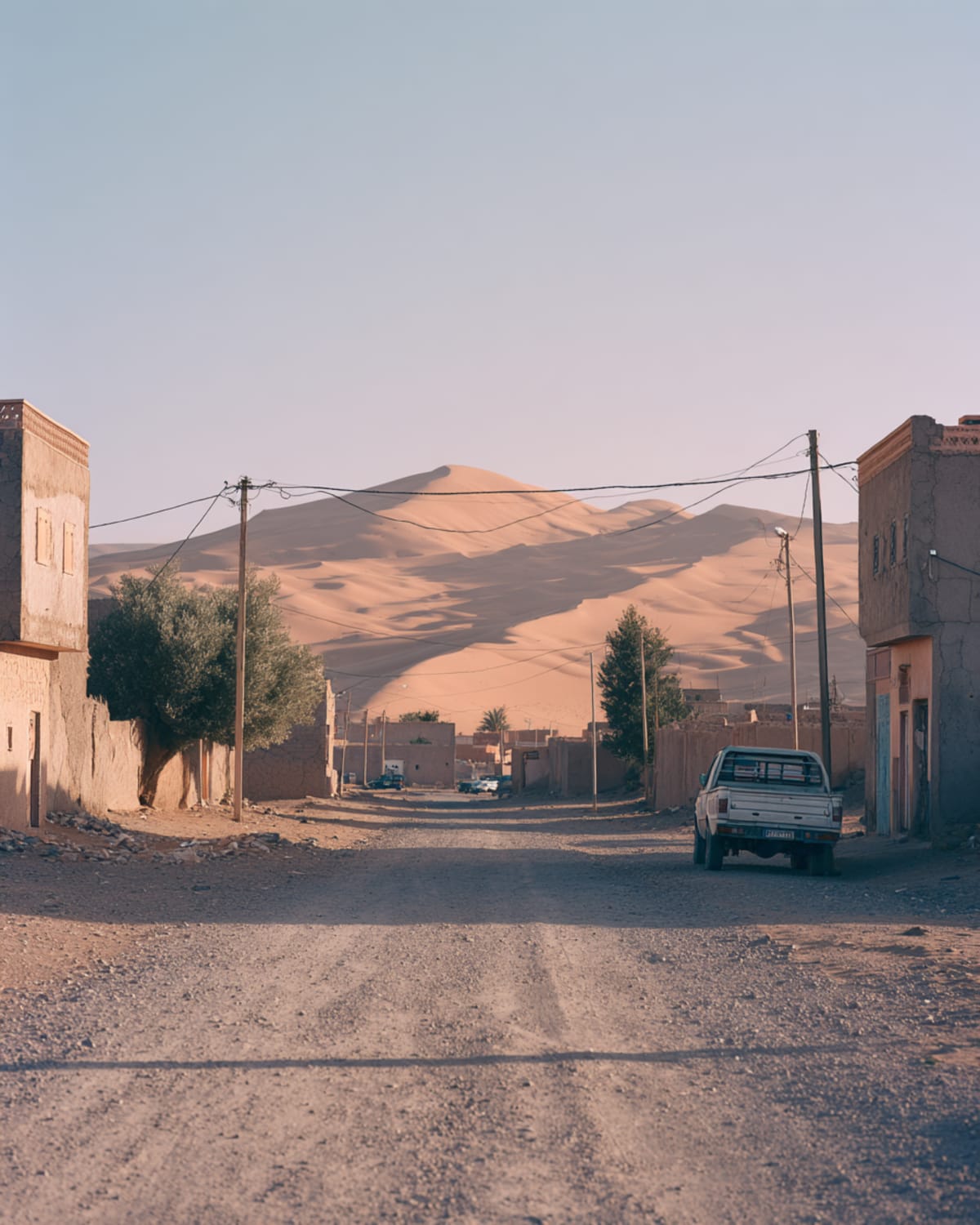
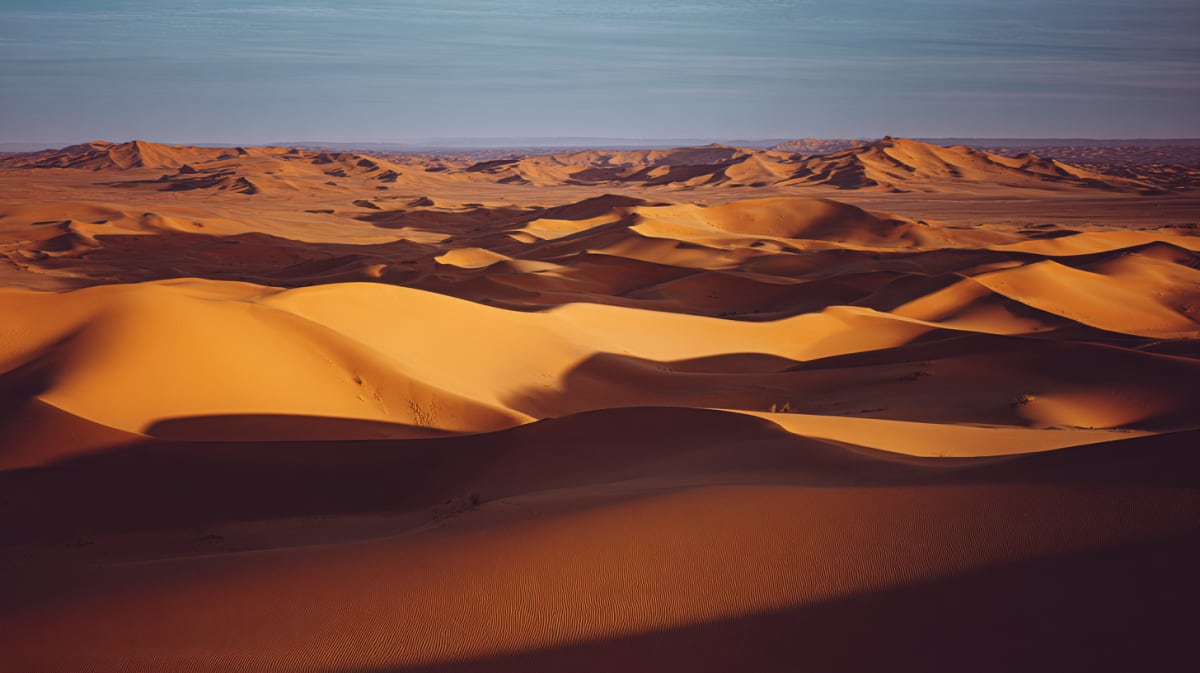
Morocco's Sahara. The dunes rise 150 meters — peach at dawn, terracotta at noon, purple at sunset. The stars at night justify the trip alone; the silence is the point.

Villages
Descendants of sub-Saharan slaves built a spiritual music from trance rhythms and memory. The guembri starts when someone picks it up. No ticket, no schedule.
Nature
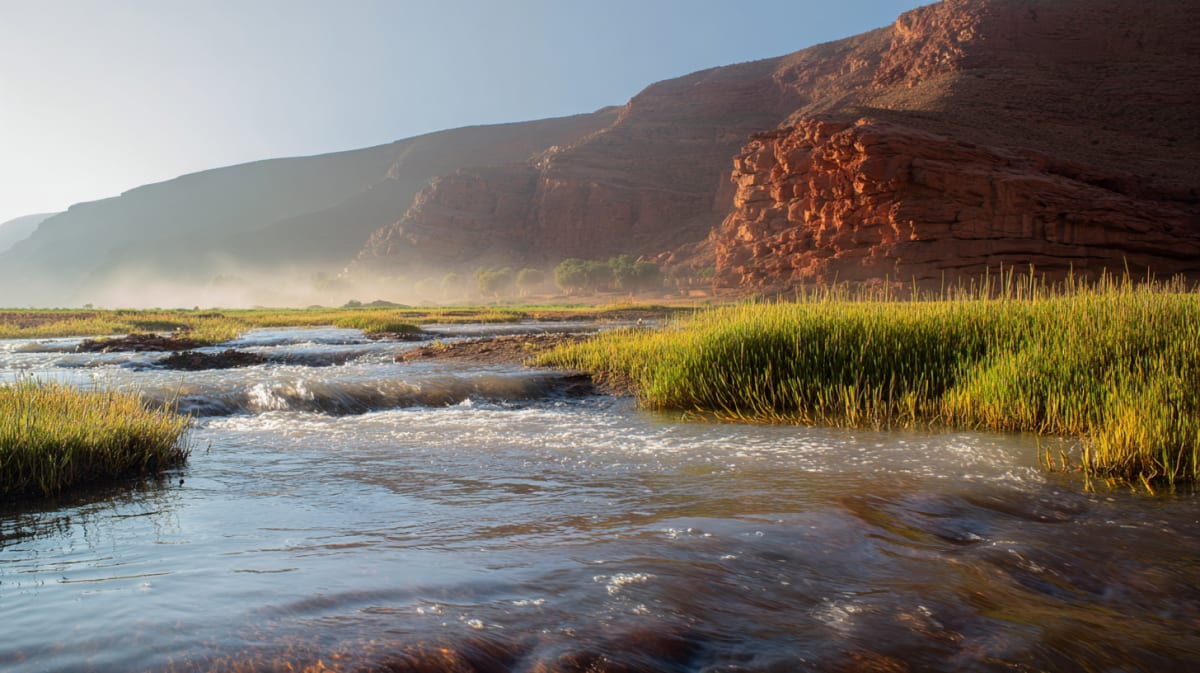
A seasonal lake at the edge of the Erg Chebbi that forms after winter rains — sometimes for weeks, sometimes for months, sometimes not at all. When it forms, flamingos arrive from their breeding grounds further north. The contrast of pink flamingos against orange sand dunes is one of the most extraordinary natural spectacles in Morocco, and one that cannot be planned for.

Kasbahs
Built before anyone started counting. The mellah — Jewish quarter — is still visible inside the walls.

Nature
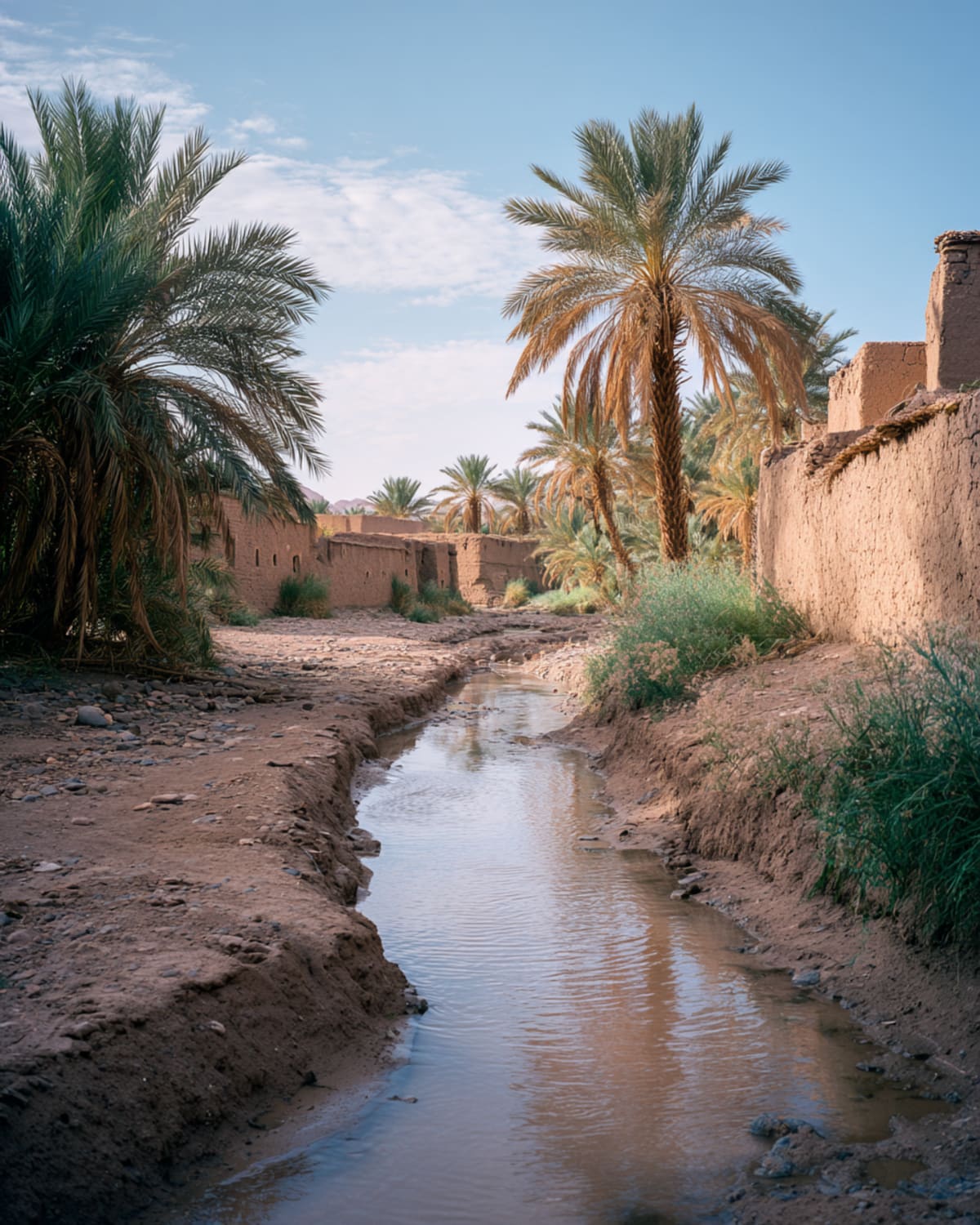
The great palm grove of the Draa Valley stretches for over 200 kilometres from Agdz to Mhamid — the longest oasis in Morocco and one of the longest in the world. Two million date palms, irrigated by a system of khettara channels that has functioned since the 11th century. The dates from the Draa Valley — particularly the Medjool variety grown around Zagora — are among the finest in the world.

Architecture
The N9 road through the Draa Valley passes more kasbahs per kilometre than anywhere else in Morocco — mud-brick fortified residences in varying states of preservation, from inhabited and maintained to spectacularly ruined. Each kasbah belongs to a specific tribe or family. The architectural vocabulary is consistent: crenellated towers, geometric geometric patterning in the pisé, arched gateways facing east.
Stories
Architecture
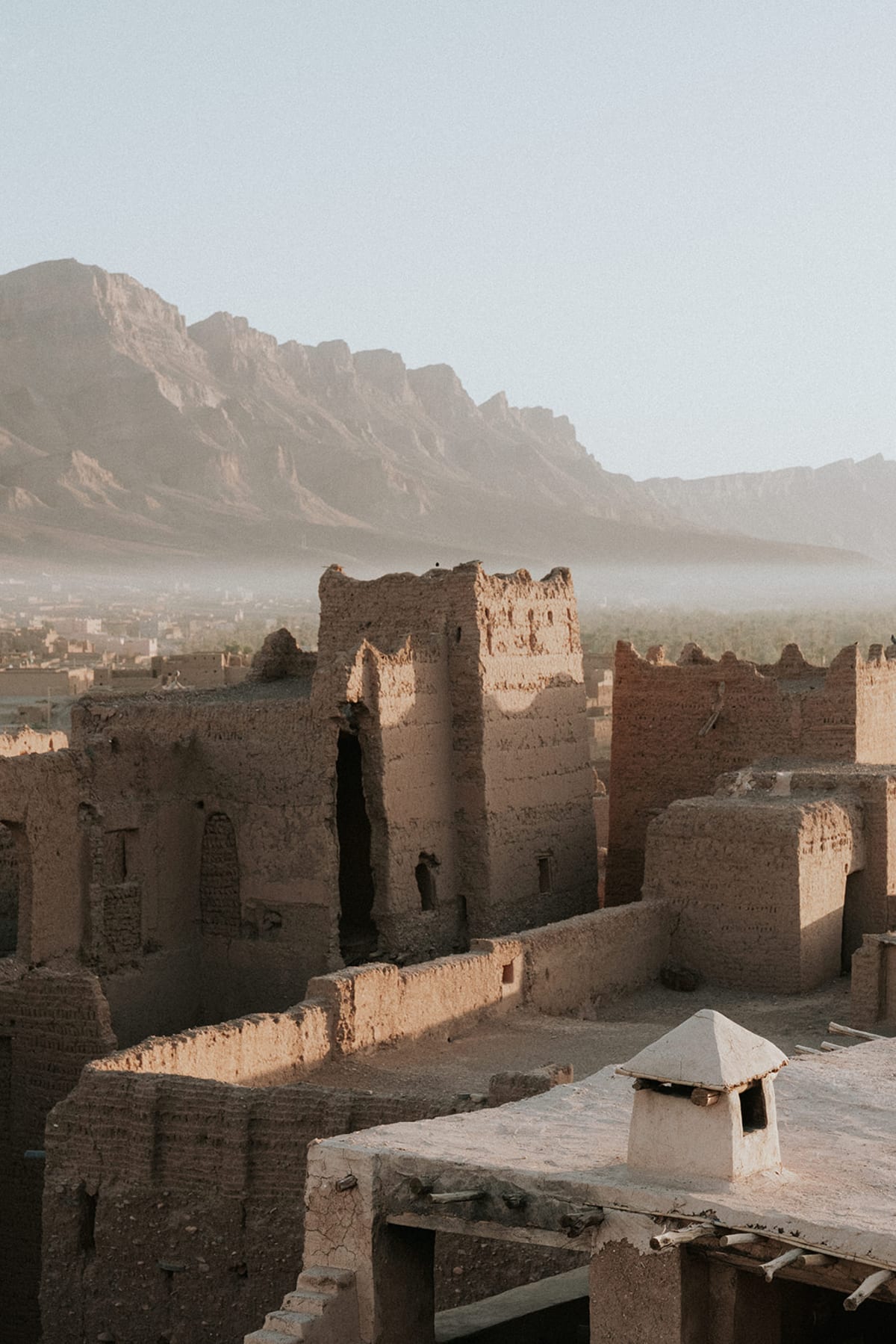
The walls are melting. Rain-carved channels, collapsing corners. A kasbah is built to return to the earth from which it came.
Architecture
One gate. One wall. Two hundred families inside. The ksar was never just a village. It was a statement: we survive together, or we don't survive at all.

Architecture
Step through the doorway. The temperature drops fifteen degrees in three seconds. The kasbah walls are two feet thick, made of rammed earth that has been absorbing and releasing heat for four hundred years.

Design
The green is like nothing else. No two pieces match. The glaze formula has stayed in one family for four hundred years at the end of the salt road.

Design
The dye doesn't stain — it inhabits. Indigo bonds with fiber at the molecular level, becoming part of the cloth rather than sitting on its surface. The Tuareg understood this. They called themselves the Blue People because the color had entered their skin.
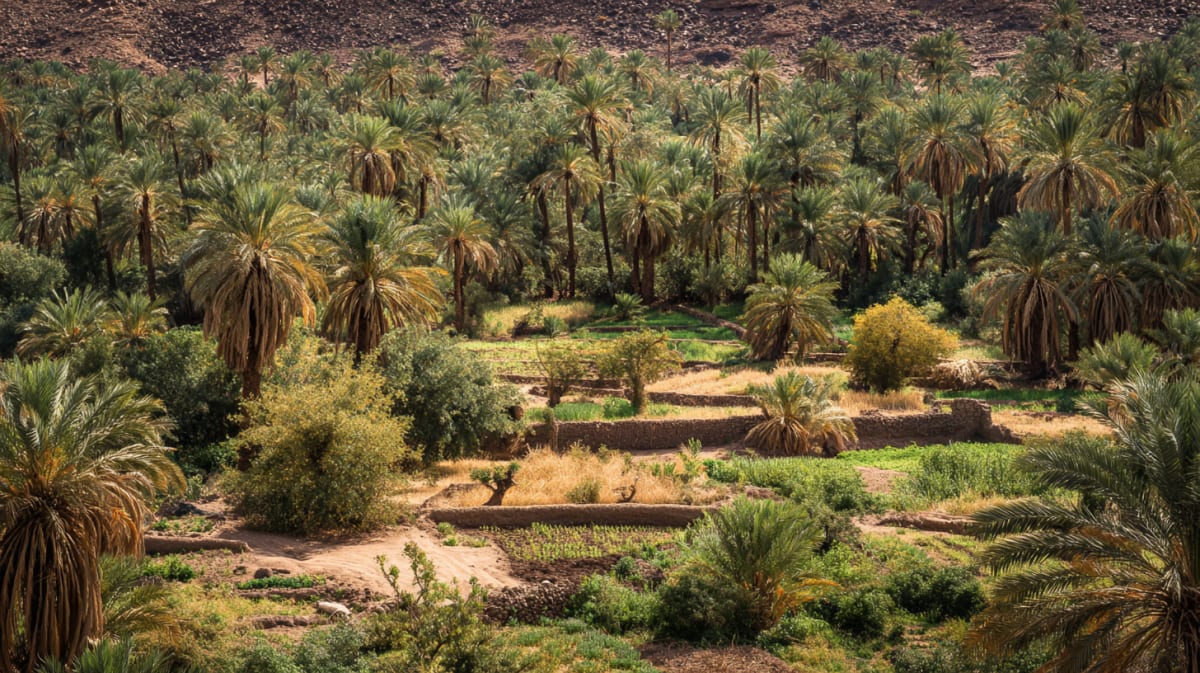
Systems
Three layers of life, each making the next possible. It looks like nature. It is engineering. A machine disguised as paradise.
Journeys in Desert
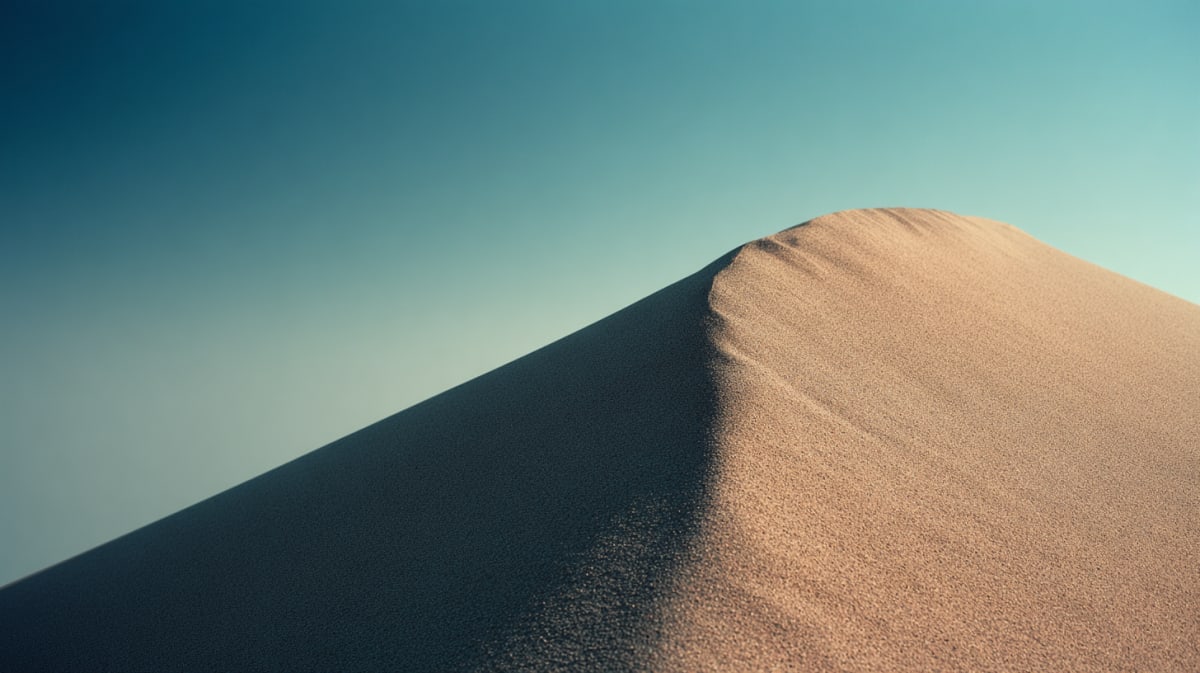
Mountains to sand and back. Stars so dense they press against your chest — and a silence that rewrites what you thought quiet meant.
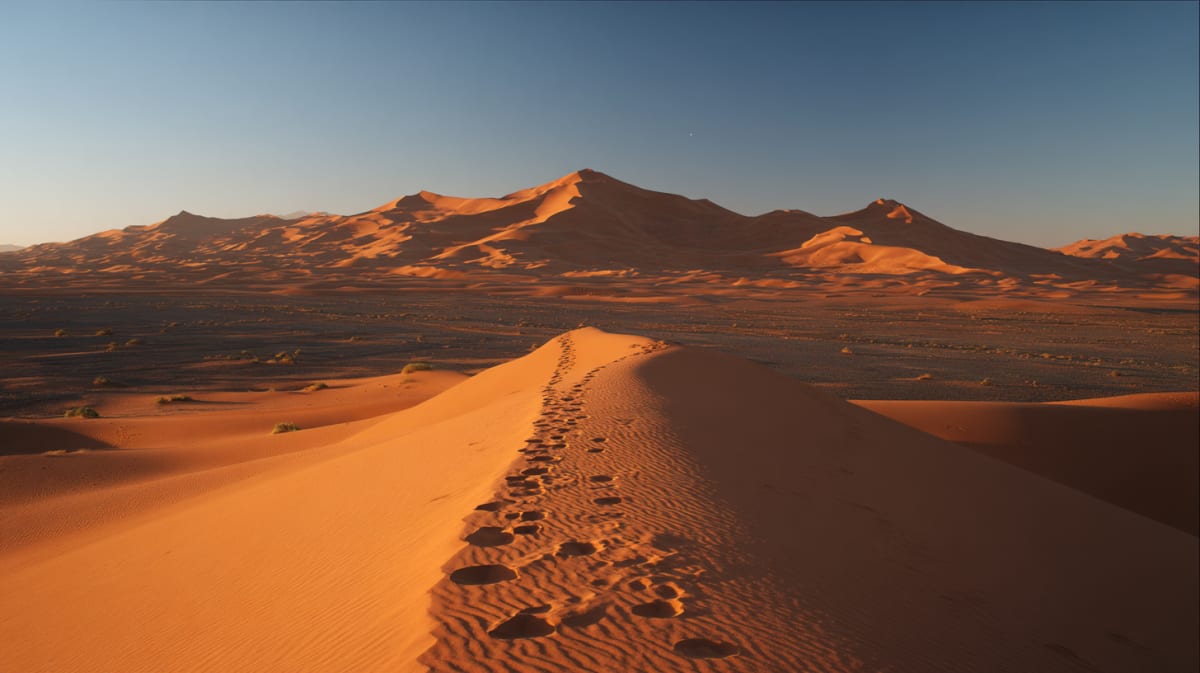
The classic — red city to medieval labyrinth via the Sahara. The corridor that defines Moroccan travel.
Descent through ancient rhythms. Return through gorges where the stone remembers everything — and your phone camera remembers nothing accurately.
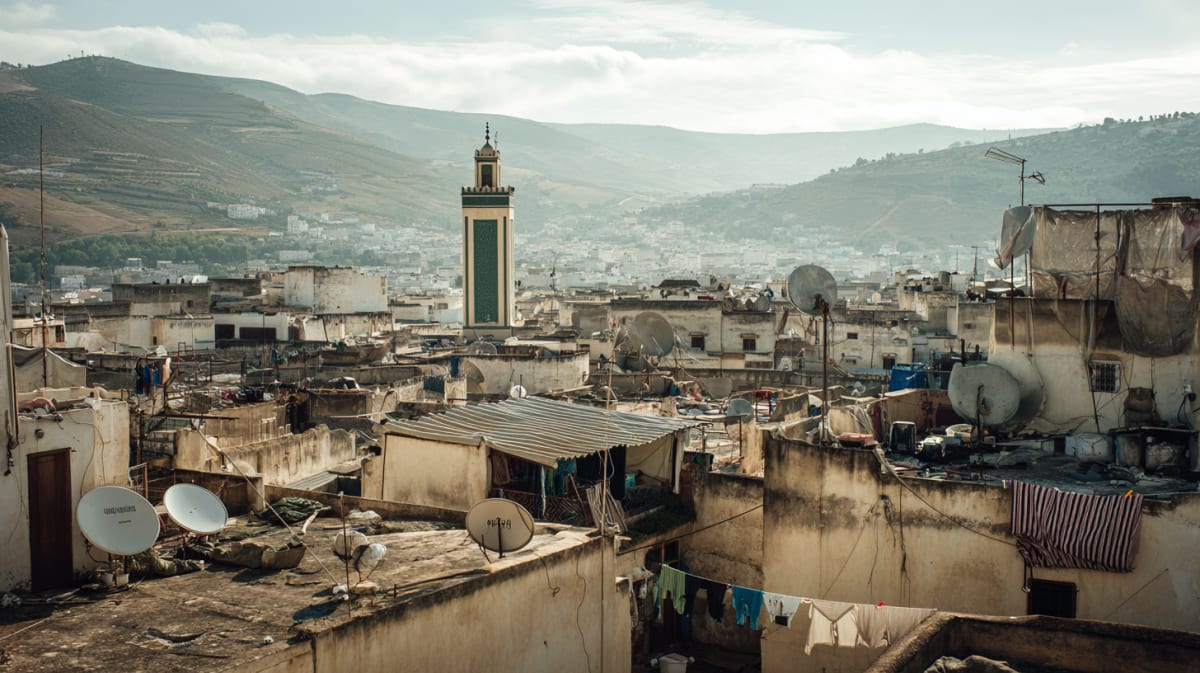
The classic desert crossing — medieval labyrinth to red city, with the Sahara in between.
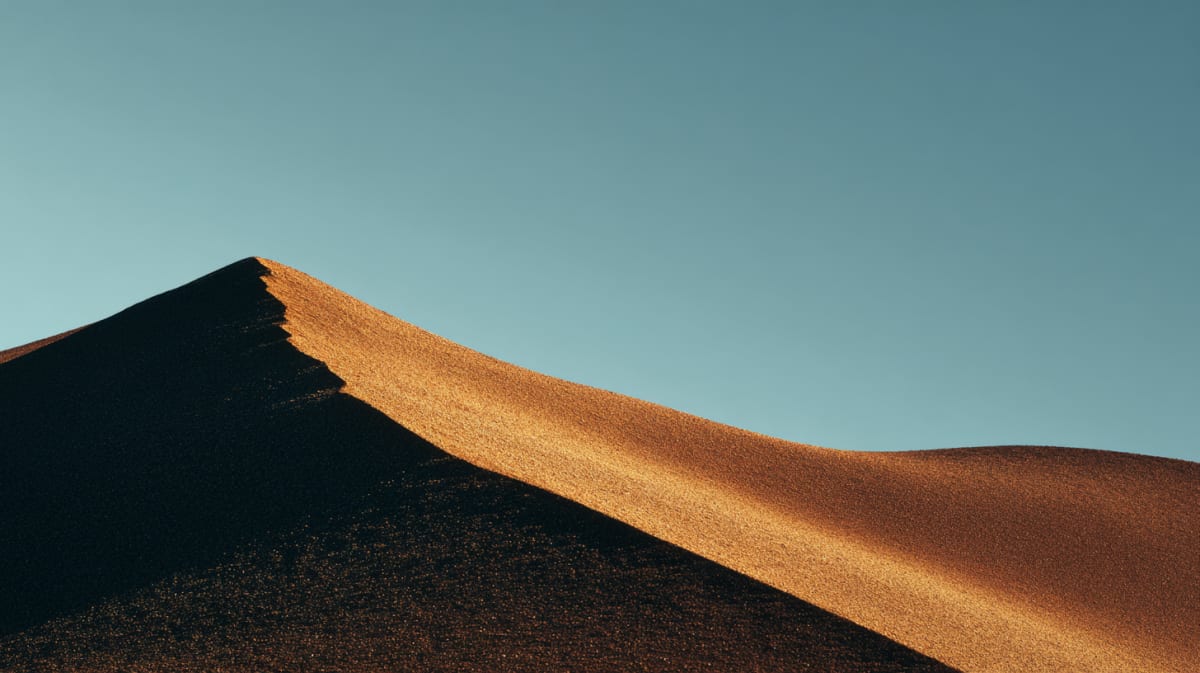
Deeper into emptiness. Longer roads. Sand that holds a silence your bones will remember when your ears have forgotten.
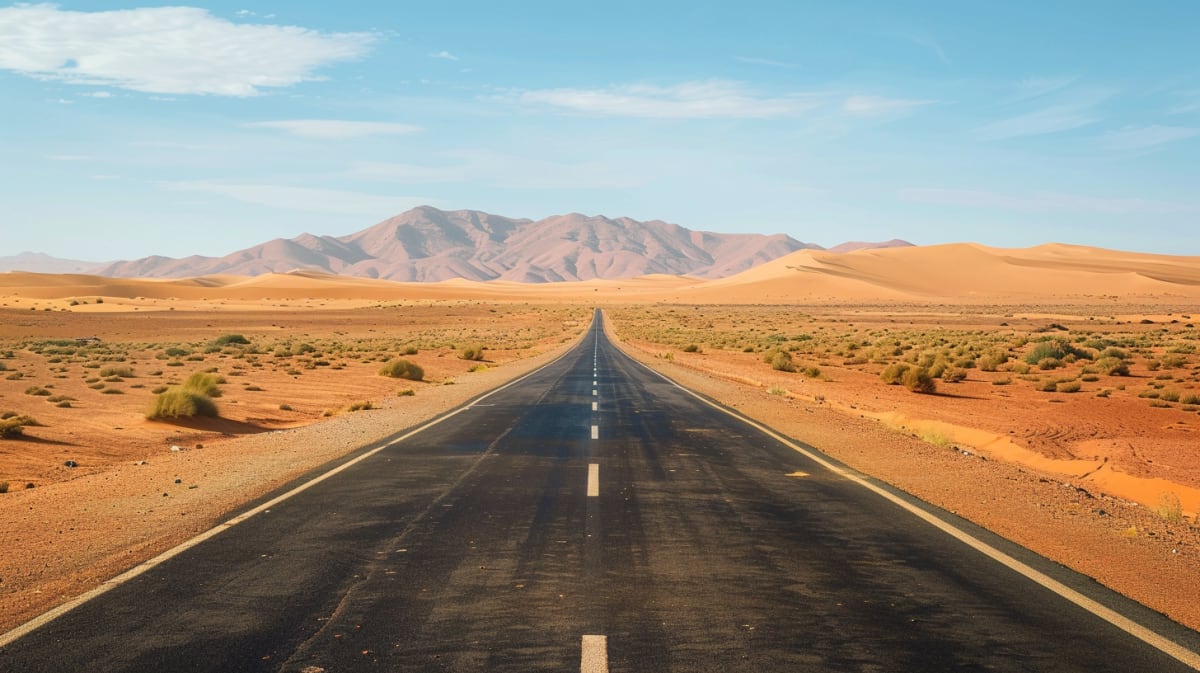
Art Deco to sand dunes in three days. Morocco's full spectrum — fast enough to feel the whiplash, slow enough to feel the shift.
Private journeys
Every journey we design is private, built around what you want to see, and shaped by deep experience inside Morocco.
Plan Your TripWritten from the medina. Sent when it matters.