El Badi Palace
Hours
Daily 9:00–17:00. Ramadan: 10:00–16:00.
Entry
100 MAD (foreigners). 10 MAD (Moroccan residents). Cash only.
Duration
60 minutes
Location
Ksibat Nhass, Kasbah
The Incomparable. A 16th-century Saadian palace built with Portuguese ransom gold -- now an open-air monument where storks nest on the ramparts.
01
History
Sultan Ahmad al-Mansur built El Badi Palace to celebrate a specific victory: the Battle of the Three Kings in 1578, where Morocco defeated Portugal so decisively that the Portuguese king, his ally, and the Moroccan pretender to the throne all died on the same battlefield.
Portugal paid an enormous ransom to recover its prisoners. Al-Mansur used that money — along with gold from conquered Sudan and revenue from the sugar trade — to build a palace that would announce Morocco's arrival as a major power. Construction began in 1578 and took 25 years.
The name 'El Badi' means 'the marvellous.' Contemporary accounts describe 360 rooms, a courtyard with a 90-metre reflecting pool, Italian marble columns, gold leaf from Sudan, and carved onyx from India. Ambassadors from European courts reported being deliberately made to wait in progressively more lavish rooms before reaching the sultan — a calculated display of wealth.
Al-Mansur died in 1603. A century later, Sultan Moulay Ismail — the Alaouite ruler who moved his capital to Meknes — spent 12 years systematically dismantling El Badi. He stripped the marble, the gold, the carved cedarwood, and shipped it north to decorate his own palaces. What remains today are the walls, the massive courtyard, the sunken gardens, and the scale.
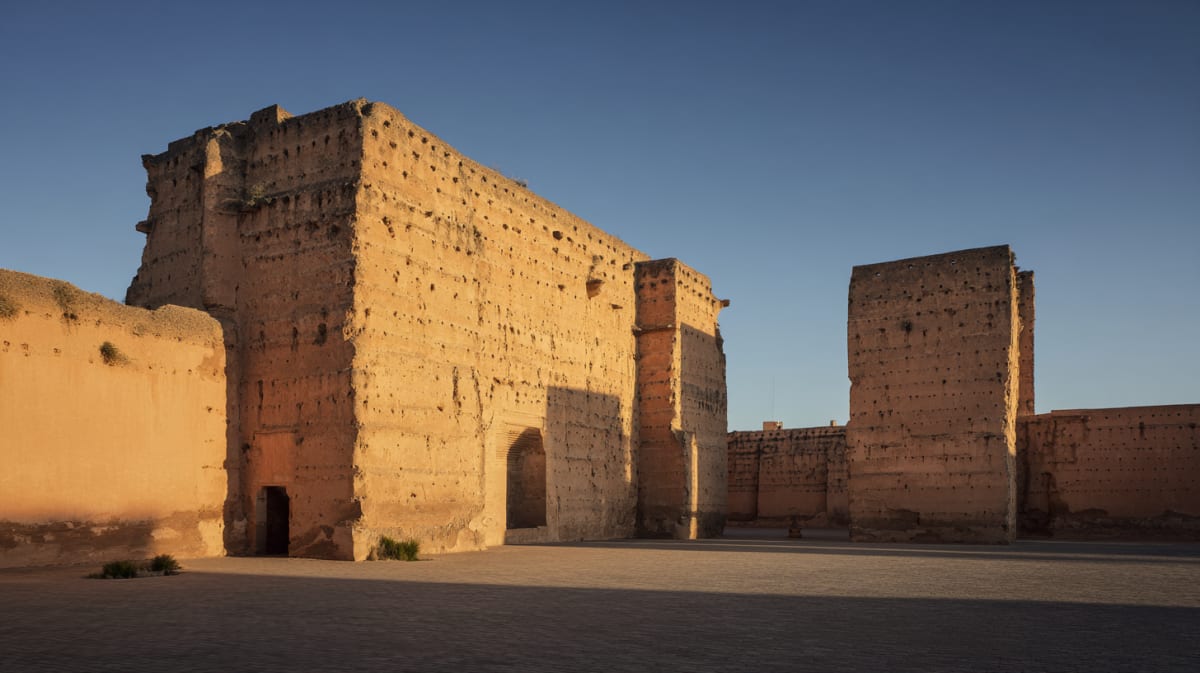
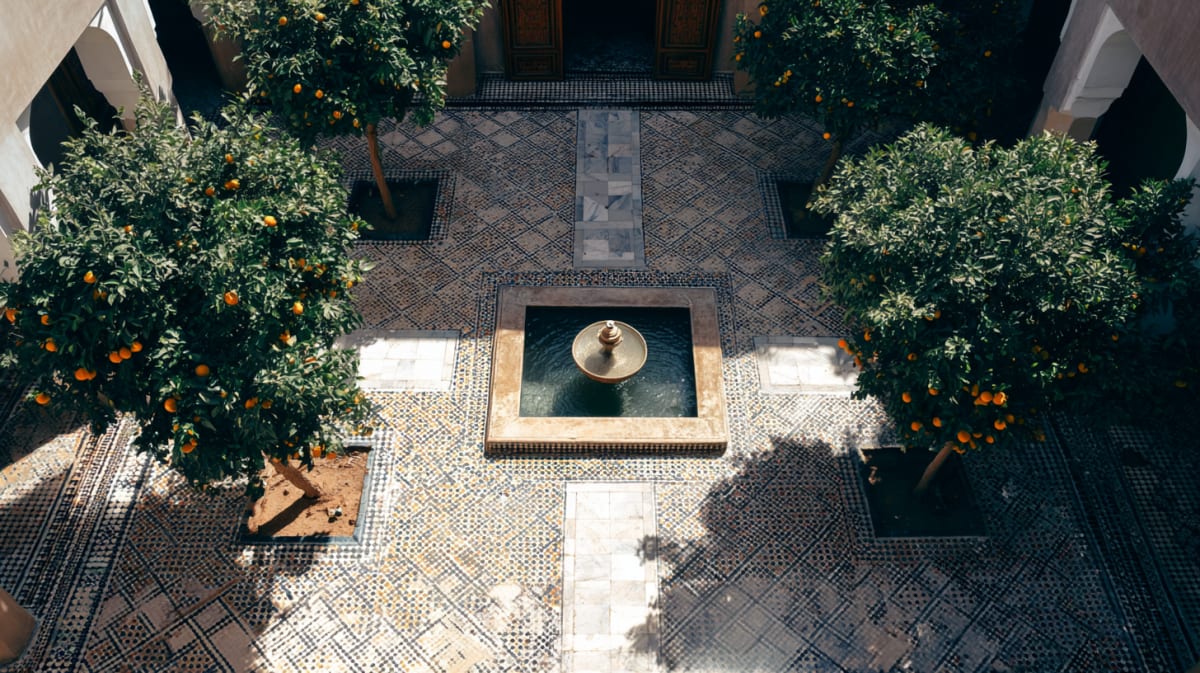
The ruins are arguably more powerful than the original. The courtyard alone — 135 metres by 110 metres — gives you the footprint of ambition. Storks nest on the ramparts. Orange trees grow where reflecting pools once shimmered.
02
Architecture & Ruins
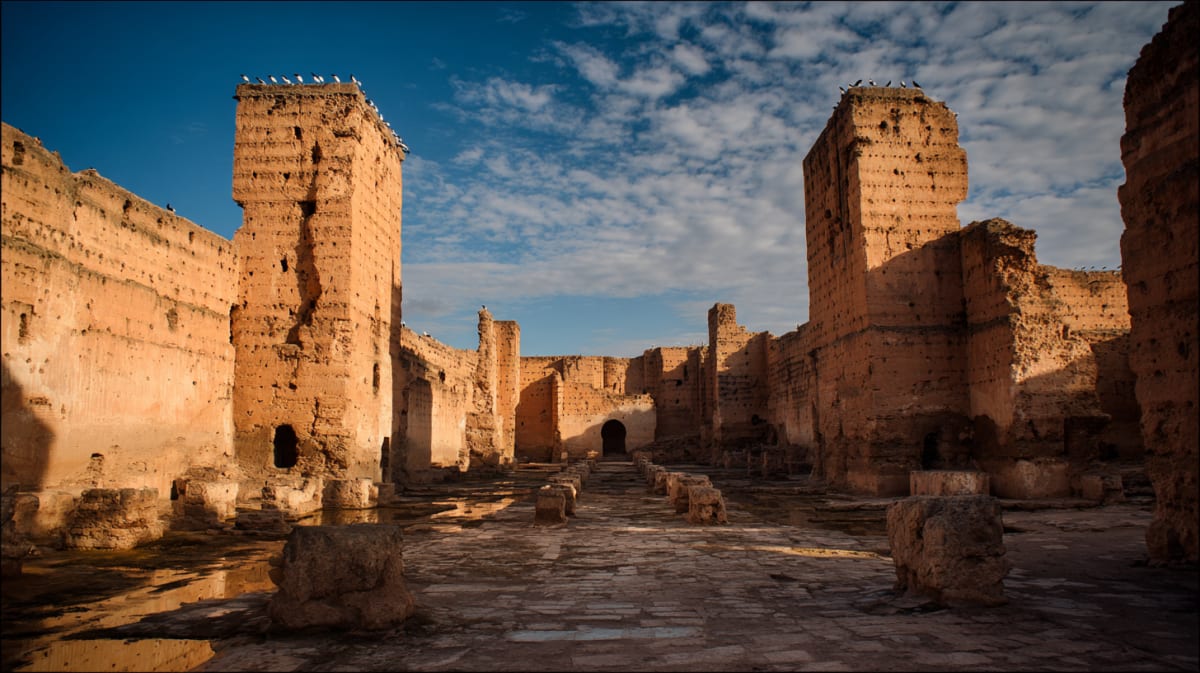
What survives is the skeleton: massive pisé (rammed earth) walls up to 6 metres thick, the enormous central courtyard, four sunken gardens planted with orange trees, and the remains of the central reflecting pool.
The courtyard measures 135 metres by 110 metres — one of the largest in the Islamic world when it was built. Five pavilions originally surrounded it, one at each corner and one at the centre. Only the foundations remain.
Below ground level, a network of underground passages, dungeons, and storerooms extends beneath the courtyard. Parts of these subterranean chambers are accessible and contain a small collection of artefacts, including the original minbar (pulpit) from the Koutoubia Mosque — a masterpiece of Almohad woodcarving dating to the 12th century, made of cedarwood and inlaid with silver and ivory.
The walls retain traces of their original decoration in places: fragments of zellige, carved plaster, and painted surfaces that hint at the richness Moulay Ismail stripped away.
Climb the rampart walls (stairs at the northeast corner) for a panoramic view across the medina to the Atlas Mountains. This is also the best vantage point for watching the white storks that nest on the walls — El Badi supports one of the largest stork colonies in Marrakech.
03
Visiting
Allow 45–60 minutes. The site is entirely open-air with no shade — bring water and sun protection in summer.
The most impressive element is the scale. Stand at the entrance and look across the courtyard to grasp the ambition of a sultan who wanted to build the most magnificent palace in the western Islamic world.
Don't miss the underground chambers. Access is through a staircase near the ticket office. The Koutoubia minbar — a 12th-century carved cedarwood pulpit — is displayed here and is considered one of the finest examples of Almohad craftsmanship in existence.
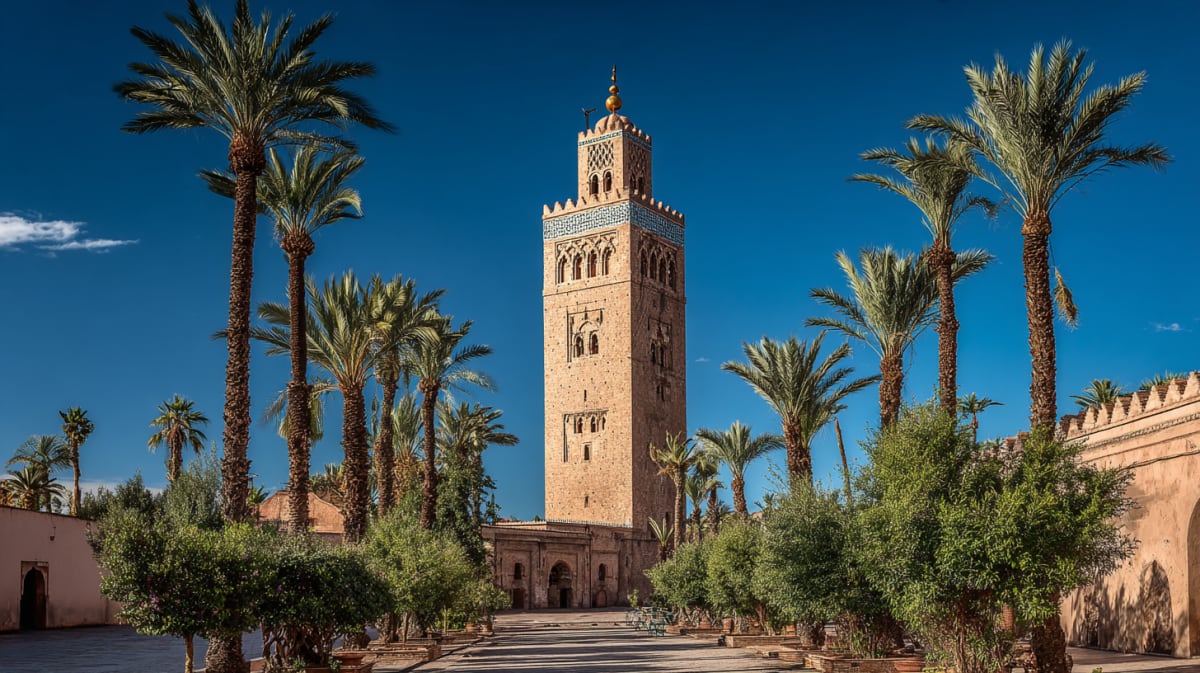
The rampart walk is worth the climb. The stairs are steep but manageable. From the top: stork nests, the Saadian Tombs next door, the Koutoubia minaret, and the Atlas Mountains on clear days.
El Badi hosts the annual Marrakech Popular Arts Festival (Festival National des Arts Populaires) in June/July, when the courtyard becomes a stage for Moroccan folk music and dance. The ruins look extraordinary at night during the festival.
No cafes or toilets inside. The nearest facilities are at Place des Ferblantiers (2 minutes' walk).
Best Time to Visit
Late afternoon. The open-air ruins catch golden light beautifully, and the storks on the ramparts are most active around 4–5pm. Midday is brutal in summer — there is no shade.
Getting There
From Jemaa el-Fna, walk south through Rue Riad Zitoun el-Jdid and turn right at Place des Ferblantiers. The palace entrance is on the east side of the square. 15-minute walk from the main square. Also a 5-minute walk from Bahia Palace.
Local Tip
Combine with nearby Saadian Tombs
Common Questions
The entrance fee is 100 MAD for international visitors and 10 MAD for Moroccan residents. Cash only at the gate.
Daily from 9:00am to 5:00pm. During Ramadan, hours are reduced to 10:00am to 4:00pm.
Yes — the palace was systematically stripped by Sultan Moulay Ismail in the early 18th century. What remains are the massive walls, the enormous courtyard (135m x 110m), sunken gardens, and underground chambers. The Koutoubia minbar, a 12th-century masterpiece, is displayed in the subterranean galleries.
45 to 60 minutes. The site is entirely open-air. Allow extra time to climb the ramparts for panoramic views and to visit the underground chambers.
Yes. White storks nest on the rampart walls year-round. The best viewing is from the rampart walkway, accessible via stairs at the northeast corner. Late afternoon is when the storks are most active.
Walking Distance
Nearby
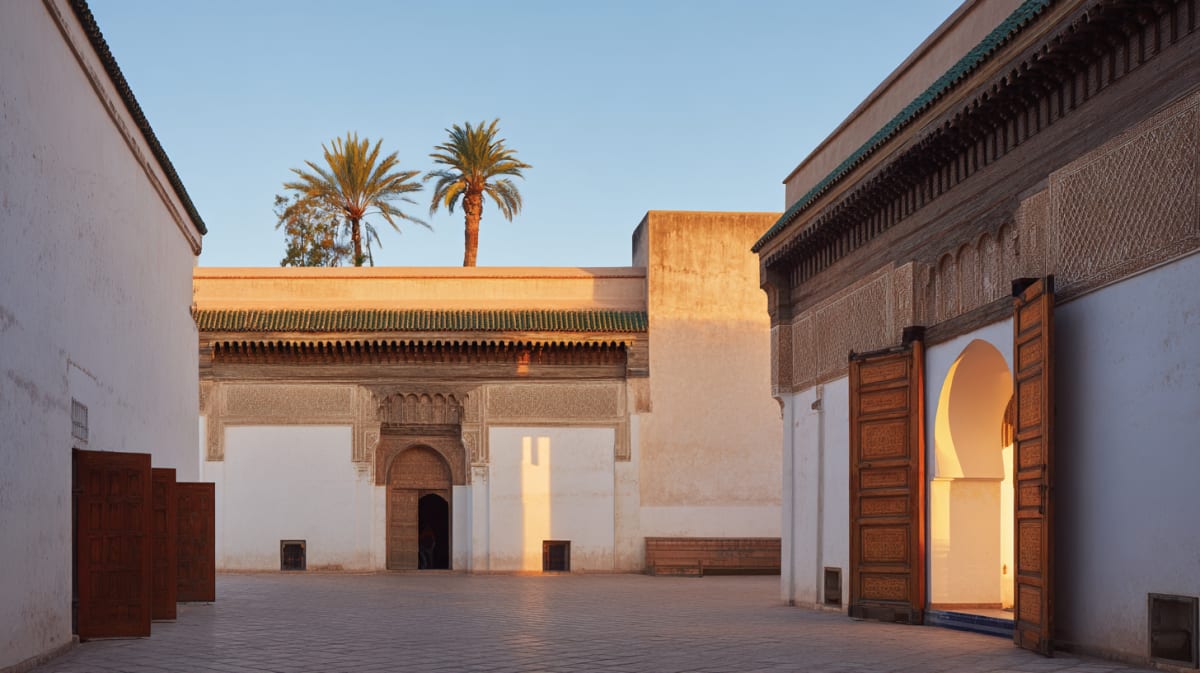
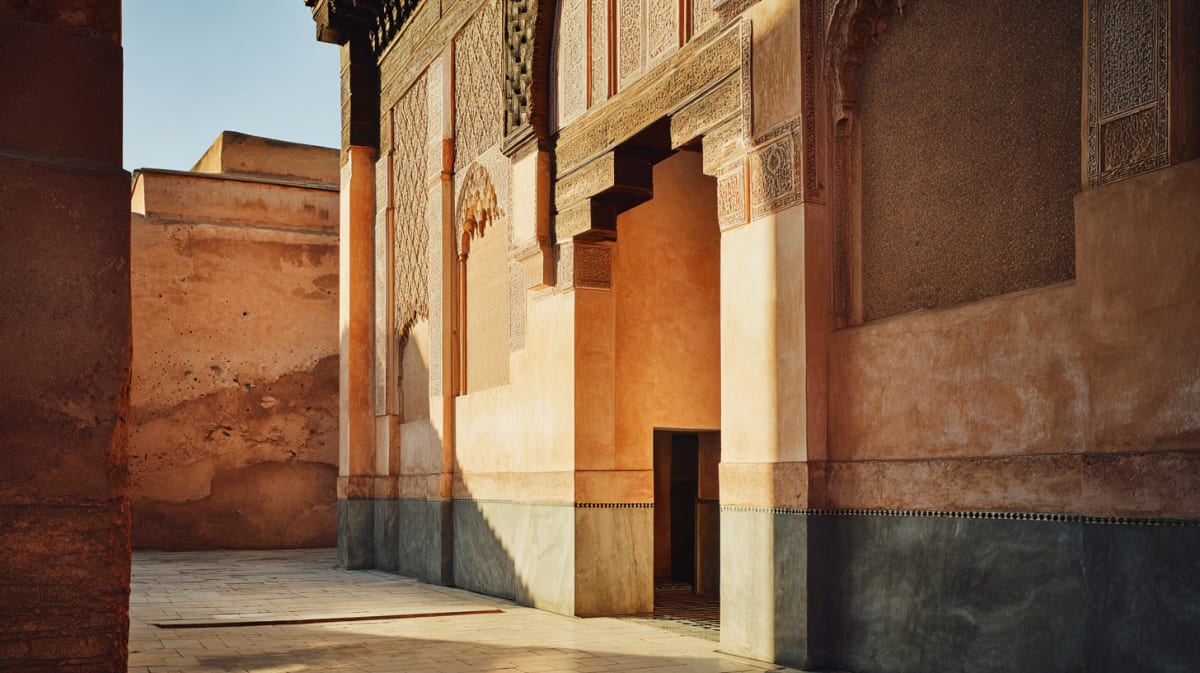
El Badi is a ruin that rewards imagination. We go at midday when the storks are nesting on the walls and the sunken gardens are sharp with shadow.
Plan a private journey →Explore More
Related Stories
Discover the history and culture of Marrakech

Explore More
Multi-day journeys featuring this place
Curated routes that pass through Marrakech
3 Days
3-Day Sahara Circle
Mountains to sand and back. Stars so dense they press against your chest — and a silence that rewrites what you thought quiet meant.
3 Days
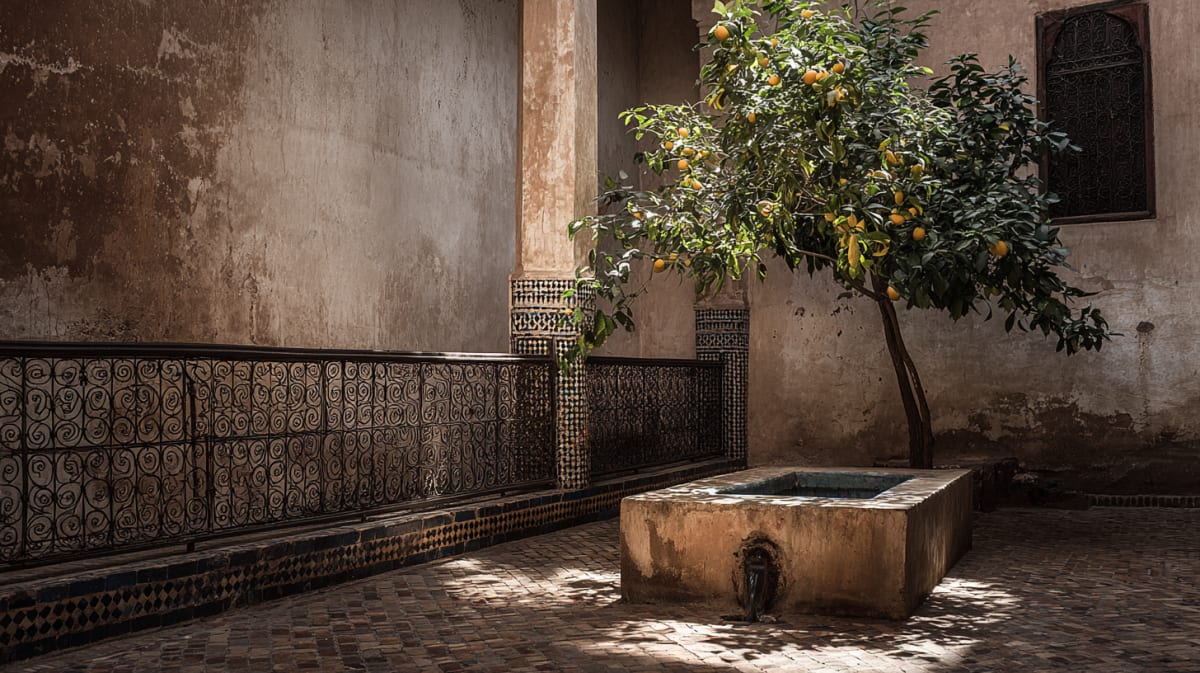
Marrakech City Break
Three days to learn a medina's rhythm — souks at dawn, hidden gardens at noon, the square becoming a theatre at dusk.
4 Days
Marrakech to Fes
The classic — red city to medieval labyrinth via the Sahara. The corridor that defines Moroccan travel.
Sources: Deverdun G. (1959) Marrakech des Origines à 1912;;Meakin B. (1901) The Moorish Empire;;UNESCO Marrakech nomination file (1985)