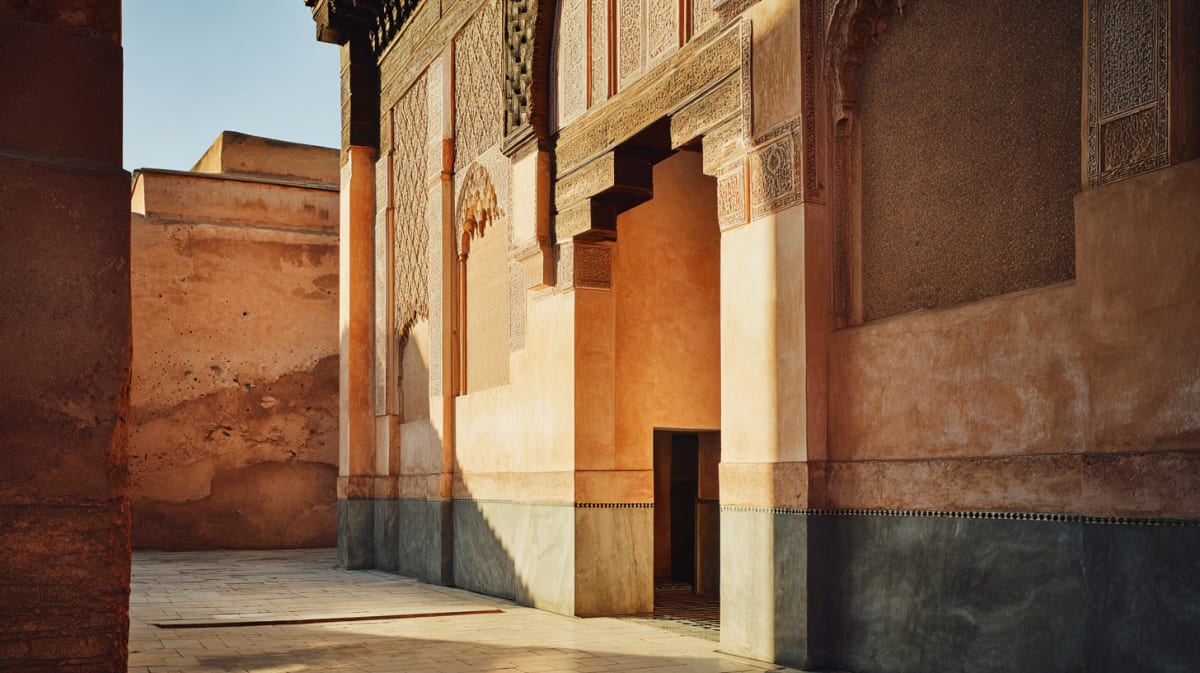
Saadian Tombs
Hours
Daily 9:00–17:00. Ramadan: 10:00–16:00. Last admission 30 minutes before closing.
Entry
100 MAD (foreigners). 10 MAD (Moroccan residents). Cash only.
Duration
40 minutes
Location
Rue de la Kasbah, Kasbah
Sealed for 300 years by a rival sultan who couldn't destroy them but refused to honour them. Rediscovered by aerial survey in 1917, the craftsmanship rivals the Alhambra.
01
History
The Saadian Tombs are the royal necropolis of the Saadian dynasty, which ruled Morocco from 1549 to 1659. The complex began as a burial ground in the early 14th century, but the structures you see today were built by Sultan Ahmad al-Mansur — the same ruler who built El Badi Palace — in the late 16th century.
Al-Mansur imported Italian Carrara marble, commissioned gilded honeycomb muqarnas (decorative plaster vaulting), and employed the finest artisans in Morocco to create a mausoleum befitting a dynasty at its zenith. He was buried here in 1603.
When the Saadian dynasty fell and the Alaouites took power, Sultan Moulay Ismail considered destroying the tombs but could not bring himself to desecrate a burial site. Instead, he ordered the entrance sealed and the passage walled up. The tombs were effectively erased from the city's memory.
For over 200 years, the necropolis was forgotten. Stray cats wandered the gardens. Storks nested on the walls.
In 1917, the French Resident General Hubert Lyautey commissioned aerial photographs of Marrakech. The photographs revealed the hidden complex. The tombs were excavated, restored, and opened to the public — still in remarkably good condition, with most of the original decoration intact.
The complex contains the remains of around 66 Saadian princes and over 100 members of the royal household — courtiers, chancellors, and wives.
02
Architecture
The complex is divided into two main mausoleums and a garden with simpler tombs.
The principal mausoleum contains three interconnected chambers:
The Mihrab Room — originally a prayer room, now containing numerous floor-level tombs marked with zellige tiles. The mihrab (prayer niche) faces Mecca.
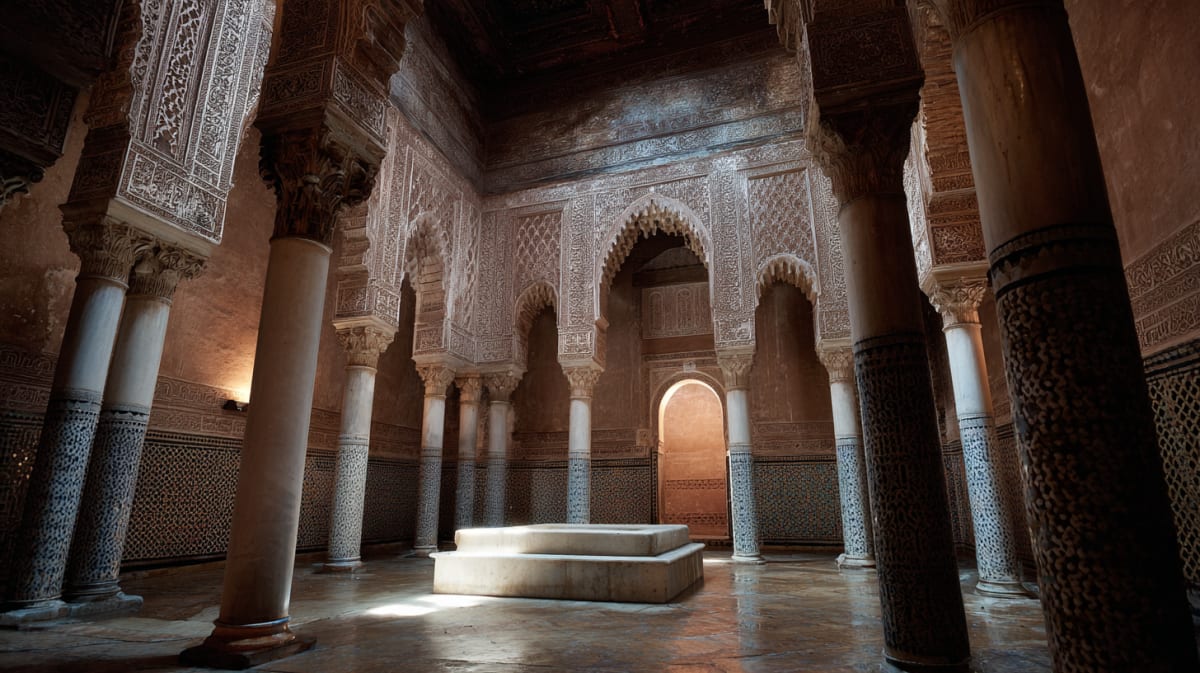
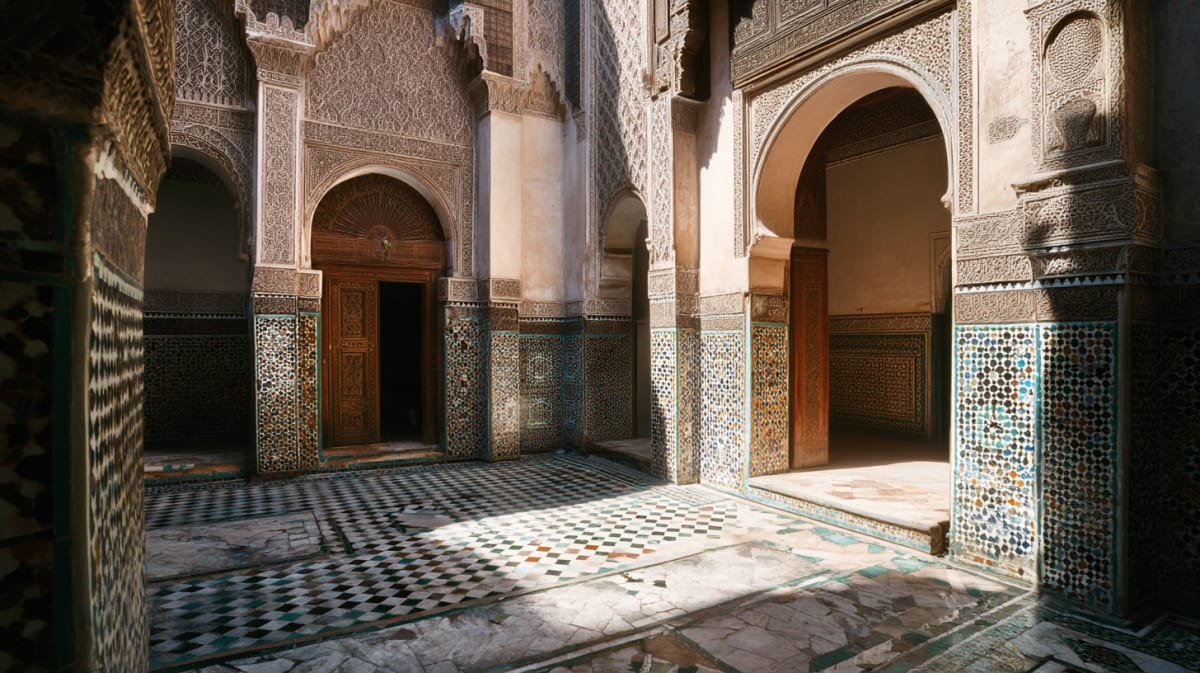
The Chamber of Twelve Columns — the masterpiece. Twelve Carrara marble columns support a dome of gilded muqarnas (honeycomb plasterwork). Sultan Ahmad al-Mansur is buried at the centre. The cedarwood and stucco carving in this chamber represents the pinnacle of Saadian decorative art. The light enters through high windows and catches the gold.
The Room of Three Niches — smaller, containing the tombs of young princes. Three horseshoe arches lead to alcoves with zellige-covered graves.
The second mausoleum is simpler, containing the tomb of al-Mansur's mother, Lalla Messaouda, along with other family members. The carved cedarwood and painted surfaces here are excellent but less ornate than the main building.
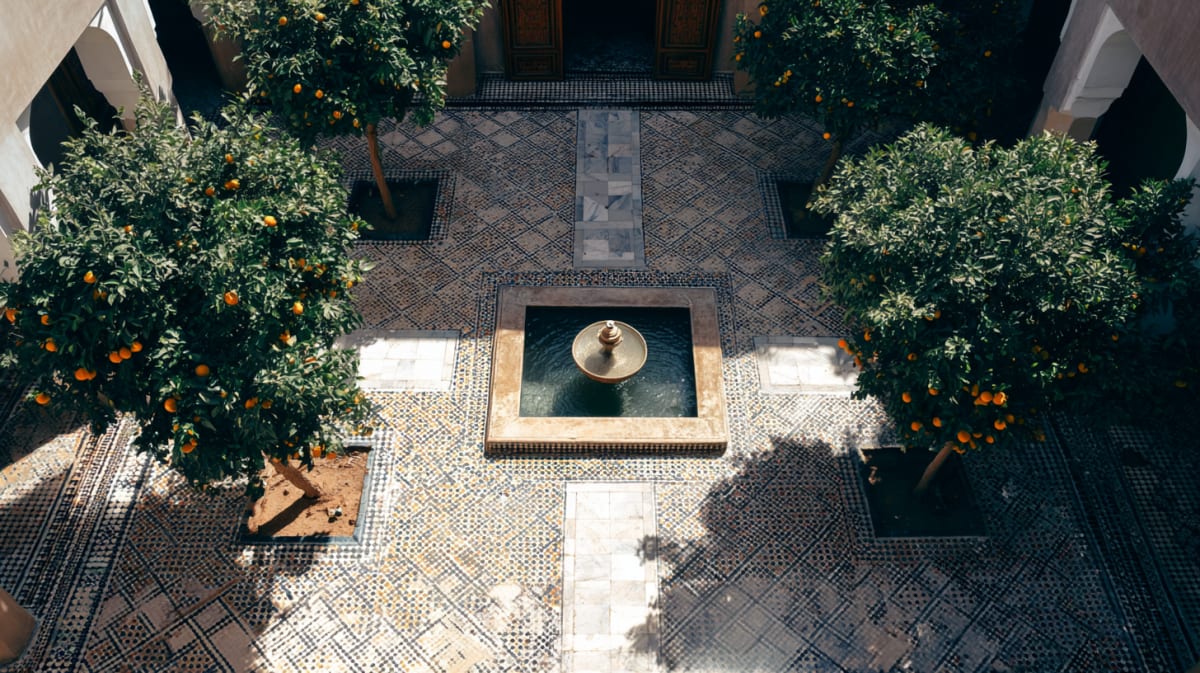
The garden between the mausoleums holds rows of simple tombs — servants, courtiers, and lesser royals — marked with low zellige markers among roses and hedges.
03
Visiting
Allow 30–45 minutes. The site is compact — much smaller than most visitors expect.
The main attraction is the Chamber of Twelve Columns. You cannot enter the chamber — you view it from the doorway. The viewing area accommodates 4–5 people at a time, which creates queues. In peak season (October–April), waits of 20–30 minutes for this single doorway are common.
Strategy: arrive at 9am sharp or after 4pm. The chamber is small enough that you can see everything from the doorway — binoculars are unnecessary but a zoom lens is useful for photographing the muqarnas ceiling detail.
The garden tombs are often overlooked by visitors rushing to the main chamber. They are peaceful and photogenic.
No guides are stationed inside, but guides wait at the entrance and charge 100–150 MAD for a 20-minute explanation. Worth it if you want context for who is buried where.
The site has no facilities — no cafe, no toilets, no shop. The nearest restaurants are on Rue de la Kasbah.
Best Time to Visit
First thing in the morning at 9am. The main mausoleum (Chamber of Twelve Columns) is small — only a handful of people can see in at once. By 10:30am, the queue for this chamber stretches 30+ minutes. Late afternoon is the second option.
Getting There
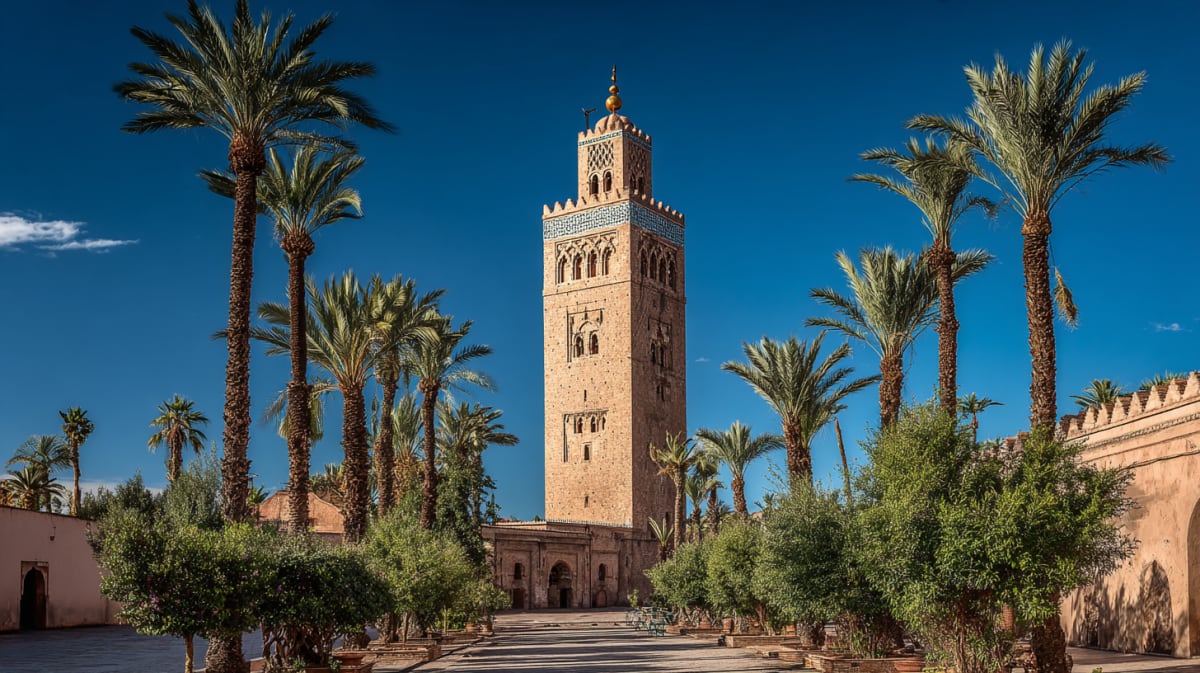
The entrance is hidden behind the Kasbah Mosque in the southern medina, near Bab Agnaou. From Jemaa el-Fna, walk south via Rue de la Kasbah — 15 minutes. From El Badi Palace, it is a 5-minute walk. Look for a narrow passageway beside the mosque; the entrance is discreet and easy to miss.
Local Tip
Small spaces. Expect queues midday.
Common Questions
100 MAD for international visitors, 10 MAD for Moroccan residents. Cash only at the gate.
Daily 9:00am to 5:00pm. During Ramadan: 10:00am to 4:00pm. Last admission 30 minutes before closing.
30 to 45 minutes, though queues for the main Chamber of Twelve Columns can add 20–30 minutes during peak hours (10am–3pm).
When the Alaouite dynasty replaced the Saadians in the 17th century, Sultan Moulay Ismail sealed the entrance rather than destroy a sacred burial site. The tombs were forgotten until 1917, when French aerial photographs revealed the hidden complex.
The entrance is through a narrow passageway beside the Kasbah Mosque in the southern medina, near Bab Agnaou. It is discreet and easy to miss — look for the signs on the mosque wall.
Walking Distance
Nearby
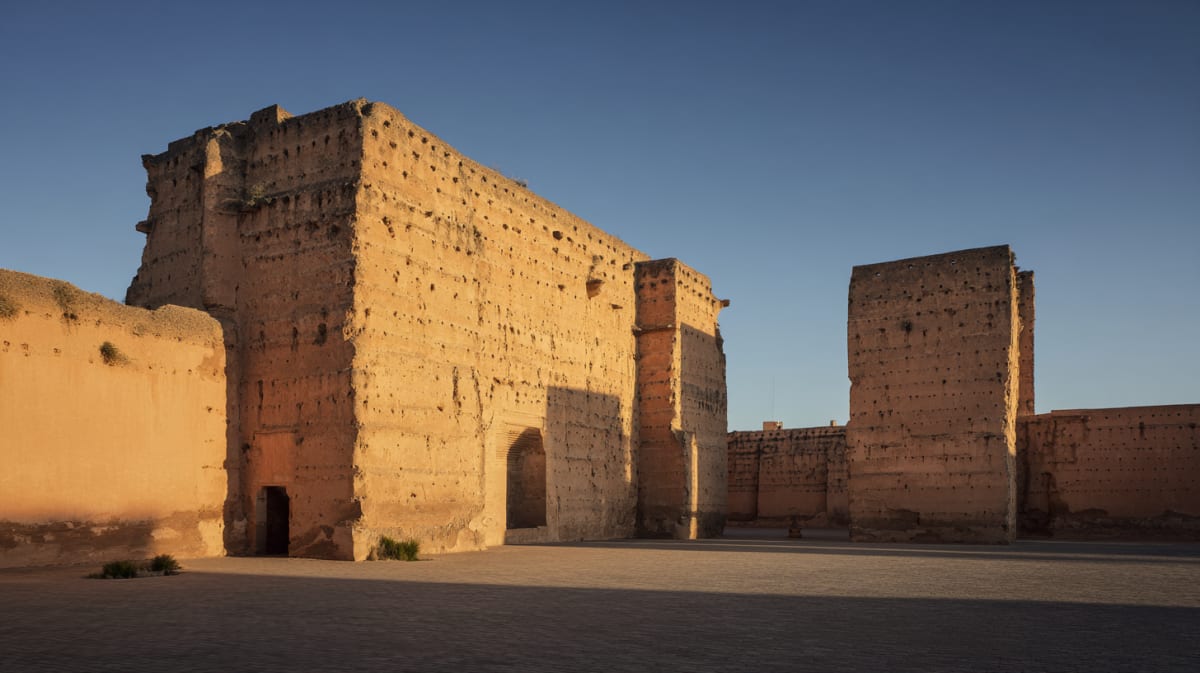
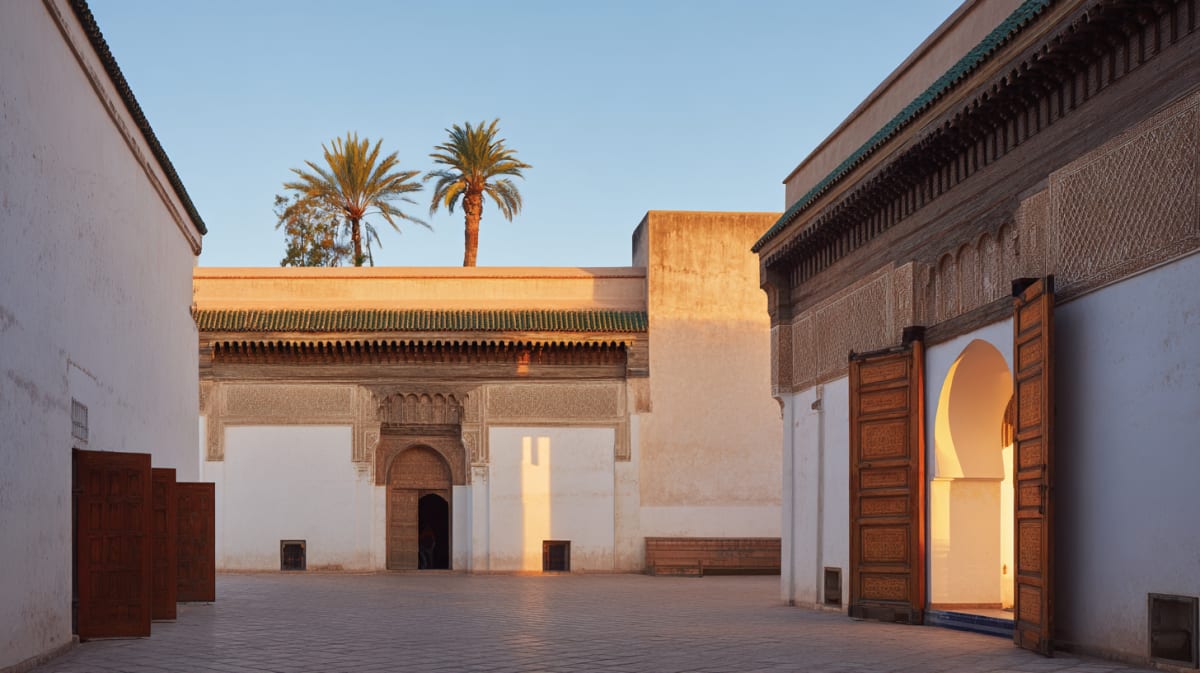
We go to the Saadian Tombs at 4:30pm. The tour groups have left. The light hits the carved cedarwood ceiling. The gold is real.
Plan a private journey →Explore More
Related Stories
Discover the history and culture of Marrakech
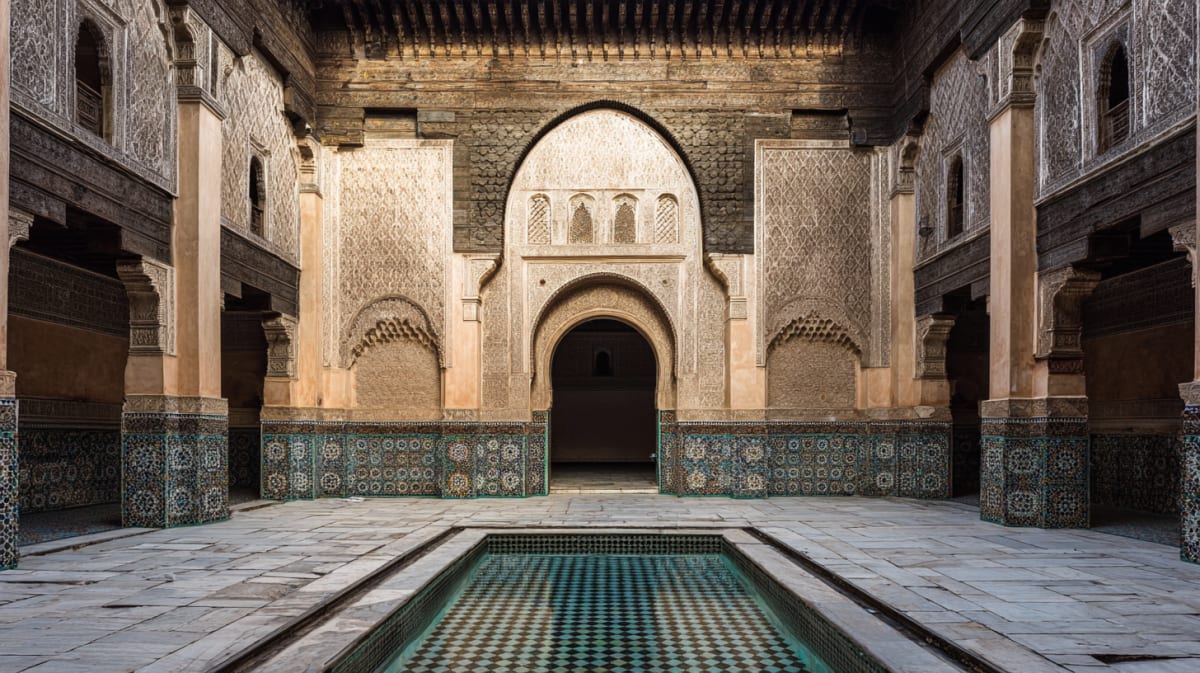
Explore More
Multi-day journeys featuring this place
Curated routes that pass through Marrakech
3 Days
3-Day Sahara Circle
Mountains to sand and back. Stars so dense they press against your chest — and a silence that rewrites what you thought quiet meant.
3 Days
Marrakech City Break
Three days to learn a medina's rhythm — souks at dawn, hidden gardens at noon, the square becoming a theatre at dusk.
4 Days
Marrakech to Fes
The classic — red city to medieval labyrinth via the Sahara. The corridor that defines Moroccan travel.
Sources: Deverdun G. (1959) Marrakech des Origines à 1912;;UNESCO Marrakech nomination file (1985)