10 Days
The Mellah Route
Morocco's Jewish story is not a footnote. It is 2,000 years of shared civilisation — older than Islam in this land, woven into every medina, every craft tradition, every diplomatic triumph. At independence in 1956, 275,000 Jews called Morocco home. Today, roughly 2,500 remain. The arithmetic is devastating. The architecture is still standing.<br><br>From Marrakech's mellah — where balconies were permitted and goldsmiths shaped the city's reputation — to Casablanca's Jewish museum, the only one in the Arab world. From Rabat, where Mohammed V refused to surrender his Jewish subjects to Vichy France, to the mellahs of Meknes and Fes — the oldest in Morocco, established 1438. Then south, over the Atlas, to the oasis towns where Jewish and Muslim families shared fortress walls for centuries and the children played in the same streets and the bread came from the same oven.<br><br>In Tinghir, a documentary filmed in the crumbling mellah connected families separated for sixty years and reopened a conversation Morocco had not yet finished having. This journey follows that conversation — through the rooms where coexistence was not a policy but a fact, and the cemeteries where it is written in stone.

Day 1
Marrakech
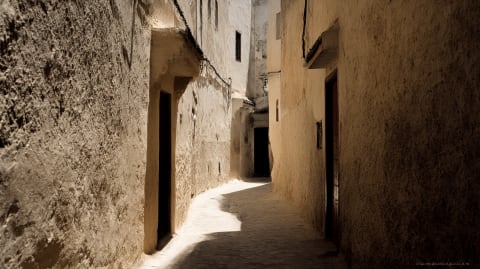
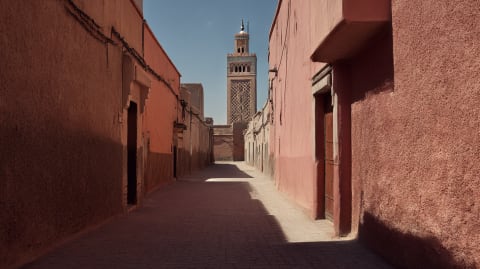
The mellah begins where the medina changes rhythm. Streets widen — balconies appear, permitted here but forbidden elsewhere. The Slat al-Azama synagogue still holds services for the handful who remain. The Lazama synagogue, restored with royal patronage, sits behind an unmarked door. The Miaara cemetery holds tombstones dating back centuries, Hebrew script weathering under the same sun that falls on the Koutoubia. At its height, Marrakech's Jewish quarter held tens of thousands. Today, the architecture remembers what the population cannot. A community that shaped this city for five hundred years — goldsmiths, diplomats, translators, physicians to sultans — now told through empty courtyards and locked doors that occasionally open.
Day 2
Casablanca
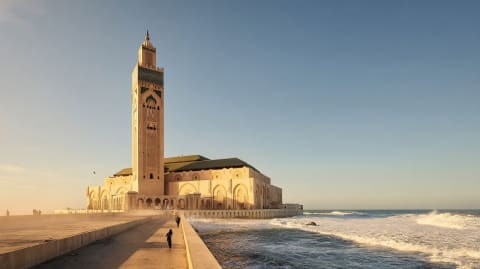
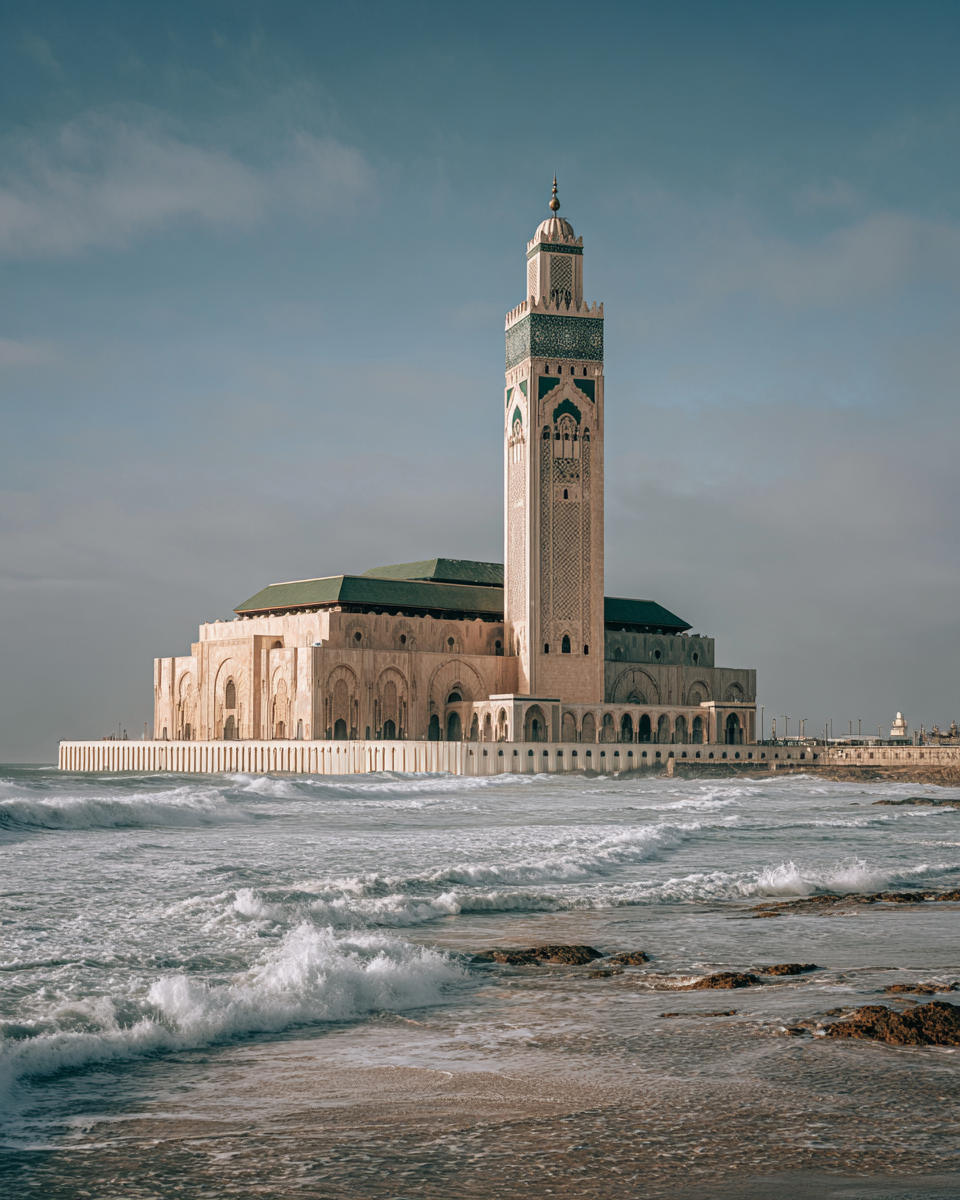
North across the Haouz plain. The Atlas shrinks in the mirror — snow-capped, rose-tinted, reluctant to let you go. The land flattens into wheat and sunflower, the road straight enough to lose time on. Casablanca materialises in stages — first the industrial fringe, then the French-built boulevards, then the Art Deco quarter where Mauresque arches meet Parisian ironwork. Mohammed V Airport waits. But if you have an hour, stand at the corniche and watch Hassan II Mosque — its minaret rising from the Atlantic, the retractable roof open to the sky. The last image of Morocco: stone meeting water, faith meeting horizon.

Day 3
Casablanca
The Museum of Moroccan Judaism sits in a white villa in the Oasis neighbourhood — the only Jewish museum in the Arab world. The collection is modest: Torah scrolls, wedding dresses, photographs of communities that no longer exist. What matters is that it exists at all. Beth-El synagogue still holds Shabbat services. The old mellah near the port has been absorbed into the city, but the street names remember. Casablanca was the last major departure point — the city where 250,000 became 2,500. The story is not persecution; Morocco protected its Jews. The story is Israel, France, Canada — the pull of new nations, new opportunities, new lives. The ones who stayed chose Morocco.
Day 4
Rabat
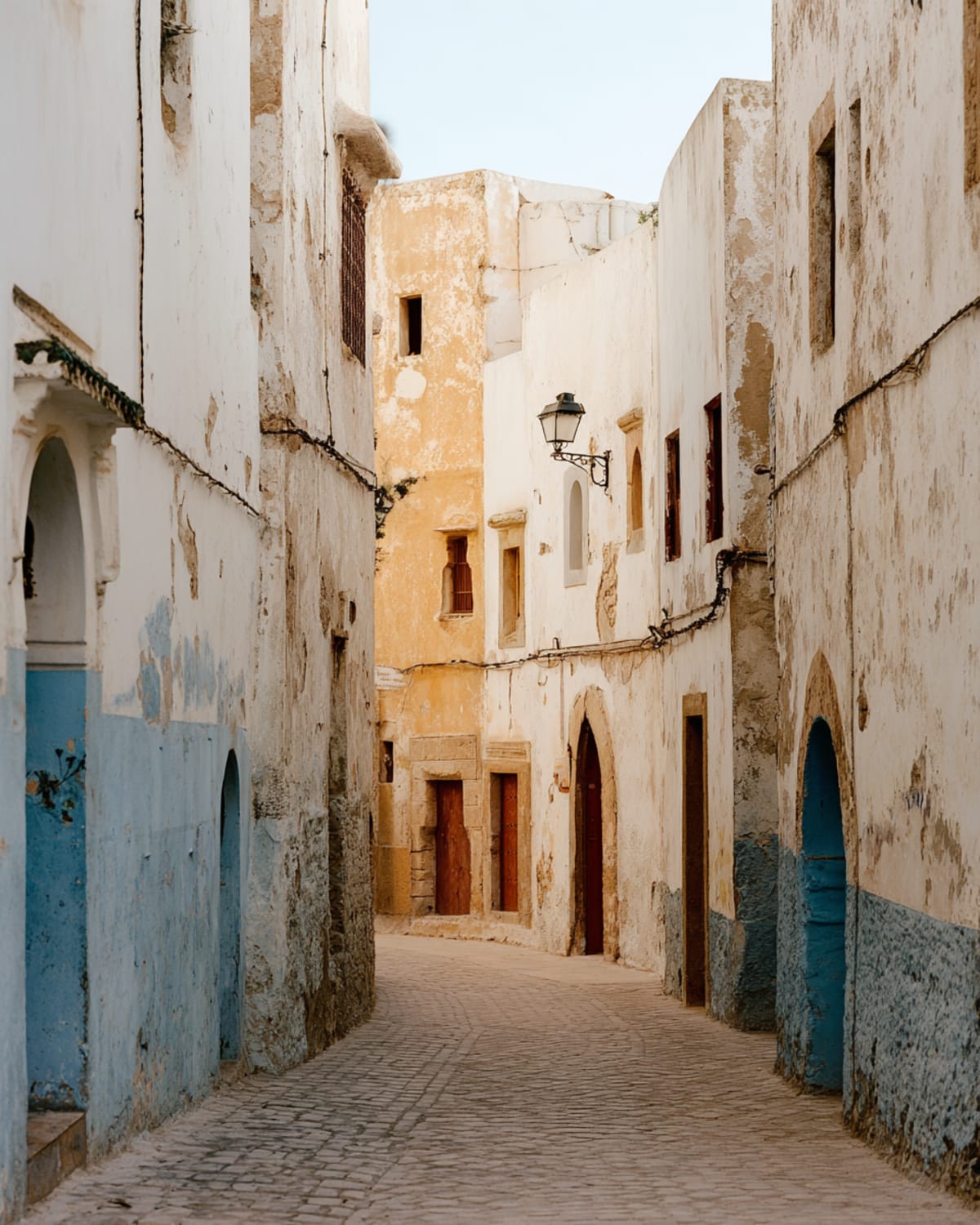
North along the Atlantic motorway — an hour between Morocco's two faces. Casablanca's commercial sprawl gives way to cork oak and eucalyptus. The ocean appears in glimpses. Rabat materialises white and composed on the Bou Regreg river, a capital that whispers where other cities shout. The kasbah overlooks the Atlantic. The medina is calm, carpeted, navigable. The diplomatic quarter smells of jasmine. After Casablanca's urgency, Rabat feels like exhaling.

Day 5
Rabat
Rabat's mellah is quieter than the others — smaller, less visited, folded into the administrative calm of a capital city. The Jewish cemetery sits near the Kasbah of the Udayas, tombstones facing Jerusalem as they do in every mellah in every city in Morocco. The Talmud Torah synagogue has been restored. What makes Rabat different is the political story: this is where Mohammed V refused Vichy France's demand to identify and deport Moroccan Jews. "There are no Jews in Morocco," the Sultan said. "There are only Moroccan subjects." The palace where that decision was made is walking distance from the mellah it protected.

Day 6
Meknes
The road from Rabat to Meknes crosses the Gharb plain — flat, agricultural, unremarkable. The destination is not. Meknes was Moulay Ismail's obsession: fifty years building a rival to Versailles. The Jewish presence here predates the sultan by centuries. The mellah sits in the shadow of Bab Mansour, the grandest gate in Morocco. Beyond the city, Volubilis — Roman columns against sky, mosaic floors where they fell two thousand years ago. Jews lived here under Roman rule; the evidence is archaeological, not anecdotal. The oldest Jewish presence in Morocco may be the oldest in all of Africa.

Day 7
Fes
An hour between imperial cities. The landscape barely changes — olive groves, wheat fields, the Saïss plain stretching in every direction. Fes announces itself gradually: first the industrial suburbs, then the Ville Nouvelle, then the walls. The medina contains everything. For the Jewish community that settled here in the 9th century, Fes was the intellectual capital — close to the Qarawiyyin university, close to trade, close to power. The mellah established in 1438 was the first in Morocco; the word itself — mellah, salt — may originate here.

Day 8
Fes
The Mellah of Fes is the oldest in Morocco — established 1438, when the sultan moved the Jewish community from the medina to a quarter near the palace. Protection or segregation? Both. At its height, 250,000 Jews lived here. Fewer than 200 remain. The Ibn Danan synagogue has been restored to its 17th-century form — carved plaster, painted wood, a ritual bath fed by underground springs. The Habarim cemetery is the largest Jewish burial ground in Morocco: thousands of whitewashed tombs, all facing Jerusalem. The community's goldsmiths, embroiderers, and jewellers defined Fassi craftsmanship. Walk through the mellah slowly. The balconies, the wider streets, the different rhythm — architecture tells what census data cannot.
Day 9
Midelt
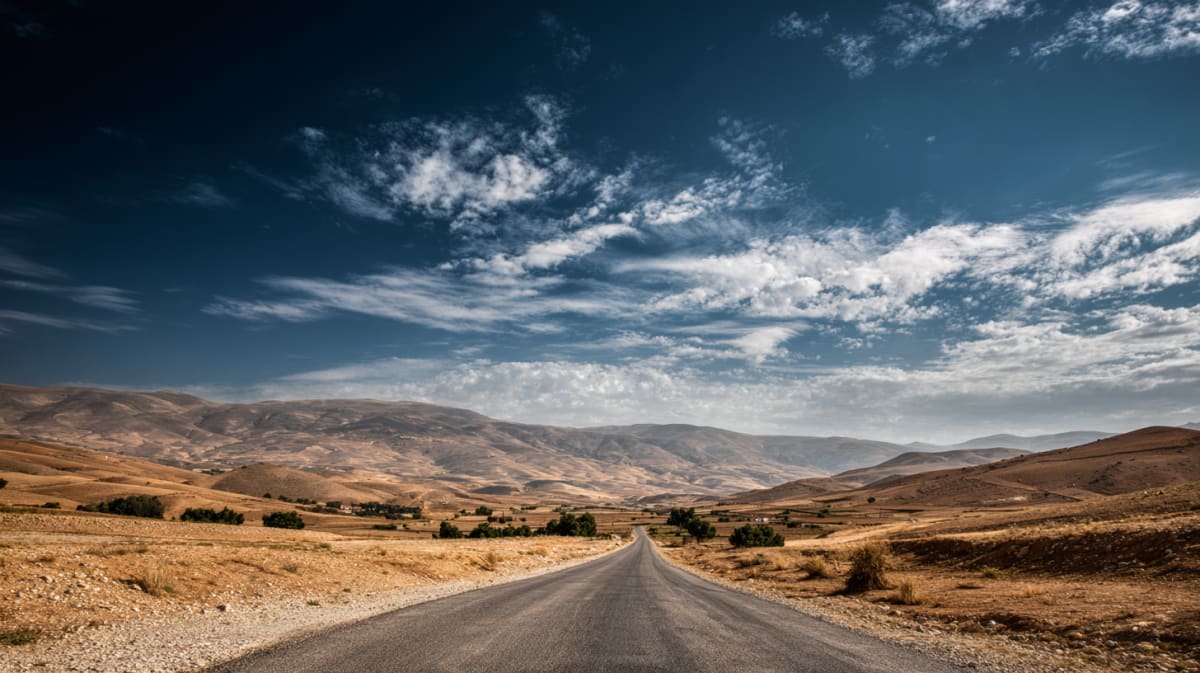
The Middle Atlas rises in cedar and silence. Ifrane appears Swiss and improbable — swept streets, flower beds, students walking between buildings that could be in Lausanne. Past the town the forest closes in. Azrou's Barbary macaques watch you from cedar branches eight hundred years old, their expressions suggesting they know something you don't. The road climbs. The air thins and sharpens against your throat. Midelt waits at the foot of Jebel Ayachi — a town that knows it's a gateway, selling apples and fossils and hot trout from the river. South from here, the land remembers different gods.

Day 10
Tinghir
The road south from Midelt crosses the High Atlas at Tizi n'Talghemt — the pass of the she-camel. The landscape shifts from green to red, from Europe to Africa. Midelt itself was once home to a Jewish community that worked the nearby mines; they are gone now, absorbed into the migration that emptied every small-town mellah in the south. The descent toward Tinghir follows the Todra river valley. Kasbahs appear and crumble. The oasis towns — Goulmima, Tinejdad — had their own Jewish quarters, their own stories of coexistence, their own departures. By the time you reach Tinghir, you understand: this was not one community but hundreds, scattered across every valley where trade moved.
Day 11
Tinghir
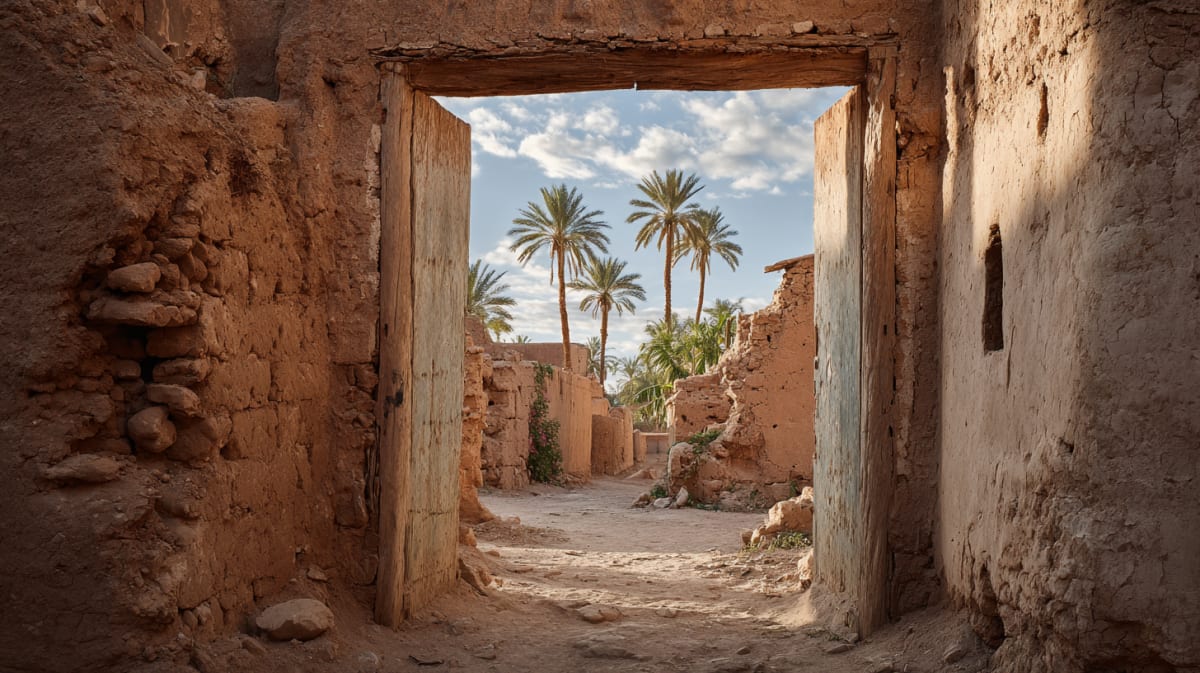
Tinghir's mellah is the one the documentary found. Kamal Hachkar's "Tinghir-Jerusalem: Echoes of the Mellah" traced the families who left for Israel in the 1950s, then returned to visit the houses they had not forgotten. The film broke something open: Moroccan Muslims wept watching it. The mellah is crumbling but not empty — families still live in the houses Jews left behind, and some still keep the mezuzah marks on the doorframes. The synagogue is locked but visitable with the right introduction. The Jewish cemetery overlooks the palmery. The story here is not ancient; it is within living memory. The last Jewish families of Tinghir left in the 1960s. Their neighbours remember their names.

Day 12
Ouarzazate
The Road of a Thousand Kasbahs — the number is not hyperbole. The route west from Tinghir follows the Dadès Valley through Boumalne, past the famous gorge, through the Valley of Roses to Skoura and its palmery. Every town had its mellah; every kasbah sheltered both communities behind the same walls. Skoura's Jewish quarter produced some of the finest silver jewellers in the south. Ouarzazate — the gateway city — served as the last trading hub before the desert. The Kasbah Taourirt, the Glaoui stronghold, rises at the entrance to town. The Jewish community here was among the last to leave the south. Their departure coincided with Morocco's independence; the irony is not lost on anyone who studies it.

Day 13
Marrakech
The return to Marrakech crosses the Tizi n'Tichka — at 2,260 meters, the highest paved pass in Morocco. The road was built by the French in 1936; before that, the route over the Atlas was the domain of mules and the Glaoui family who controlled it. A detour to Telouet reveals their collapsing kasbah: painted ceilings over empty rooms, grandeur rotting in the mountains. The descent toward Marrakech is dramatic — from snow-dusted peaks to palm groves in two hours. You arrive having traced a circle: from the mellah where the journey began, through every major Jewish community in Morocco, and back to the city where the story continues. The 2,500 who remain are not relics. They are Moroccans.
Private Journeys
Plan this journey.
This route is private, and shaped around how you want to move through the country. Tell us what you're hoping to find — we'll design the trip around it.
There is more
This is just the shape of the route.
The full story — where the road changes, what the maps don't name, which detours are worth the dust — lives in the Slow Morocco letter. Written from the medina. Sent when it matters.
No frequency promises. Unsubscribe anytime.